



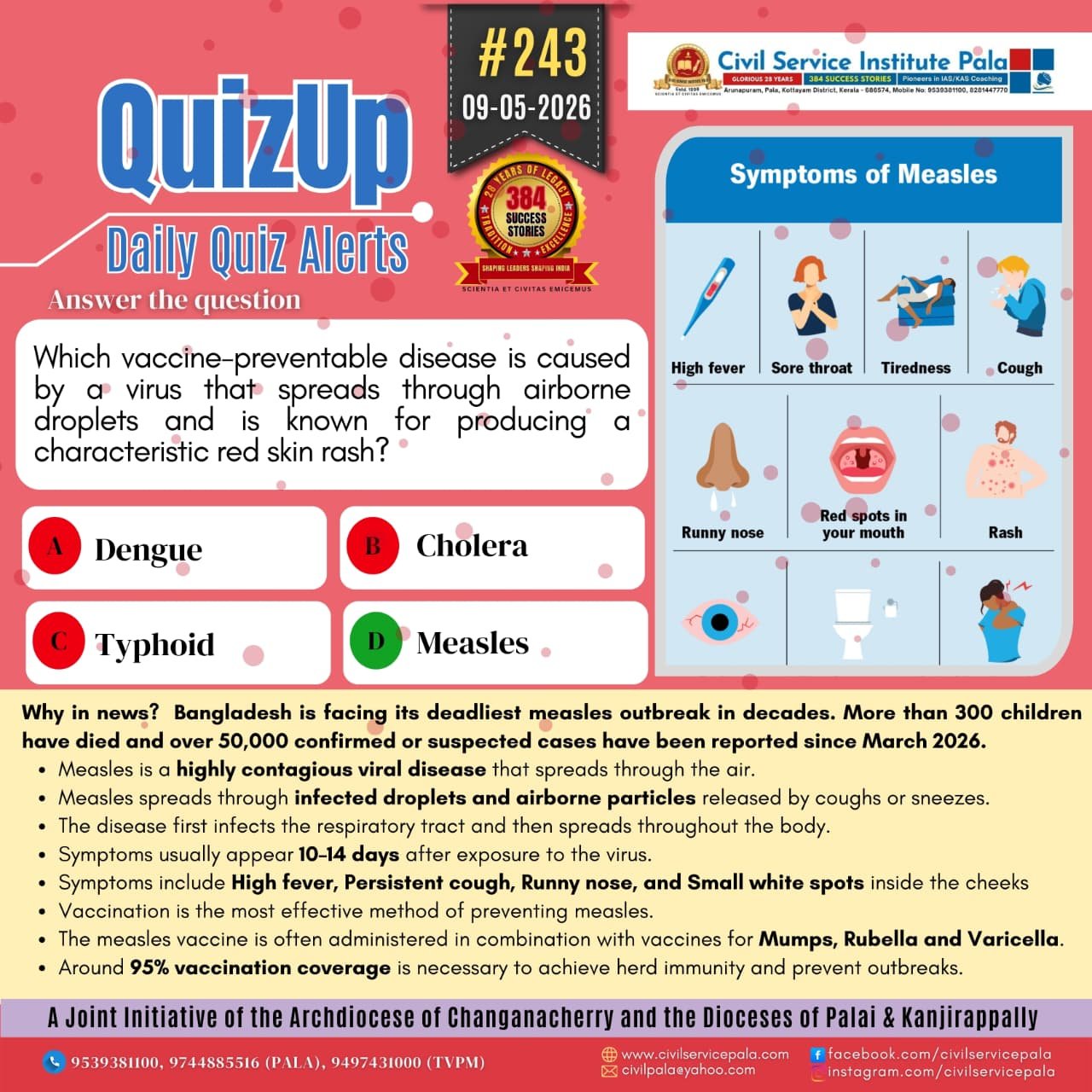
What is Measles?
Why in News?
Bangladesh is facing its deadliest measles outbreak in decades. More than 300 children have died and over 50,000 confirmed or suspected cases have been reported since March 2026. The outbreak has placed severe pressure on hospitals and exposed gaps in immunisation coverage that emerged after political instability and disruptions in healthcare services during 2024.
What is Measles?
• Measles is a highly contagious viral disease that spreads through the air when an infected person coughs, sneezes or breathes. It mainly affects children and can lead to severe complications, disability and death if not prevented through vaccination.
• The disease first infects the respiratory tract and then spreads throughout the body. It is caused by the measles virus and remains one of the world’s most infectious diseases.
• Before the introduction of the measles vaccine in 1963, major epidemics occurred every two to three years and caused nearly 2.6 million deaths annually across the world.
• According to the World Health Organization, measles vaccination prevented nearly 59 million deaths between 2000 and 2024.
Nature and Transmission of Measles
• Measles spreads through infected droplets and airborne particles released when an infected person coughs or sneezes. The virus can remain active in the air or on surfaces for up to two hours.
• An infected individual can spread the disease from four days before the appearance of the rash to four days after the rash develops.
• Measles is extremely contagious. One infected person can transmit the disease to nearly 18 other people in a non-immune population.
• The disease spreads rapidly in overcrowded areas, refugee camps and regions with weak health infrastructure or low vaccination coverage.
Symptoms and Clinical Features
Symptoms usually appear 10–14 days after exposure to the virus.
Early symptoms include:
• High fever
• Persistent cough
• Runny nose
• Red and watery eyes
• Small white spots inside the cheeks
A characteristic red rash appears later, beginning on the face and upper neck before spreading across the body, including the hands and feet.
The rash generally lasts for five to six days before fading.
Complications and Health Risks
Measles can lead to severe and life-threatening complications, especially among:
• Children below five years
• Malnourished children
• Pregnant women
• Persons with weak immunity
Major complications include:
• Pneumonia
• Severe diarrhoea and dehydration
• Ear infections
• Blindness
• Encephalitis or brain inflammation
Measles can also weaken the immune system significantly, making children vulnerable to other infections even after recovery.
If a pregnant woman contracts measles, it may result in premature birth or low birth weight in infants.
Prevention and Vaccination
Vaccination is the most effective method of preventing measles.
Children are advised to receive two doses of the measles vaccine:
• First dose at 9–12 months
• Second dose at 15–18 months
The vaccine is safe, effective and inexpensive, costing less than one US dollar per child in many immunisation programmes.
The measles vaccine is often administered in combination with vaccines for:
• Mumps
• Rubella
• Varicella
According to WHO and UNICEF estimates:
• Around 84% of children globally received the first dose of the vaccine in 2024.
• About 76% received both doses.
• Nearly 30 million infants remained under-protected against measles.
Experts note that around 95% vaccination coverage is necessary to achieve herd immunity and prevent outbreaks.
WHO recommends that all measles patients receive two doses of Vitamin A supplements because Vitamin A deficiency worsens complications and increases mortality risk.
The WHO, UNICEF and global partners continue to support:
• Emergency vaccination campaigns
• Disease surveillance
• Laboratory diagnosis
• Public awareness programmes
The World Health Organization launched the Immunization Agenda 2030 to strengthen global immunisation systems and support measles elimination targets.
Bangladesh Measles Outbreak: A Contemporary Case Study
The ongoing outbreak in Bangladesh demonstrates how disruptions in immunisation programmes can quickly lead to public health crises.
The country had earlier made major progress in vaccination coverage. However, political instability and the 2024 uprising disrupted healthcare services and delayed a planned nationwide measles vaccination drive.
As a result:
• Vaccine coverage fell to nearly 59%
• Large numbers of children missed their second vaccine dose
• Herd immunity weakened significantly
By May 2026:
• More than 50,000 confirmed and suspected cases were reported
• Over 336 children had died
• Hospitals became overcrowded with infected children
• Emergency field hospitals had to be established
Most affected children were between six months and five years of age.
The government, along with WHO, UNICEF and security forces, launched an emergency measles-rubella vaccination campaign on April 5, 2026. Nearly 17 million children have since been vaccinated.
The outbreak also highlights the close relationship between:
• Public health infrastructure
• Political stability
• Routine immunisation systems
• Disaster preparedness
Health authorities have additionally warned that rising dengue cases during the monsoon season could further burden the healthcare system.
