



Vande Mataram @150
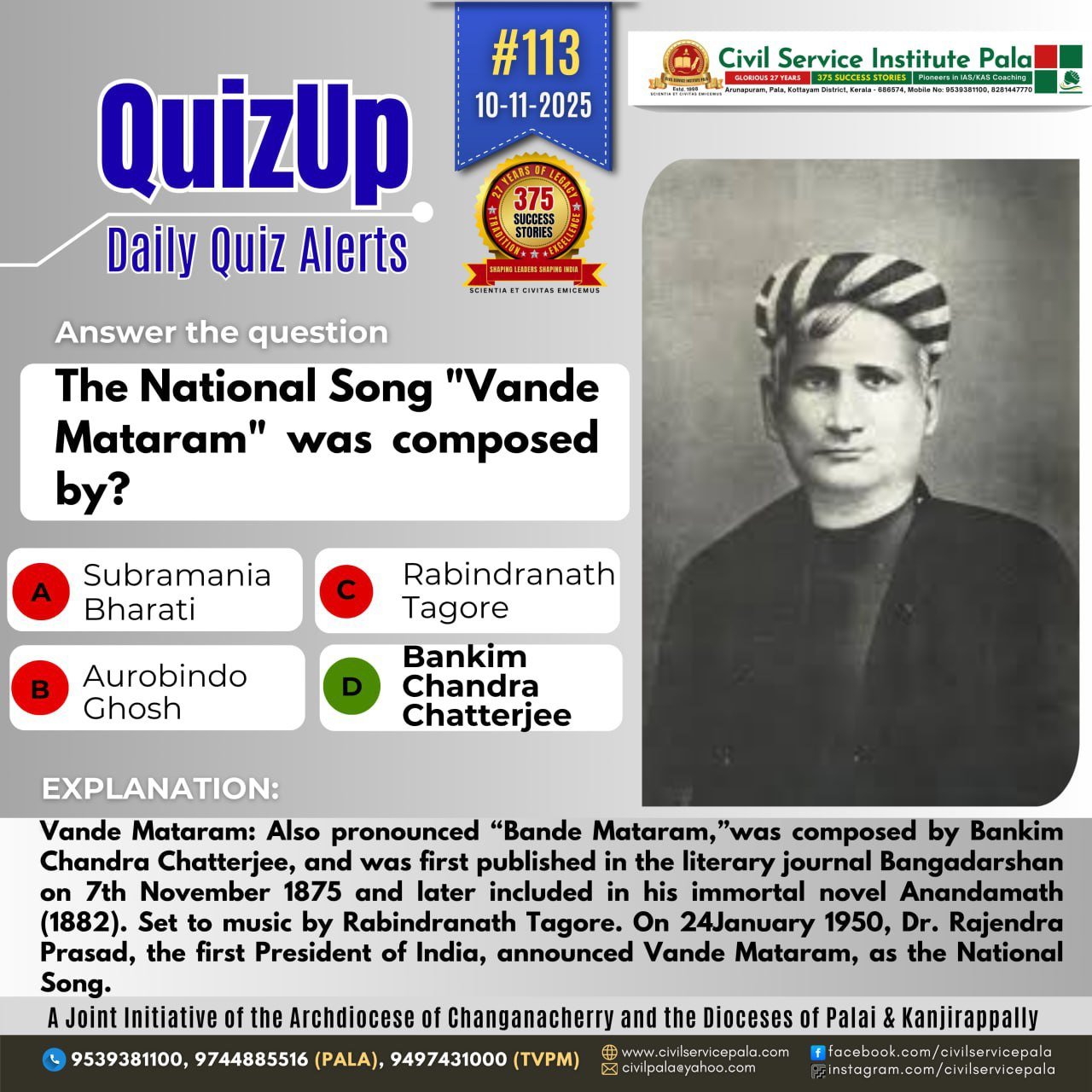
Vande Mataram @150 marks the 150th anniversary of the iconic national song “Vande Mataram,” composed by Bankim Chandra Chatterjee (Chattopadhyay) in 1875. This milestone (celebrated in 2025) honors the song’s profound influence on India’s freedom movement and its continuing legacy as a symbol of patriotism and national pride. Origin and Composition Composed by: Bankim Chandra Chatterjee in 1875 in Sanskrit and Bengali. First appeared in: His novel “Anandamath” (1882). Meaning: “Vande Mataram” translates to “I bow to thee, Mother”, referring to Mother India as a divine figure. Historical Significance It became the anthem of India’s freedom struggle, inspiring revolutionaries and nationalists. The song was first sung in 1896 by Rabindranath Tagore at the Indian National Congress session. It unified Indians across linguistic, religious, and regional lines during colonial resistance. National Recognition In 1950, the Constituent Assembly adopted “Vande Mataram” as the National Song of India, while “Jana Gana Mana” was made the National Anthem. The first two stanzas are officially recognized for public singing. Vande Mataram @150 (2025) Celebrations The Government of India and cultural organizations are commemorating 150 years of the song’s creation. Events include cultural programs, exhibitions, musical renditions, seminars, and school competitions celebrating India’s national identity and unity. The celebration emphasizes the spirit of nationalism, literary heritage, and cultural unity that “Vande Mataram” represents. Essence of the Song “Vande Mataram” is more than a song — it is a symbol of devotion, sacrifice, and love for the motherland, continuing to inspire generations of Indians.
