



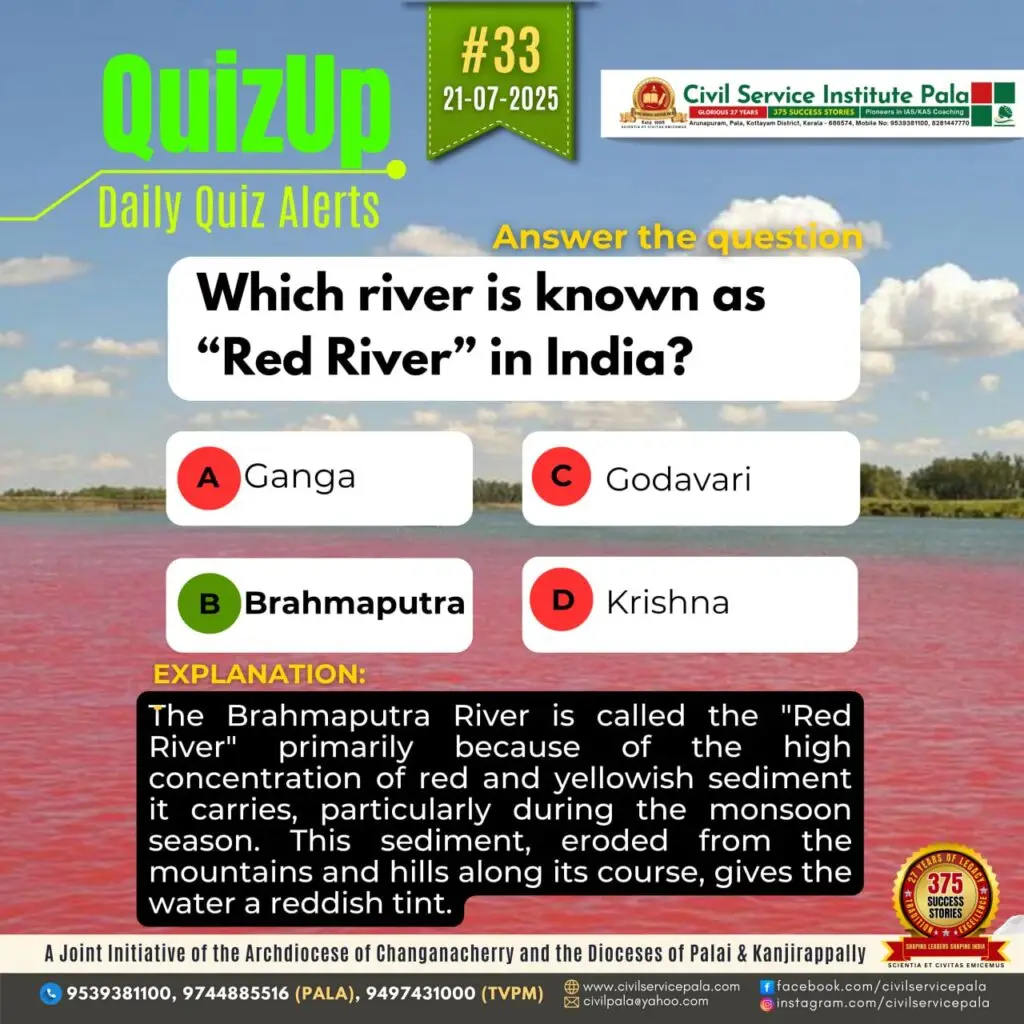
The Brahmaputra
The Brahmaputra is one of Asia’s greatest and most powerful rivers, known for its vast volume, long journey, and cultural and ecological significance.
Origin and Course:
Origin: Angsi Glacier in the Tibet Autonomous Region, near Mount Kailash.
Called Yarlung Tsangpo in Tibet.
Flows eastward across Tibet, then takes a sharp U-turn (called the Great Bend) and enters India through Arunachal Pradesh as the Siang/Dihang River.
After joining with other rivers, it’s called Brahmaputra in Assam.
Flows into Bangladesh as the Jamuna, eventually merging with the Ganges and emptying into the Bay of Bengal.
Length and Width:Total length: About 2,900 km.
In some parts of Assam, it stretches up to 10 km wide.
It is one of the few rivers in the world with a male name.
Importance:
Lifeline for northeast India and Bangladesh.
Fertile plains support rice, jute, and tea cultivation.
Vital for transport, irrigation, and hydropower.Holds religious significance for Hindus and Buddhists.
Power and Floods:
Known for its mighty flow and devastating annual floods, especially during monsoons.
Erosion caused by floods is a major problem in Assam.
Carries enormous silt and sediment, helping to form the Brahmaputra delta, the largest river delta in the world.
Ecological Significance:
Home to rich biodiversity including:
Gangetic dolphins
One-horned rhinoceros
Migratory birds
Passes through key wildlife areas like Kaziranga National Park.
Key Takeaway:
The Brahmaputra is more than a river—it’s a natural force, cultural symbol, and life source for millions. Its dynamic flow, mighty floods, and ecological importance make it one of the most remarkable rivers in the world.
