



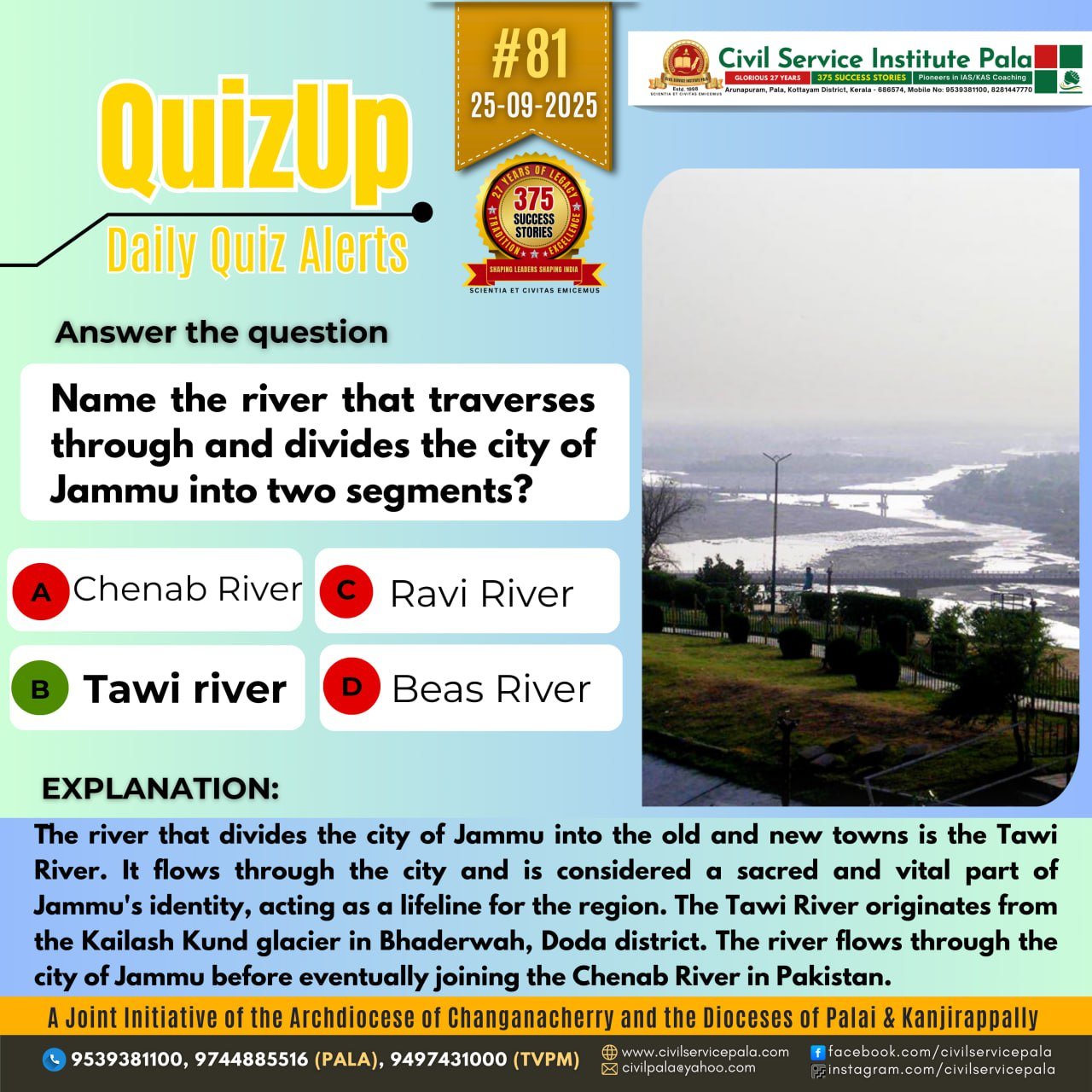
Tawi River
The Tawi River is an important river of the Jammu region in the Union Territory of Jammu and Kashmir, India. It holds ecological, cultural, and religious significance. Geographical Features Origin: The Tawi River originates from the Kailash Kund glacier located at an elevation of about 4,000–4,600 meters in the Bhaderwah area of the Doda district (Outer Himalayas). Course: Flows through Chenani, Udhampur, and then into Jammu city, dividing it into two parts (old city on the right bank, new city on the left). Joins the Chenab River in Sialkot (now in Pakistan). Length: Approximately 141 km long. Basin: The river drains an area of nearly 2,168 sq. km. Cultural & Religious Significance Considered sacred by the local Hindu population. Referred to as "Surya Putri Tawi" (Daughter of the Sun God). Important ghats (like Mubarak Mandi Ghat in Jammu) are used for religious rituals, festivals, and cremations. Economic & Social Importance Provides drinking water to Jammu city through the Tawi filtration plant. Source of irrigation for agricultural lands in Jammu and Udhampur districts. Supports fisheries and local livelihoods. Environmental Concerns Pollution: Untreated sewage and solid waste from Jammu city are major threats, reducing water quality. Encroachments: Urbanization and construction along riverbanks cause ecological stress. Flow reduction: Due to climatic changes and deforestation in the catchment area. Infrastructures on Tawi Bridges: Several bridges connect the old and new parts of Jammu city across the Tawi. Artificial Lake Project: The Jammu & Kashmir government initiated a project to create an artificial lake on the Tawi for tourism, water storage, and beautification, though it has faced delays. Hydropower potential: Limited projects due to seasonal variations in water flow.
