



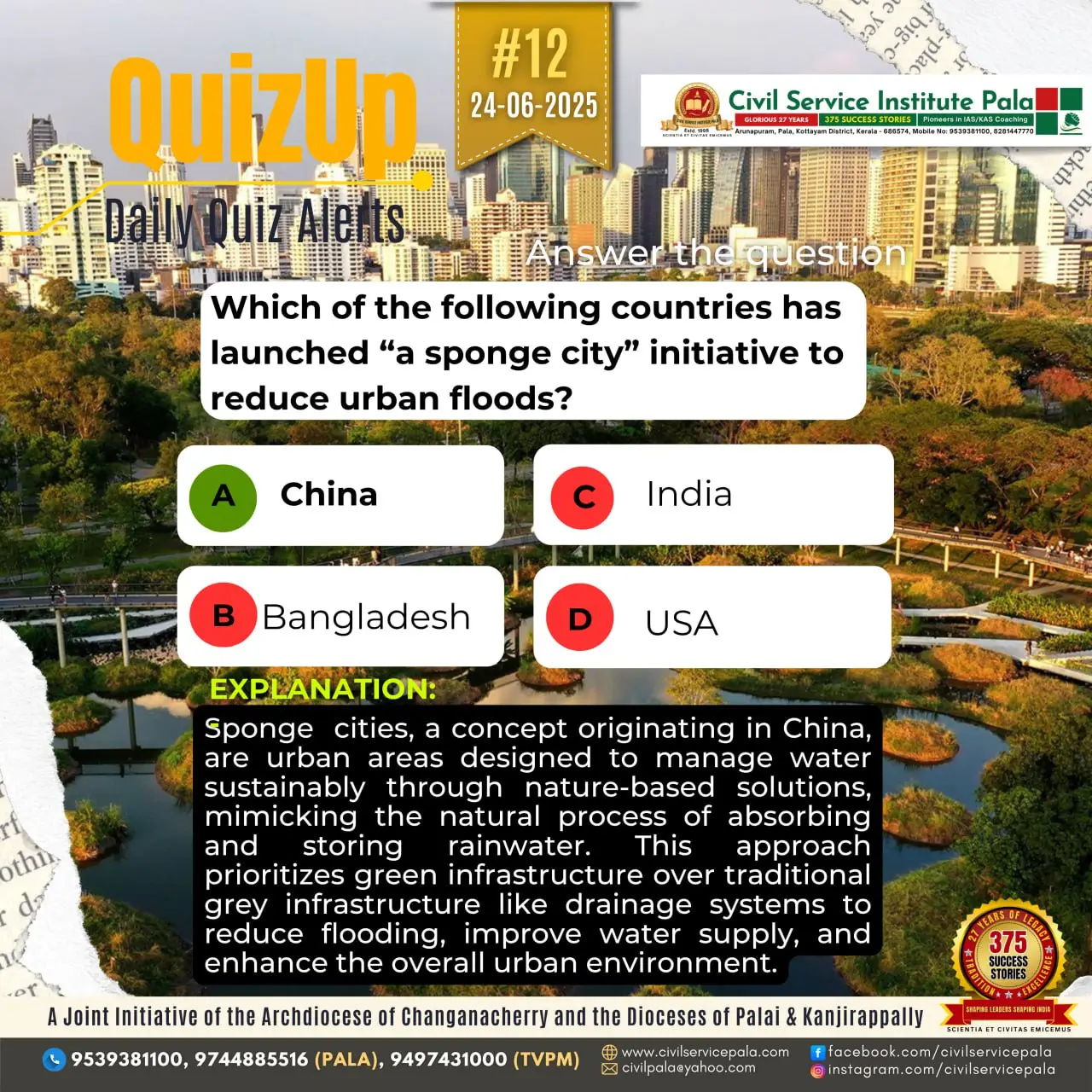
Sponge Cities
“Sponge Cities” is a sustainable urban development program launched by China to tackle urban flooding, water scarcity, and climate change impacts by making cities behave like sponges—absorbing, storing, filtering, and slowly releasing rainwater.
Why Was It Started?
China has faced:
Frequent urban floods due to rapid urbanization, poor drainage, and loss of natural wetlands.
Increasing climate variability, with both droughts and heavy rainfall.
The need to improve water quality and urban resilience.
Launched in 2015, the Sponge City initiative aims to restore natural hydrological cycles disrupted by concrete-heavy development.
Core Features of a Sponge City
Permeable Surfaces
Roads, sidewalks, and parking areas made from materials that allow water to seep through.
Green Infrastructure
Green roofs, urban wetlands, rain gardens, and bioswales to absorb and filter rainwater.
Restoration of rivers and lakes to reduce runoff and improve ecosystems.
Rainwater Harvesting & Storage
Systems to capture rainwater for reuse in irrigation, cleaning, and other non-potable uses.
Flood Control & Drainage
Upgraded drainage networks that work with natural systems rather than replacing them.
Pilot Cities
Initial pilot projects were launched in 30 cities, including:
Wuhan
Shanghai
Xiamen
Chongqing
The goal was for at least 20% of urban areas in pilot cities to meet sponge city standards by 2020, and 80% by 2030.
Benefits
Reduces urban flooding and waterlogging
Improves water quality and biodiversity
Enhances urban cooling and reduces heat islands
Contributes to sustainable water management
Challenges
High costs and need for long-term investment
Integration with existing urban infrastructure
Coordination among multiple government agencies and sectors
In Summary
China’s Sponge Cities initiative is a visionary move toward eco-friendly urban planning, aiming to mimic nature’s water-absorbing capacity in the heart of concrete jungles. It’s a model for other countries facing similar water-related urban challenges in the age of climate change.
