



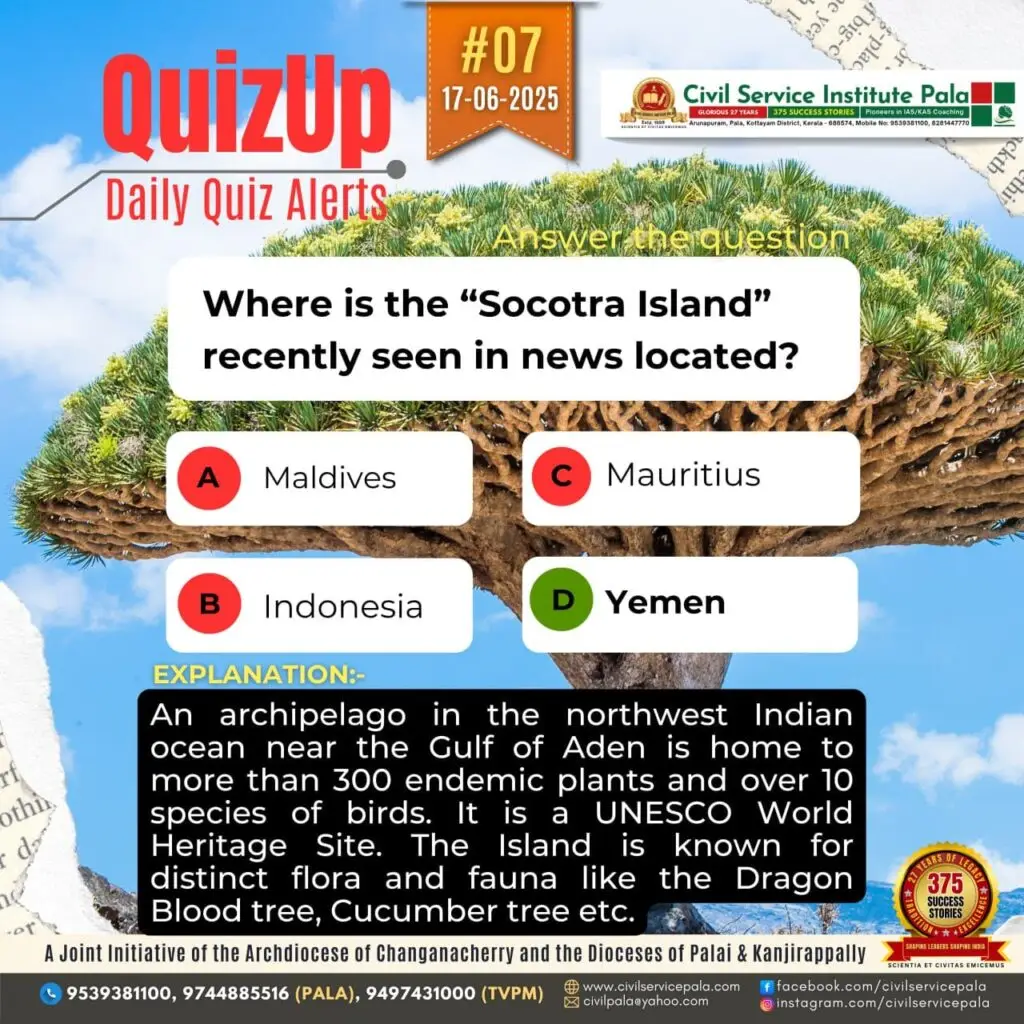
Socotra Islands
The Socotra Islands are an isolated archipelago in the Arabian Sea, part of Yemen. The largest island, also named Socotra, is often described as the most alien-looking place on Earth—and for good reason. It’s a global hotspot for endemic species, meaning plants and animals found nowhere else.
Key Features That Make Socotra Unique:
1. Biodiversity
Around 37% of its plant species are endemic.
The Dragon’s Blood Tree (Dracaena cinnabari) is the most iconic. It has an umbrella shape and bleeds red sap, historically used as dye and medicine.
Other strange flora includes the Desert Rose (Adenium obesum), which looks like a tree with swollen limbs, and various rare succulents.
Endemic birds, spiders, and reptiles also thrive here.
2. Geographic Isolation
Socotra split from mainland Africa about 20 million years ago.
Its isolation has preserved ancient life forms and limited modern human impact, allowing evolution to run wild in a confined ecosystem.
3. Harsh Climate, Unique Adaptations
Hot, arid, and dry with limestone plateaus and rugged mountains.
Life here has adapted to extreme drought and rocky soils in bizarre and beautiful ways.
4. Cultural Uniqueness
The people speak Socotri, an unwritten language that predates Arabic.
Traditional lifestyles and fishing practices continue largely unaffected by modern development.
5. UNESCO World Heritage Site
Recognized in 2008 for its outstanding natural value.
Conservation is a challenge due to political instability in Yemen, but efforts continue to protect its fragile ecosystem.
In short, Socotra is a natural wonder—part alien world, part evolutionary laboratory.
