



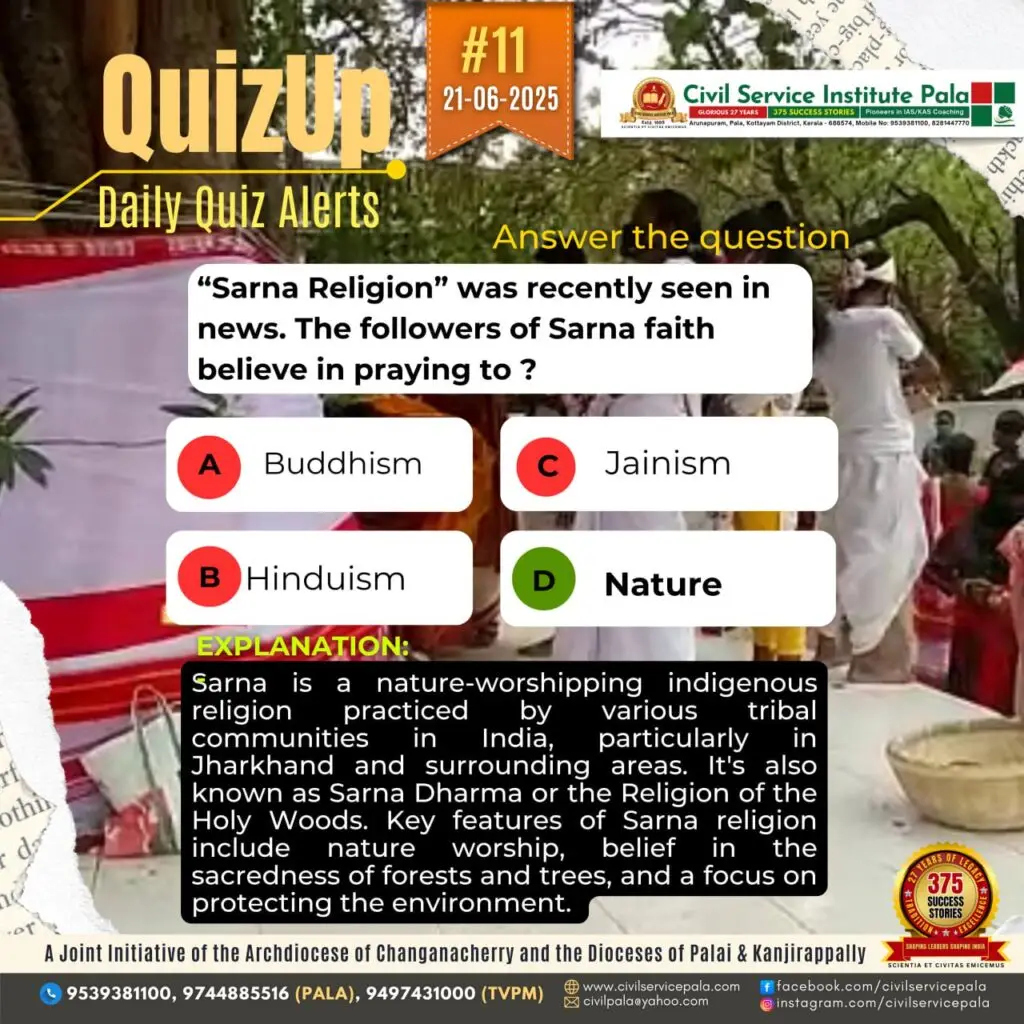
Sarna is an indigenous tribal religion
Sarna is an indigenous tribal religion practiced by many Adivasi (tribal) communities in eastern India, especially in Jharkhand, Chhattisgarh, Odisha, West Bengal, and parts of Bihar and Assam. It is not part of Hinduism, Islam, or Christianity, but rather a nature-worshipping faith rooted in tribal traditions and local customs.
Core Beliefs
Nature Worship: Sarna followers worship natural elements like trees, hills, rivers, and especially the sacred grove called Sarna Sthal—a cluster of trees that serves as the community’s spiritual center.
Bonga (Spirits): They believe in various spirits of nature, ancestors, and village guardians, often referred to as Bonga or Gram Devata.
Supreme Spirit: Some Sarna followers believe in a supreme god, often called Dharmesh, Sing Bonga, or similar names, depending on the tribe.
Practices
Rituals and Festivals: Sarhul (spring festival), Karma, and Sohrai are major festivals celebrated with offerings, dance, and music.
No Temples or Priests: Worship happens in open natural spaces. Rituals are usually led by a tribal priest called Pahan or Naike.
Community-Centric: Religion is deeply tied to the land, community values, and agricultural cycles.
Sarna vs. Other Religions
Sarna is distinct from Hinduism, though some outsiders wrongly group it under the Hindu fold.
It has no written scripture but is passed down through oral traditions.
Sarna does not involve idol worship or caste hierarchies, unlike mainstream religions in India.
Political and Legal Significance
Demand for Recognition: Sarna followers have long demanded a separate religious identity in the national census, different from Hindu, Muslim, Christian, etc.
In 2020, the Jharkhand Assembly passed a resolution asking the central government to recognize ‘Sarna’ as a separate religion in the Census.
This is about both cultural preservation and legal rights, including land, forest access, and identity.The Sarna religion is a nature-based, indigenous belief system followed by many of India’s tribal communities. It emphasizes respect for nature, community rituals, and ancestral traditions. While it remains underrepresented in mainstream discourse, Sarna is a vital part of India’s cultural and religious diversity, and its followers continue to seek formal recognition and protection of their way of life.
Source : https://www.ucanews.com/news/calls-grow-for-recognition-of-sarna-tribal-religion-in-india/109155
