



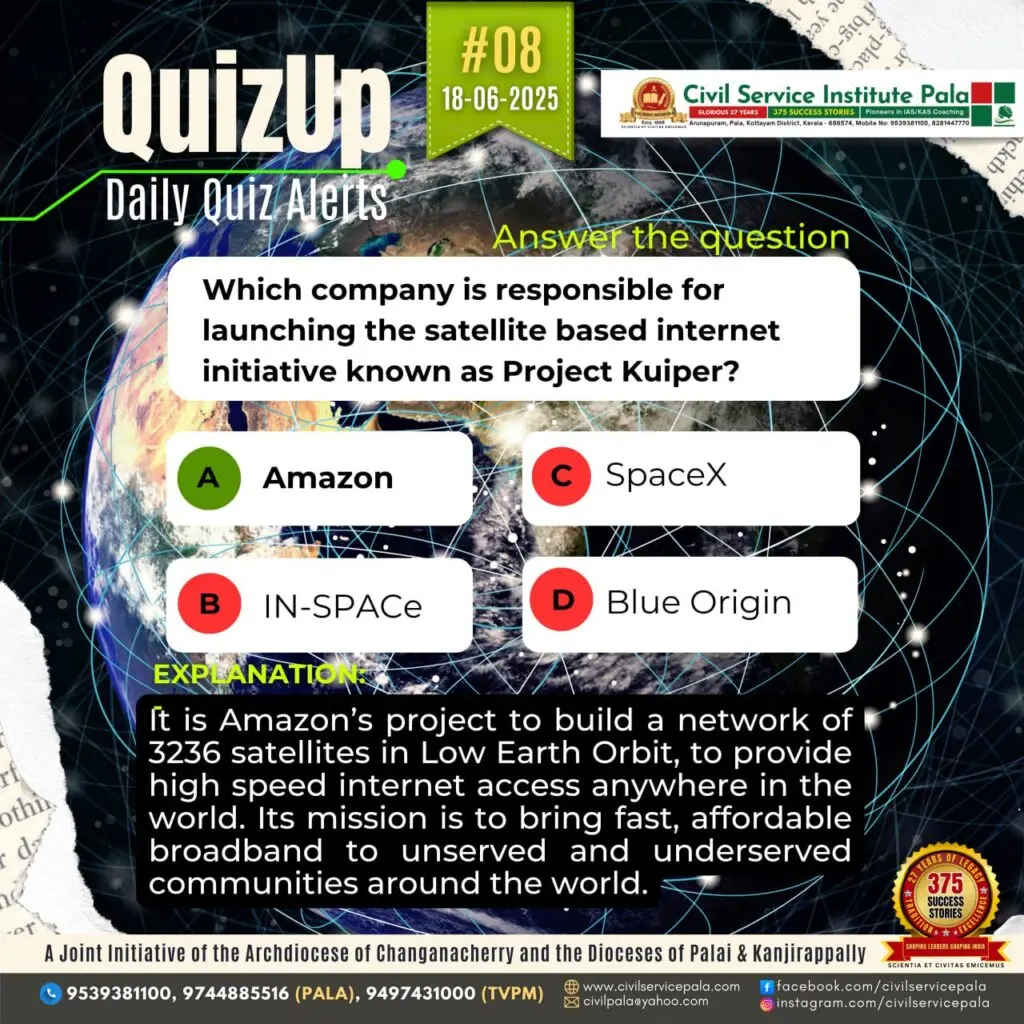
Project Kuiper
Project Kuiper is Amazon’s ambitious satellite internet initiative aimed at delivering fast, affordable broadband to underserved and remote areas around the world.
What is Project Kuiper?
Launched by: Amazon
Announced: 2019
Managed by: Kuiper Systems LLC, a subsidiary of Amazon
Named after: The Kuiper Belt, a region of the solar system beyond Neptune
Project Kuiper is Amazon’s plan to build a low Earth orbit (LEO) satellite constellation to provide global high-speed internet coverage, especially in areas with limited or no reliable connectivity.
Key Features
Constellation Size: 3,236 satellites approved by the U.S. Federal Communications Commission (FCC)
Orbit Altitude: Between 590 km and 630 km
Technology: LEO satellites offer low latency and high bandwidth, superior to traditional geostationary internet satellites
User Terminals: Amazon is developing compact, affordable ground terminals to connect users to the satellite network
Timeline and Status (as of mid-2025)
Test Satellites: Successfully launched in 2023
Mass Deployment: Began in 2024
Service Launch: Expected in late 2025
Amazon Investment: Over $10 billion committed
Why It Matters
Global Access: Aims to bring internet to rural and remote communities worldwide.
Competition: Rivals Elon Musk’s Starlink (SpaceX), but with Amazon’s retail and cloud ecosystem backing.
Economic Opportunity: Could serve schools, clinics, businesses, and governments in areas lacking infrastructure.
Cloud Integration: Potential to connect with Amazon Web Services (AWS) for cloud-based services in remote areas.
Challenges
High costs of launch and infrastructure
Space debris and orbital traffic management
Regulatory hurdles and global coordination
Competition from Starlink, OneWeb, and other satellite internet providers
Conclusion
Project Kuiper is Amazon’s bold step into space-based internet delivery, aiming to close the global digital divide. If successful, it could transform how people around the world access information, do business, and connect—especially in places where traditional internet infrastructure is impractical or absent.
