


Ollo (also called Ollos or Wollong)
Who are the Ollo?
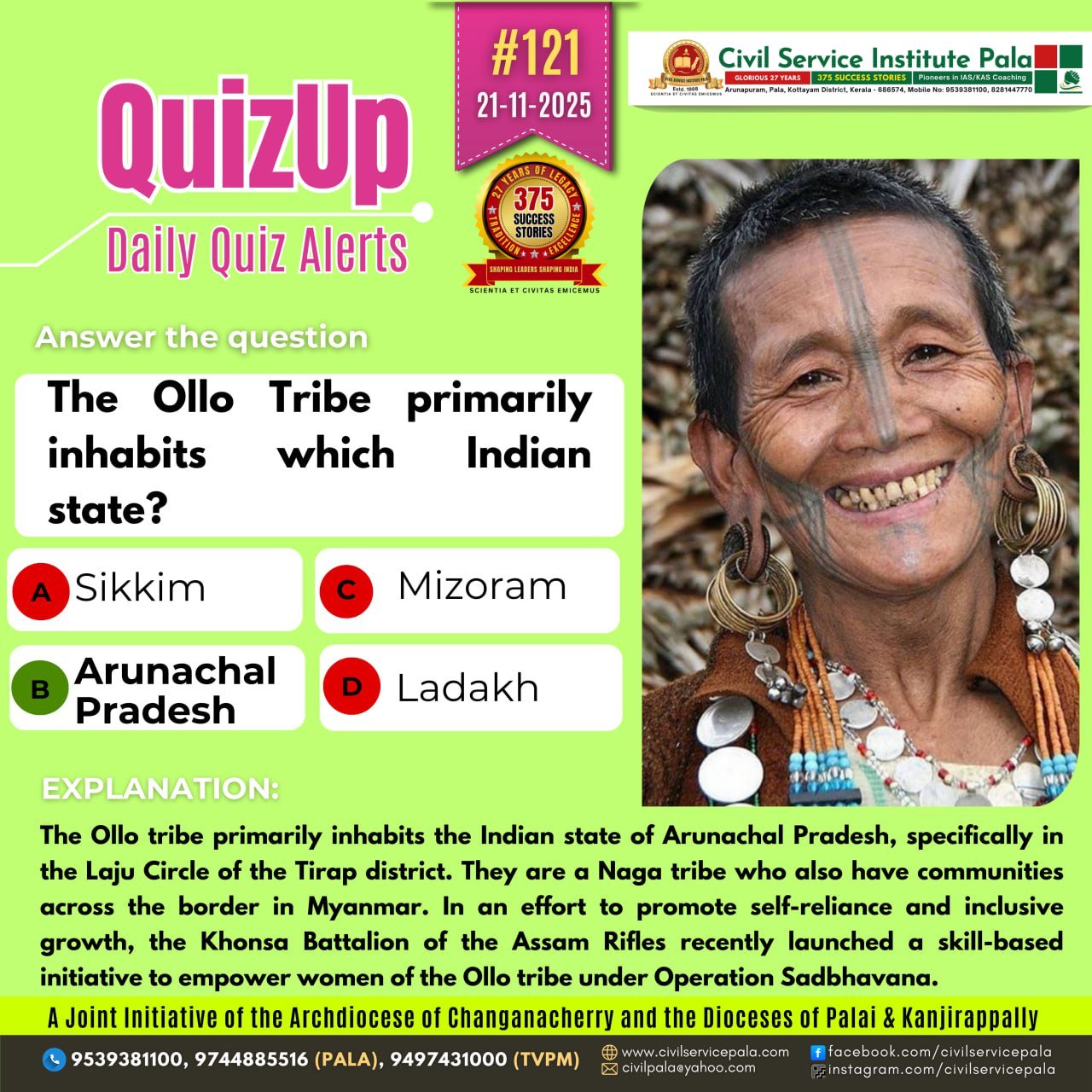
The Ollo (also called Ollos or Wollong) are an indigenous tribal community living primarily in the Lazu and Nampong circles of Tirap district in southeastern Arunachal Pradesh.They are a sub-group culturally related to the larger Nocte community, though they maintain their distinct identity.
Ethnic & Cultural Background
The Ollo people belong to the Tibeto-Burman linguistic and ethnic group.
Their society is traditionally organized around clans, village councils, and customary laws.
They are known for vibrant cultural traditions, folk songs, dances, and colourful attire.
Language
The Ollo speak the Ollo/Wollong language, which is part of the Tibeto-Burman language family.
The language is not widely documented and remains endangered due to limited speakers and dominance of other regional languages.
Livelihood
Traditionally, the Ollos have practiced:
Jhum (shifting) cultivation
Rearing of livestock
Handicrafts and weaving
Their agriculture and daily life are closely linked to forest ecosystems.
Religious Practices
Historically, they practiced animism, worshipping nature, ancestral spirits, and local deities.
In recent decades, there has been a visible shift toward Christianity, similar to several other tribes in the region.
Festivals
The main festival of the Ollo tribe is:
Tutsa Rangbang Festival (also celebrated by neighbouring tribes)
Harvest-related and thanksgiving in nature.
Marked by traditional dances, singing, community feasts, and rituals meant to bring prosperity.
Promotes unity and cultural preservation.
(Several small-scale village-level rituals associated with agriculture and spirits are also observed.)
Geographical Distribution
Mainly concentrated in:
Tirap district, especially Lazu region near the Indo–Myanmar border.
A smaller number of Ollo families also live across the border in Myanmar, as the ethnic boundary predates modern political boundaries.
Contemporary Issues
The Ollo tribe faces challenges such as:
Limited access to education and healthcare
Vulnerability due to insurgency and cross-border movement
Loss of traditional culture and language
Economic marginalization
Government programmes and tribal welfare schemes are gradually improving socio-economic conditions.
