



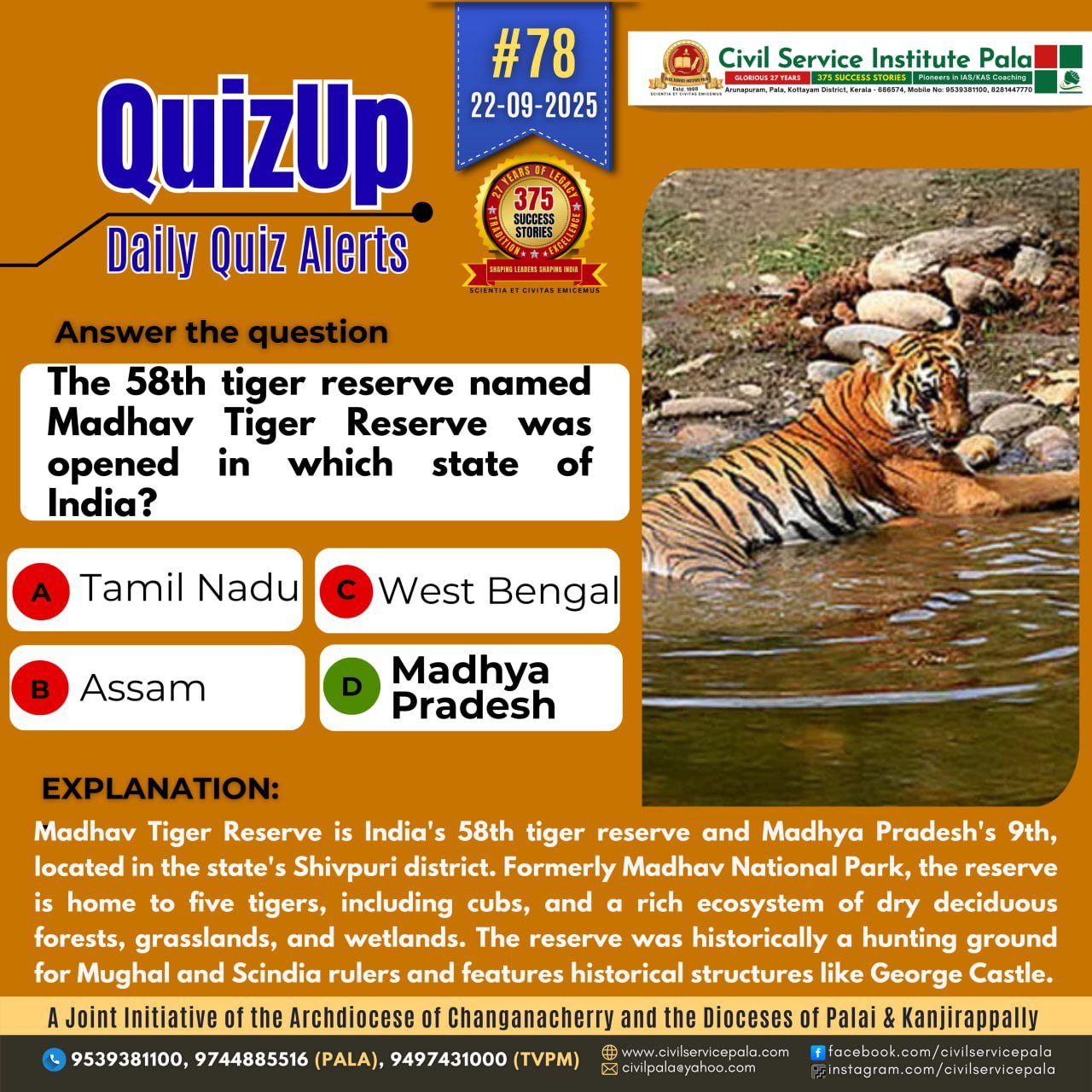
Madhav Tiger Reserve
Geography & Ecology
Area-
The reserve extends over about 1,751 sq km including core and buffer zones. Topography & Climate-Part of the Upper Vindhyan Hills, Central Highlands. Terrain has gentle slopes, some plateaus, interspersed valleys (nullahs) and occasional gorges. Highest point ~484 m (George Castle). Rainfall ~ 800-820 mm annually, most rains in monsoon (June-September) Temperature range: very hot in summer (≈ 40°C), quite cold winters (≈ 5-6°C) in parts.
Habitats & Biodiversity Vegetation: dry deciduous forest; grasslands; wetlands (lakes) etc. Water bodies: Sakhya Sagar, Madhav Sagar lakes; Madikhera dam; these help sustain fauna especially in dry times. Wildlife includes migratory waterfowl, marsh crocodiles around the lakes. Also leopards, possibly other large mammals.
Conservation & Tiger Reintroduction
Tiger Reintroduction Tigers were virtually absent for years; last resident wild tiger sightings were until ~1970.
A translocation / reintroduction effort started in 2023: three tigers (including females) were moved into the park. As of one report, there are 5 tigers in the reserve, including 2 cubs born recently.
One more tigress/tiger release planned. Administrative / Legal Approval The NTCA (National Tiger Conservation Authority) granted in-principle approval before full notification. State government of Madhya Pradesh issued official notification in March 2025. Infrastructure & Protection Efforts A boundary wall of ~13 km was inaugurated for protection. Strengthens tiger population and habitat coverage in Chambal-Gwalior region. Helps in wildlife corridors etc. Adds to MP’s status as a key tiger state (MP now has the highest number of tiger reserves among states).
Ecotourism potential: lakes, historical structures (George Castle, old lodges) adds value. Restoring biodiversity: benefits not just tigers but waterfowl, aquatic fauna, crocodiles, prey species etc.
Challenges & Considerations Habitat Restoration: Although the habitat exists, ensuring enough prey base, connectivity. Reintroduction puts demand on all habitat features.
Human-Wildlife Conflict: Buffer zones can have villages, grazing, etc. Need careful management. Poaching, Illegal Activities: Like any new reserve, could be vulnerable, especially given its location and size.
Ecological Balance: Ensuring corridors so that inbreeding, isolation is prevented; managing competition with other large predators (if present).
Resource & Community Engagement: Funding, staff, infrastructure, community cooperation will matter.
