



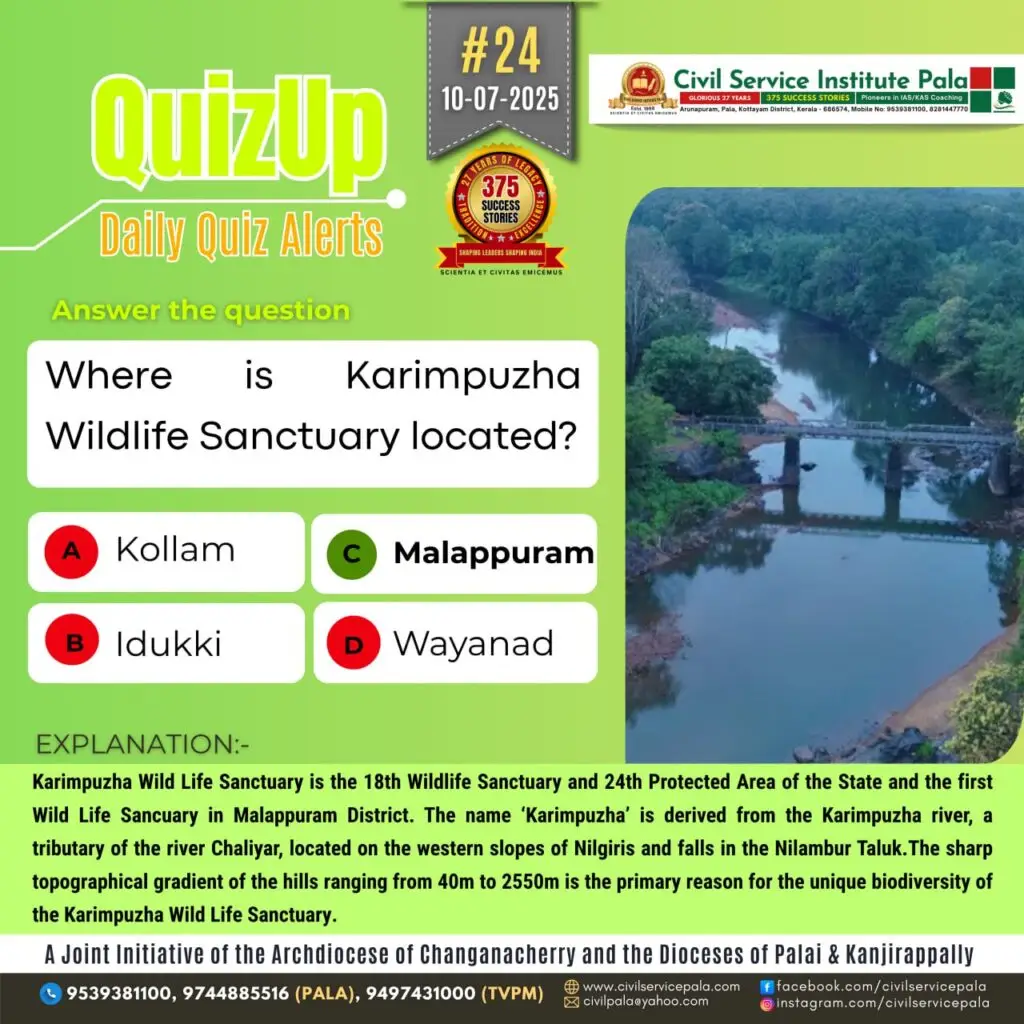
Karimpuzha Wildlife Sanctuary
Karimpuzha Wildlife Sanctuary is one of the most scenic and ecologically significant protected areas in the southern Indian state of Kerala. Officially notified as a wildlife sanctuary in 2020, it is located in the Nilambur region of Malappuram district, in the northern part of Kerala, and forms an important part of the Western Ghats, a global biodiversity hotspot. Spanning an area of approximately 227 square kilometers, Karimpuzha is rich in flora and fauna and plays a crucial role in the conservation of the fragile hill ecosystem of the region.
Geographical Significance
The sanctuary is situated on the eastern slopes of the Nilgiri Hills, adjacent to Tamil Nadu and close to important conservation areas such as:
Silent Valley National Park
Mukurthi National Park
New Amarambalam Reserve Forest
Nilgiri Tahr Wildlife Sanctuary
Karimpuzha lies in the catchment area of the Karimpuzha River, a major tributary of the Chaliyar River, which provides water to the lowland areas of Malappuram and parts of Kozhikode. The sanctuary’s undulating terrain ranges from lowland riverine forests to rugged hilltops, and includes several streams, grasslands, and evergreen forest tracts.
Flora
Being part of the Western Ghats, the sanctuary is richly vegetated with tropical evergreen, semi-evergreen, moist deciduous, and shola forests. Some of the tree species found here include:
Teak (Tectona grandis)
Rosewood (Dalbergia latifolia)
Terminalia species
Bamboo groves
Medicinal plants and endemic orchids
The sanctuary serves as a crucial genetic reservoir of many endemic and threatened plant species.
Fauna
Karimpuzha Wildlife Sanctuary supports a diverse range of wildlife, many of which are endemic or endangered. Key animal species include:
Nilgiri Tahr – the endangered mountain goat found only in the higher elevations of the Western Ghats
Lion-tailed macaque – a rare primate species endemic to the Western Ghats
Elephants, gaur (Indian bison), tigers, leopards, and sloth bears
Sambar deer, wild boar, and Indian giant squirrel
It is also an important avian habitat, supporting over 150 bird species, including the Malabar grey hornbill, great Indian hornbill, black bulbul, and various raptors and migratory birds.
Ecological and Conservation Importance
Karimpuzha Wildlife Sanctuary plays a critical role in maintaining biodiversity connectivity between the forests of Kerala and Tamil Nadu. Its contiguity with other protected areas ensures genetic flow and seasonal migration of large mammals like elephants and tigers, making it a vital part of the Nilgiri Biosphere Reserve.
The sanctuary also contributes significantly to watershed protection, soil conservation, and carbon sequestration. Its rich biodiversity and forest cover regulate the local climate and are integral to sustaining agriculture and livelihoods in the surrounding villages.
Challenges and Human Interface
The sanctuary, like many others in India, faces threats such as:
Human-wildlife conflict, particularly with elephants raiding crops in fringe villages
Encroachments, illegal grazing, and timber smuggling
Climate change impacts, including changes in rainfall and temperature patterns
The need for scientific management and ecotourism control
Efforts are being made to promote community-based conservation through awareness programs and sustainable livelihood options for the local population.
