



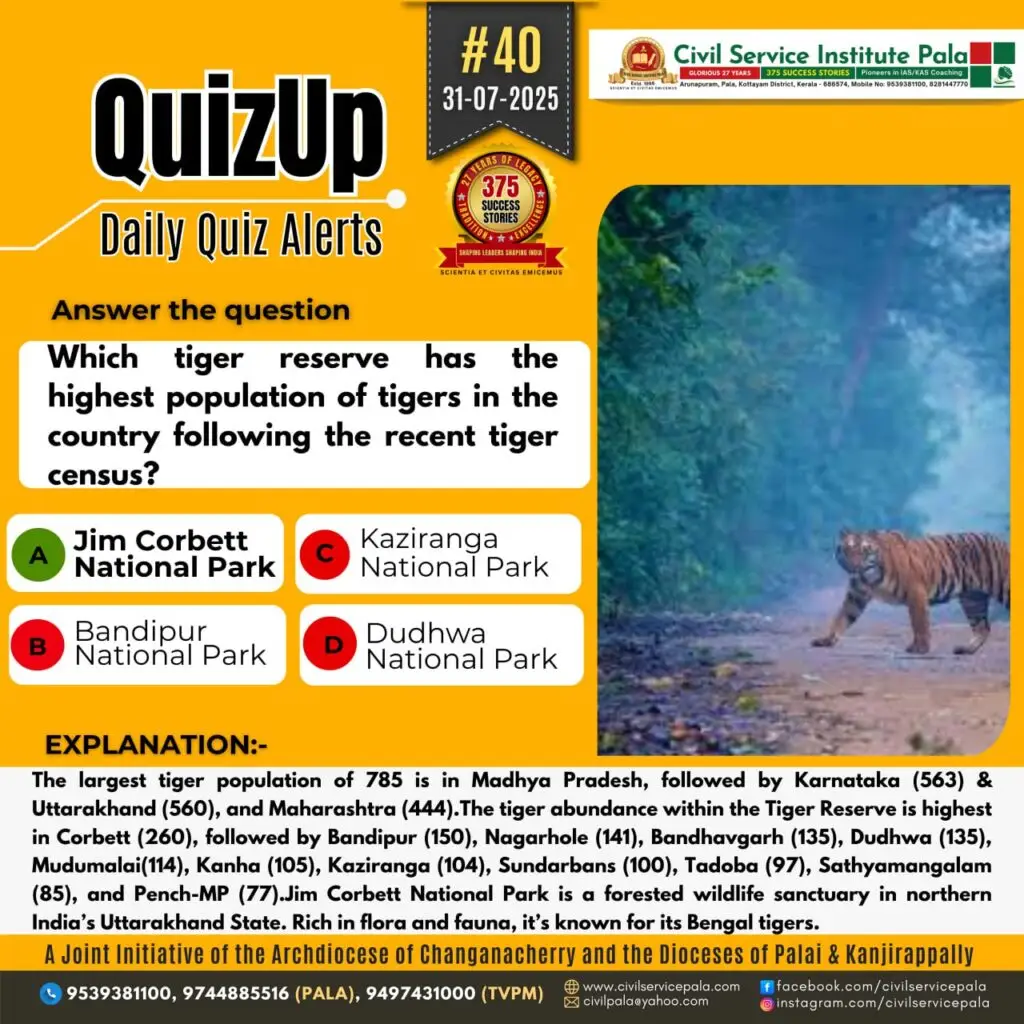
Jim Corbett National Park
Jim Corbett National Park is India’s oldest national park, located in the Nainital district of Uttarakhand. Established in 1936 as Hailey National Park, it was renamed in honor of Jim Corbett, the legendary British hunter-turned-conservationist who played a crucial role in its creation and in the protection of wildlife in India.
Key Features:
Location: Foothills of the Himalayas, spread across 520 square kilometers of hills, riverine belts, marshy depressions, grasslands, and a large lake (Ramganga Reservoir).
Part of Project Tiger: Jim Corbett National Park was the first park to come under Project Tiger in 1973, an ambitious conservation effort to save the endangered Bengal tiger.
Biodiversity Hotspot:
Fauna: Home to the Royal Bengal Tiger, Asian elephants, leopards, sloth bears, gharial crocodiles, and over 600 species of birds.
Flora: Rich in Sal forests, grasslands, and riverine vegetation. It showcases a mix of Himalayan and subtropical flora.
Zones in the Park:
Dhikala Zone – the largest and most popular for tiger sightings.
Bijrani Zone – known for diverse landscapes and good chances of spotting big cats.
Jhirna Zone – open year-round and rich in wildlife.
Dhela Zone – newer, with similar biodiversity as Jhirna.
Durga Devi Zone – ideal for birdwatchers.
Sitabani Buffer Zone – outside the core zone, good for nature walks.
Attractions:
Safari Drives (Jeep/Canter) for wildlife viewing.
Birdwatching – paradise for ornithologists.
Corbett Museum – located at Jim Corbett’s former home in Kaladhungi.
Garjiya Devi Temple – a spiritual site located on the banks of the Kosi River.
Importance:
One of the most celebrated ecotourism destinations in India.
Plays a vital role in wildlife conservation and awareness.
A crucial part of the Terai Arc Landscape, which connects several protected areas.
Jim Corbett National Park offers a mix of adventure, conservation, and natural beauty, making it a must-visit for nature and wildlife enthusiasts.
