



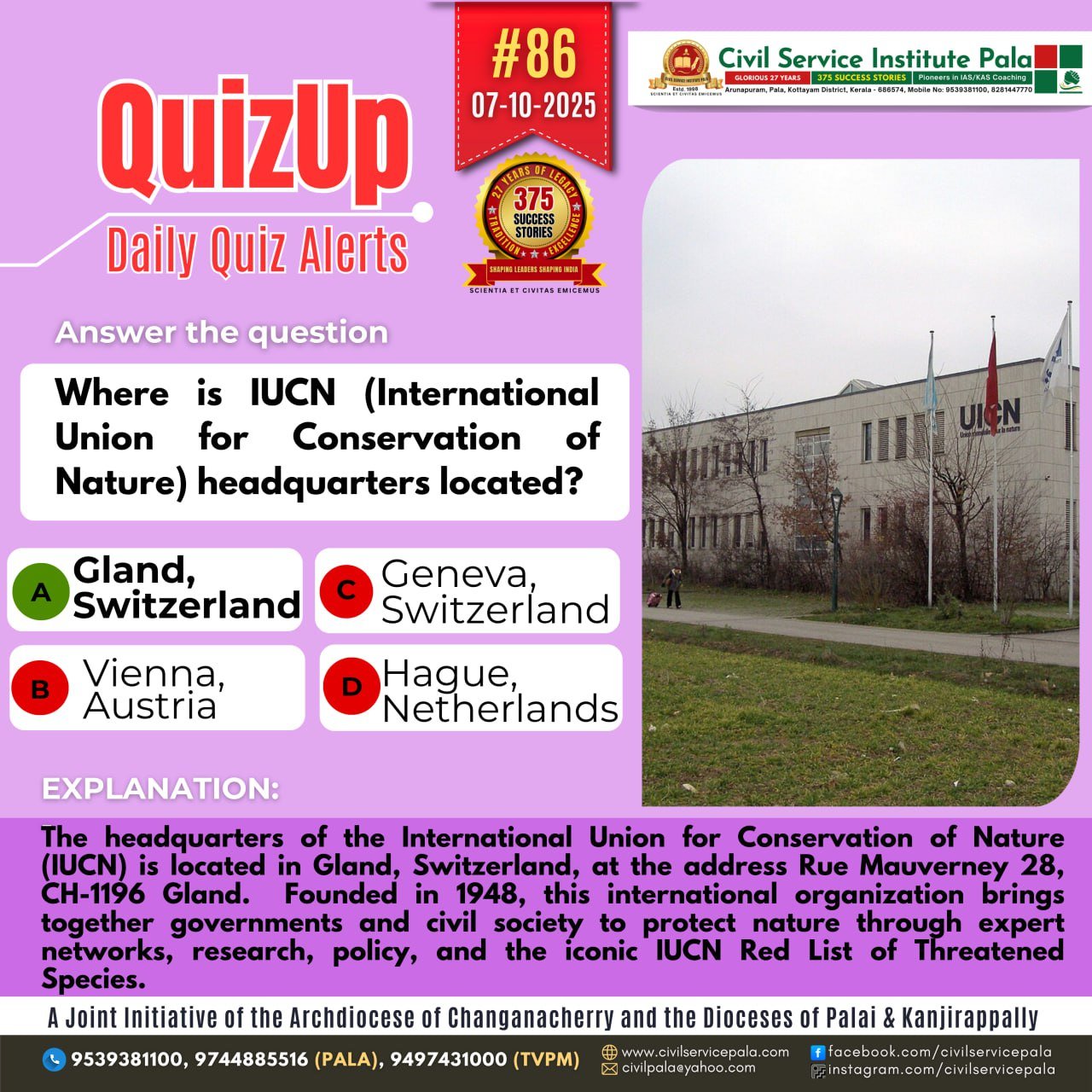
IUCN
What is IUCN?
The IUCN was established in 1948 and is headquartered in Gland, Switzerland. It is a global organization that brings together governments, scientists, NGOs, and experts to work on nature conservation and sustainable use of natural resources. It acts as a bridge between science, policy, and practice in environmental conservation.
Main Objectives
Conservation of biodiversity (plants, animals, and ecosystems). Promoting sustainable development — using natural resources responsibly. Guiding environmental policy at the global and national levels. Supporting research and data collection on ecosystems and species.
Importance of IUCN
1. Red List of Threatened Species The IUCN’s Red List is its most famous contribution. It provides the global status of species, classifying them as Endangered, Vulnerable, Critically Endangered, or Extinct. This helps governments, scientists, and conservationists identify species at risk and prioritize conservation efforts.
2. Influence on Global Policy IUCN provides scientific advice to international agreements such as: Convention on Biological Diversity (CBD) CITES (Convention on International Trade in Endangered Species) Ramsar Convention on Wetlands UN Framework Convention on Climate Change (UNFCCC) Its work shapes global environmental policy and helps nations meet sustainability goals.
3. Protected Areas and World Heritage Sites IUCN helps design and manage protected areas such as national parks and wildlife sanctuaries. It also advises UNESCO on the World Heritage Sites that have natural significance.
4. Research and Environmental Data The organization conducts scientific studies on climate change, forests, oceans, and species conservation. It provides data, reports, and guidelines that support environmental planning and decision-making.
5. Community and Sustainable Development IUCN promotes community-based conservation — empowering local and indigenous communities to manage natural resources sustainably. It balances human development needs with environmental protection.
