



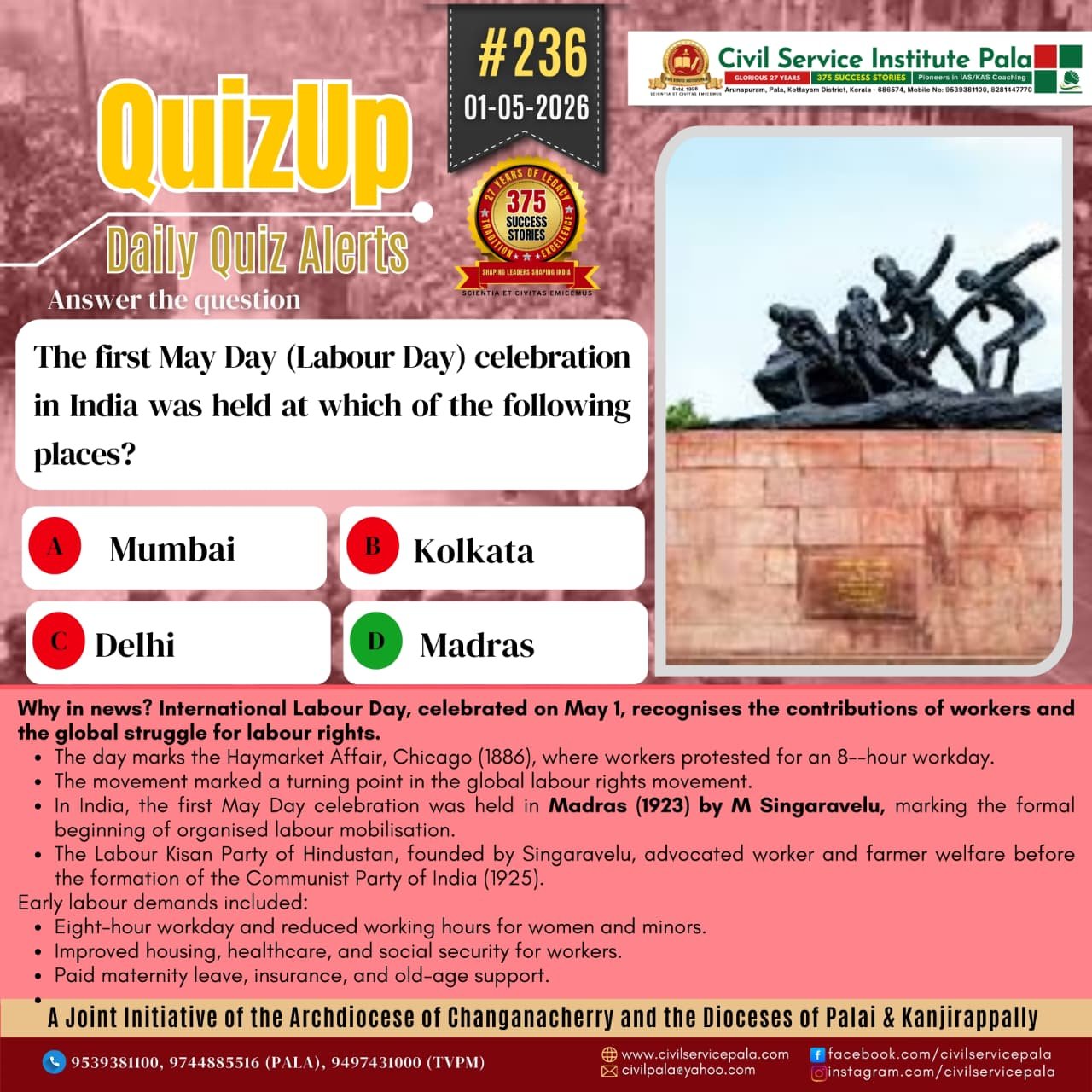
International Labour Day
International Labour Day, celebrated on May 1, recognises the contributions of workers and the global struggle for labour rights.
• The day commemorates the Haymarket Affair in Chicago (1886), where workers protested for an eight-hour workday.
• The movement marked a turning point in the global labour rights movement, leading to improved working conditions worldwide.
Historical Evolution
• The late 19th century saw industrial workers facing long hours, unsafe conditions, and lack of legal protection.
• The demand for an 8-hour workday became the central slogan of labour movements across industrial economies.
• In India, the first May Day celebration was held in Madras (1923) by M Singaravelu, marking the formal beginning of organised labour mobilisation.
Key Developments in India
• The Labour Kisan Party of Hindustan, founded by Singaravelu, advocated worker and farmer welfare before the formation of the Communist Party of India (1925).
• Early labour demands included:
o Eight-hour workday and reduced working hours for women and minors.
o Improved housing, healthcare, and social security for workers.
o Paid maternity leave, insurance, and old-age support.
• The movement also linked labour rights with broader social reforms like universal education and voting rights.
Significance
• Labour Day symbolises the transition from exploitative industrial practices to rights-based labour governance.
• It highlights the role of collective action in securing workplace protections and social justice.
• In India, it reflects the early integration of labour issues with the freedom struggle and socio-economic reforms.
