



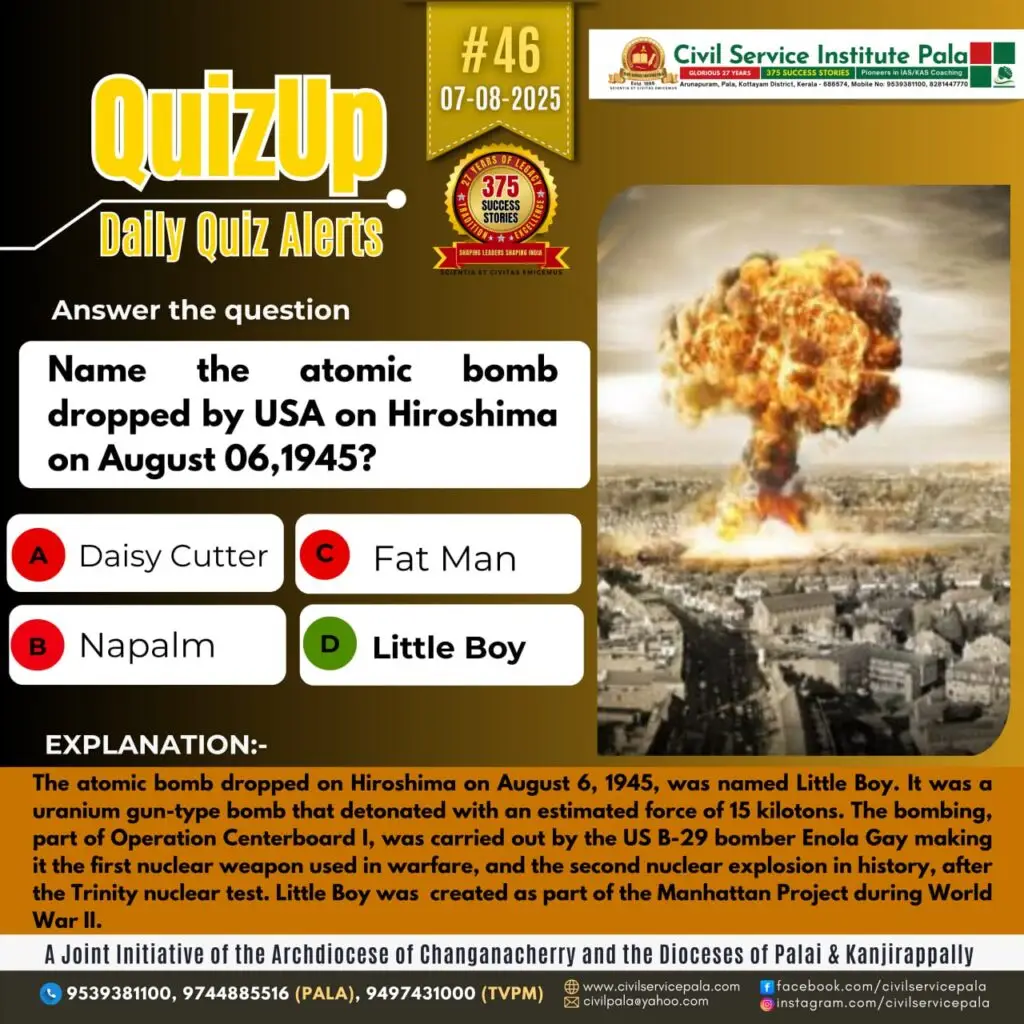
Hiroshima Day
Hiroshima Day is observed every year on August 6 to commemorate the atomic bombing of Hiroshima, Japan, in 1945 during World War II. It is a day to remember the lives lost, reflect on the devastating effects of nuclear warfare, and promote peace and the abolition of nuclear weapons.
Key Facts about Hiroshima Day:
Date: August 6
Year of the bombing: 1945
City affected: Hiroshima, Japan
Bomb dropped: “Little Boy”, a uranium-based atomic bomb
Dropped by: The U.S. military from the bomber Enola Gay
Immediate deaths: Around 70,000–80,000 people
Total deaths (by end of 1945): Estimated over 140,000 due to burns, radiation, and injuries
Follow-up bombing: Nagasaki was bombed on August 9, 1945
Significance of Hiroshima Day:
Tribute: Honors the victims and survivors (called Hibakusha) of the bombing.
Peace advocacy: Reinforces the call for nuclear disarmament and a peaceful world.
Global awareness: Promotes education on the humanitarian consequences of nuclear weapons.
Ceremonies: In Hiroshima Peace Memorial Park, thousands gather each year to pray, offer flowers, and ring the Peace Bell.
Hiroshima Peace Memorial (Genbaku Dome):
A UNESCO World Heritage Site and one of the few buildings left standing near the bomb’s hypocenter.
Serves as a powerful symbol of peace and a reminder of the horrors of nuclear war.
Source: https://www.bbc.com/reel/video/p0lvdqmt/what-happened-at-hiroshima-
