



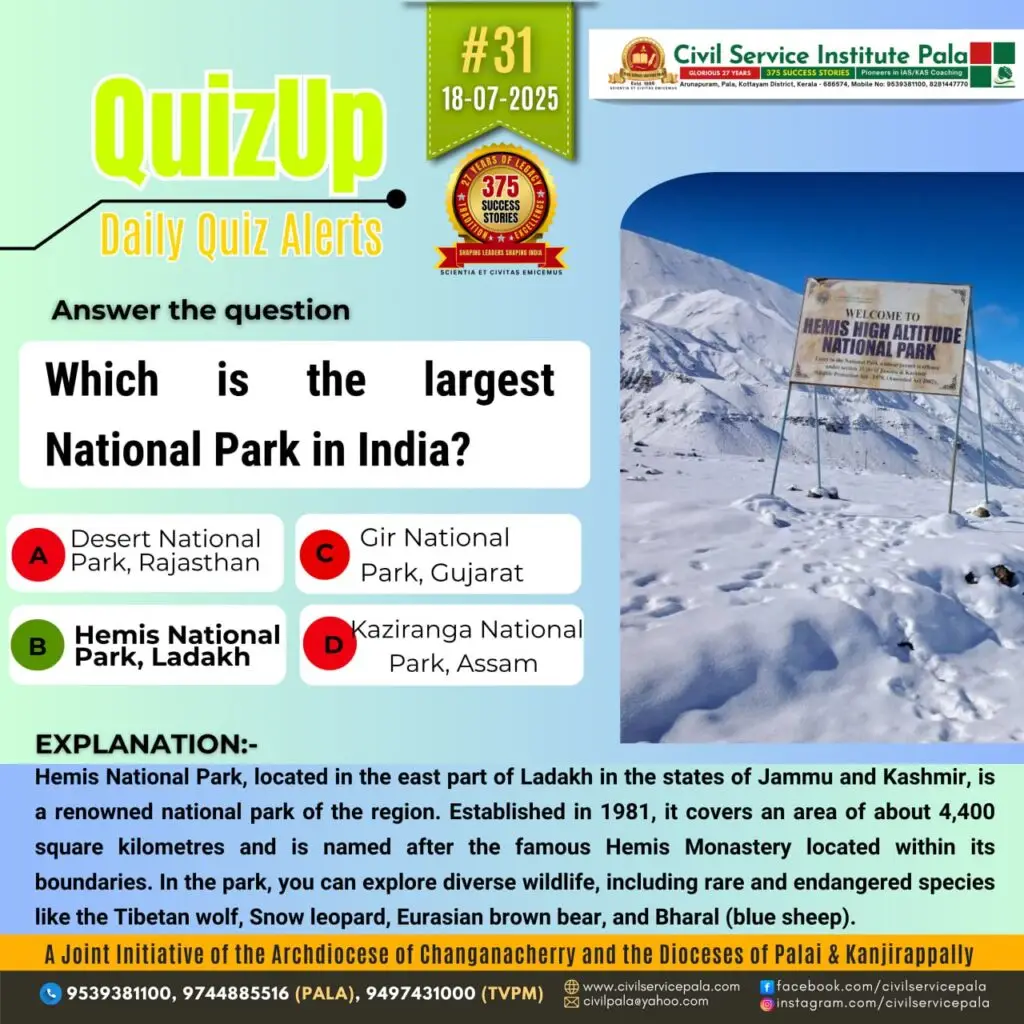
Hemis National Park
Situated about 50 km from Leh in the Leh district of Ladakh, the park spans roughly 4,400 km², making it India’s largest national park and one of South Asia’s largest protected areas. Ranges from roughly 3,000 to 6,000 meters (9,800 to 19,700 ft), requiring good acclimatization due to the high elevation. Originally protected in 1981 and expanded over the next decade to its current size. Known as the “Snow Leopard Capital of the World,” Hemis hosts one of the highest densities of snow leopards in any protected area. Sightings are most likely in winter (Dec–Jan) when the cats descend into valleys.Other Mammals-Notable species include Tibetan wolf, Eurasian brown bear, Ladakhi urial (Shapu), blue sheep (bharal), Asiatic ibex, red fox, Himalayan marmot, Himalayan mouse hare, and more—about 16 mammal species recorded.Over 70 bird species inhabit the park, such as golden eagle, Himalayan griffon vulture, lammergeier (bearded vulture), Tibetan snowcock, robin accentor, streaked rosefinch, red-billed chough, fire‑fronted serin and others.A 400‑year-old Drukpa‑Kagyu Buddhist monastery located within the park, famous for its annual Hemis Festival in early June—marked by masked dances, thangkas, music and rituals.Hemis offers an unmatched blend of pristine Himalayan wilderness, rare wildlife encounters, trekking thrills, and rich Ladakhi culture. It’s one of the most isolated and spiritually evocative landscapes in India, perfect for travelers seeking solitude, adventure, or connection with nature.
Source:https://www.incredibleindia.gov.in/en/ladakh/leh/hemis-national-park
