



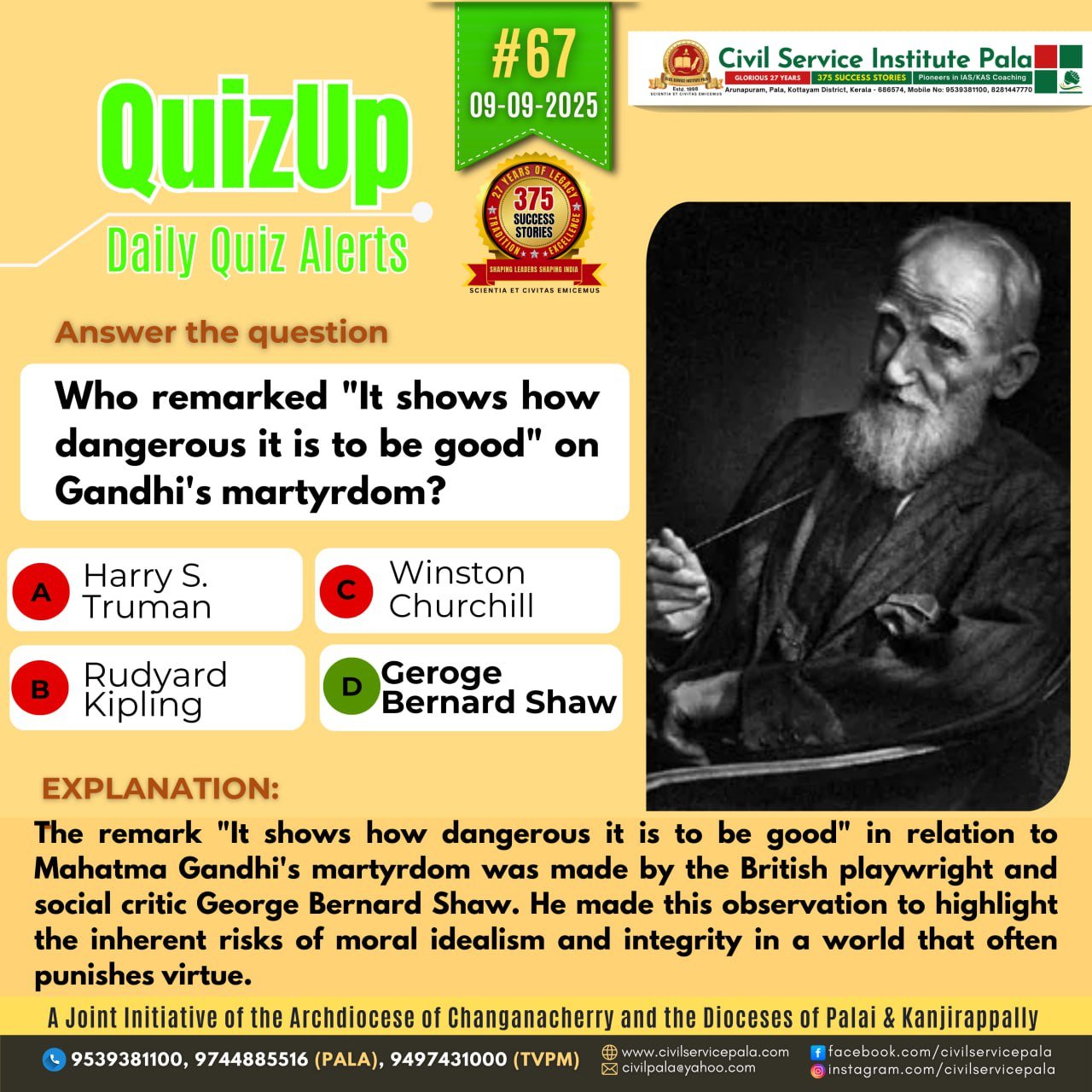
George Bernard Shaw
George Bernard Shaw (1856–1950) Who he was: An Irish playwright, critic, and essayist; one of the most influential literary figures of the late 19th and early 20th century.
Major achievements: Won the Nobel Prize in Literature in 1925 for his work marked by both idealism and humanity. Awarded an Academy Award (Oscar) in 1939 for his screenplay of Pygmalion. He remains the only person to have received both a Nobel Prize and an Oscar.
Contributions Playwriting: Wrote more than 60 plays, blending comedy with social criticism. His plays addressed issues like class inequality, women’s rights, education, religion, marriage, and health care.
Famous works: Pygmalion, Man and Superman, Saint Joan, Arms and the Man, Major Barbara, Candida.
Themes & Style: Used wit, satire, and sharp dialogue to expose social evils. Believed drama should be a vehicle for ideas, not just entertainment. Challenged Victorian norms and promoted progressive ideals.
Social & Political Thought: A member of the Fabian Society, Shaw supported democratic socialism and reforms in health, education, and welfare. Advocated women’s suffrage, vegetarianism, and criticized capitalism. Legacy Shaw reshaped modern drama, turning theatre into a platform for social change and intellectual debate. His play Pygmalion later inspired the musical and film My Fair Lady. Remembered as a brilliant critic, humanist, and reformer who used art to challenge injustice.
