



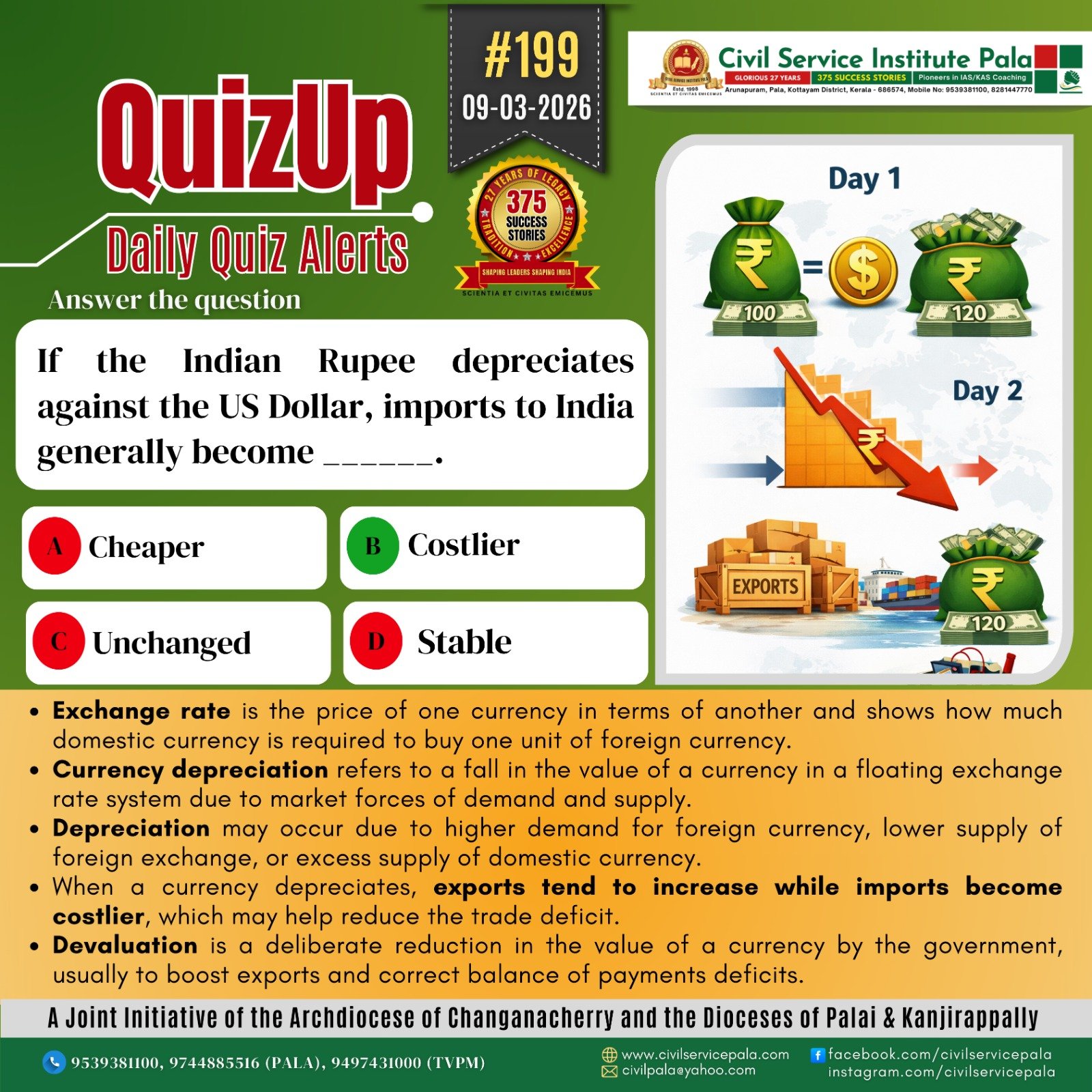
Exchange Rate
Exchange Rate
• Exchange rate is the price of one currency in terms of another.
• It shows how much domestic currency is needed to buy one unit of foreign currency.
• Example: ₹100 = $1 means ₹100 is required to obtain one U.S. dollar.
Meaning of Currency Depreciation
• Depreciation refers to a fall in the value of a currency in a floating exchange rate system.
• It occurs due to market forces of demand and supply for foreign exchange.
• It is not a deliberate government decision.
Example:
• Day 1: ₹100 = $1
• Day 2: ₹120 = $1
• More rupees are needed to buy one dollar → Rupee has depreciated.
Conditions Causing Depreciation
Currency depreciation may occur due to:
• Higher demand for foreign currency (more imports).
• Lower supply of foreign currency.
• Excess supply of domestic currency in the forex market.
• Reduced demand for domestic currency internationally.
ffect of Depreciation
• Exports increase because domestic goods become cheaper for foreigners.
• Imports decrease because foreign goods become costlier.
• It can help reduce trade deficit.
Illustration:
• If wheat costs ₹50/kg
• At ₹100 = $1 → $1 buys 2 kg rice
• At ₹150 = $1 → $1 buys 3 kg rice
→ Foreign buyers can purchase more goods → exports rise.
Devaluation
• Devaluation means a deliberate reduction in the external value of a country’s currency by the government.
• Example: ₹50 = $1 → ₹75 = $1 due to policy decision.
• It is usually done to increase exports and correct balance of payments deficits.
Revaluation
• Revaluation is the deliberate increase in the external value of a currency.
• Example: ₹50 = $1 → ₹25 = $1.
• It is rarely used and may be done to reduce trade surplus.
Key Distinction
• Depreciation/Appreciation: occur automatically due to market forces.
• Devaluation/Revaluation: occur due to government or monetary authority decisions.
