



Evidence of Music in Vedic Literature
Evidence of Music in Vedic Literature
Why is it Important?
Vedic literature provides the earliest literary evidence for the origin and development of Indian music.
The foundations of Indian classical music, musical notes, musical instruments, music education, and ritual singing can all be traced to the Vedic period.
The evolution from sacred Vedic chanting to Gandharva (classical) and later Indian music traditions is an important theme in Indian cultural history.
Literary Evidence of Music in Vedic Texts
Vedas and Music
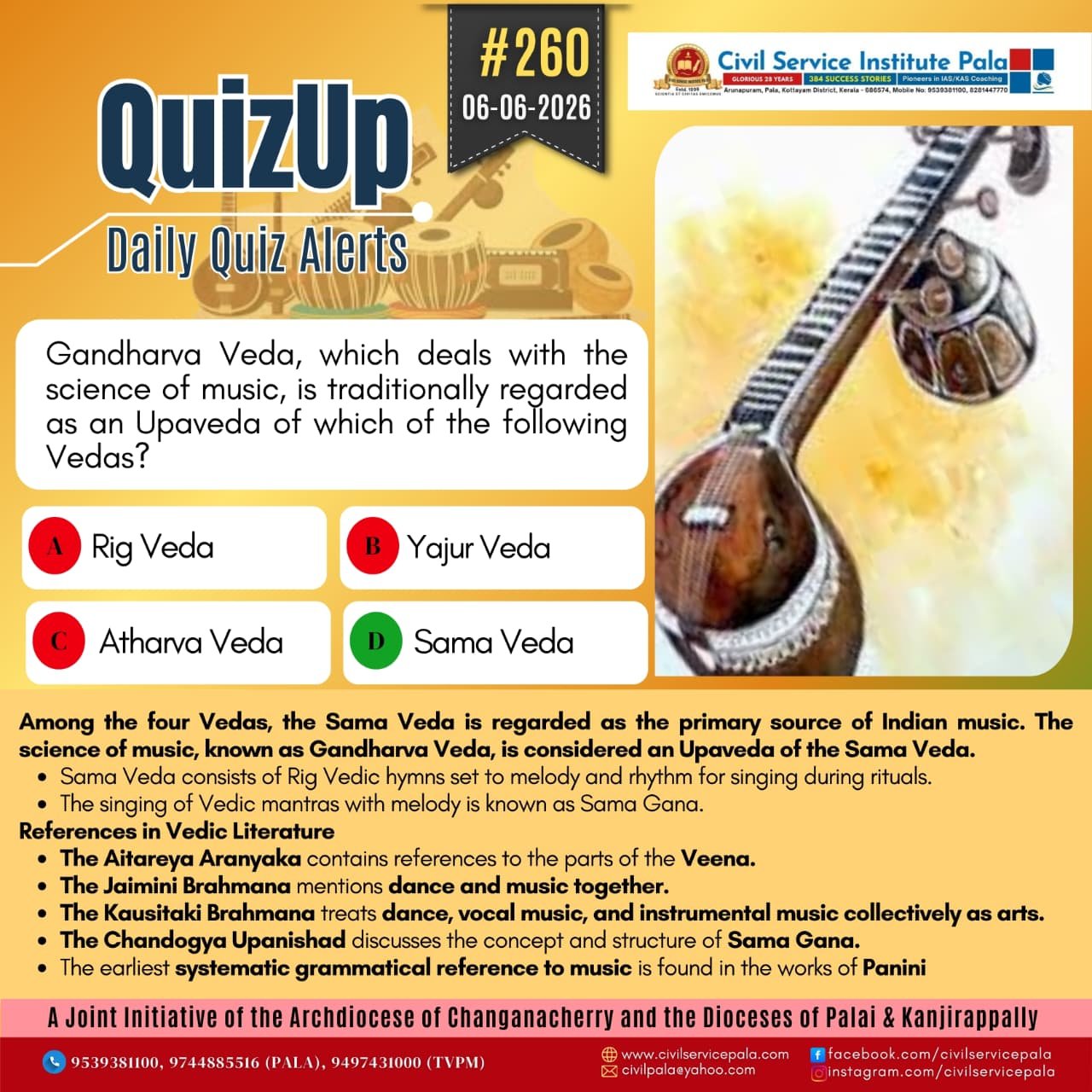
Among the four Vedas, the Sama Veda is regarded as the primary source of Indian music.
Sama Veda consists of Rig Vedic hymns set to melody and rhythm for singing during rituals.
The singing of Vedic mantras with melody is known as Sama Gana.
The science of music, known as Gandharva Veda, is considered an Upaveda of the Sama Veda.
References in Vedic Literature
The Aitareya Aranyaka contains references to the parts of the Veena.
The Jaimini Brahmana mentions dance and music together.
The Kausitaki Brahmana treats dance, vocal music, and instrumental music collectively as arts.
The Chandogya Upanishad discusses the concept and structure of Sama Gana.
The earliest systematic grammatical reference to music is found in the works of Panini.
The first major exposition of music theory is found in the Natyashastra attributed to Bharata Muni.
Development of Musical Notes
The earliest Vedic music used three notes: Udatta, Anudatta, and Svarita.
These three notes gradually evolved into seven Vedic notes.
The seven-note system later developed into the Laukik (Gandharva) musical tradition, which formed the basis of classical Indian music.
Music in Vedic Society
Religious Function
Music played a central role in yajnas and religious ceremonies.
Vedic hymns were believed to possess spiritual and ritual power and were therefore sung according to strict rules.
Specially trained priests performed ritual singing during sacrifices and ceremonies.
Social Function
Music was also used during social gatherings, celebrations, and public ceremonies.
Folk songs and heroic ballads such as Gatha, Narashansi, and Raibhya were popular.
Singers accompanying themselves on the Veena were known as Gathagayak or Veenagathin.
