



Ecosystem
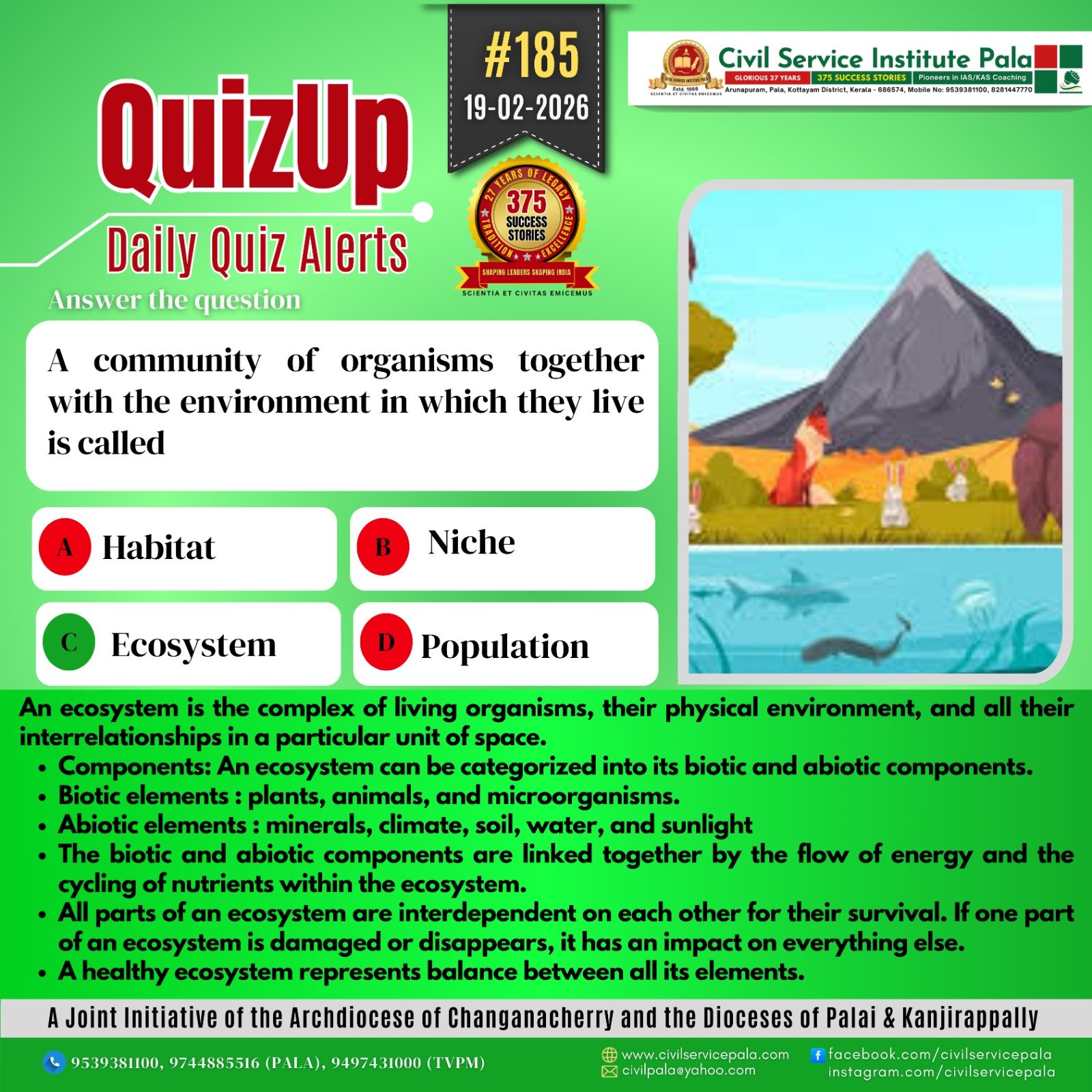
An ecosystem is the complex of living organisms, their physical environment, and all their interrelationships in a particular unit of space.
Components of an ecosystem : An ecosystem can be categorized into its biotic and abiotic constituents.
Biotic elements : plants, animals, and microorganisms.
Abiotic elements : minerals, climate, soil, water and sunlight.
The biotic and abiotic components are linked together by the flow of energy and the cycling of nutrients within the ecosystem.
All parts of an ecosystem are interdependent on each other for their survival. If one part of an ecosystem is damaged or disappears, it has an impact on everything else.
A healthy ecosystem represents balance between all its elements.
Biotic components
• Biotic components of ecosystems consist of living organisms classified by function into producers and consumers.
• Producers, mainly green plants, algae, and certain bacteria, are autotrophs that create food via photosynthesis using sunlight, carbon dioxide, and water.
• Consumers are heterotrophs divided into :
• macro consumers : includes primary herbivores like cows, secondary carnivores like wolves, tertiary carnivores like lions, and omnivores like humans
• micro consumers : consist of decomposers such as bacteria and fungi that break down dead matter into reusable nutrients.
Energy flow
Energy flows unidirectionally from producers to higher consumers, with significant loss as heat at each step, limiting ecosystems to typically four or five levels. This one-way progression ensures energy decreases upward, sustaining fewer organisms at top levels.
Nutrient cycling
Nutrient cycling recycles essential elements like carbon and nitrogen between living organisms and the physical environment through uptake, consumption, decomposition, and return to soil. This balanced process maintains ecosystem stability and supports continuous life by making nutrients available for producers.
