



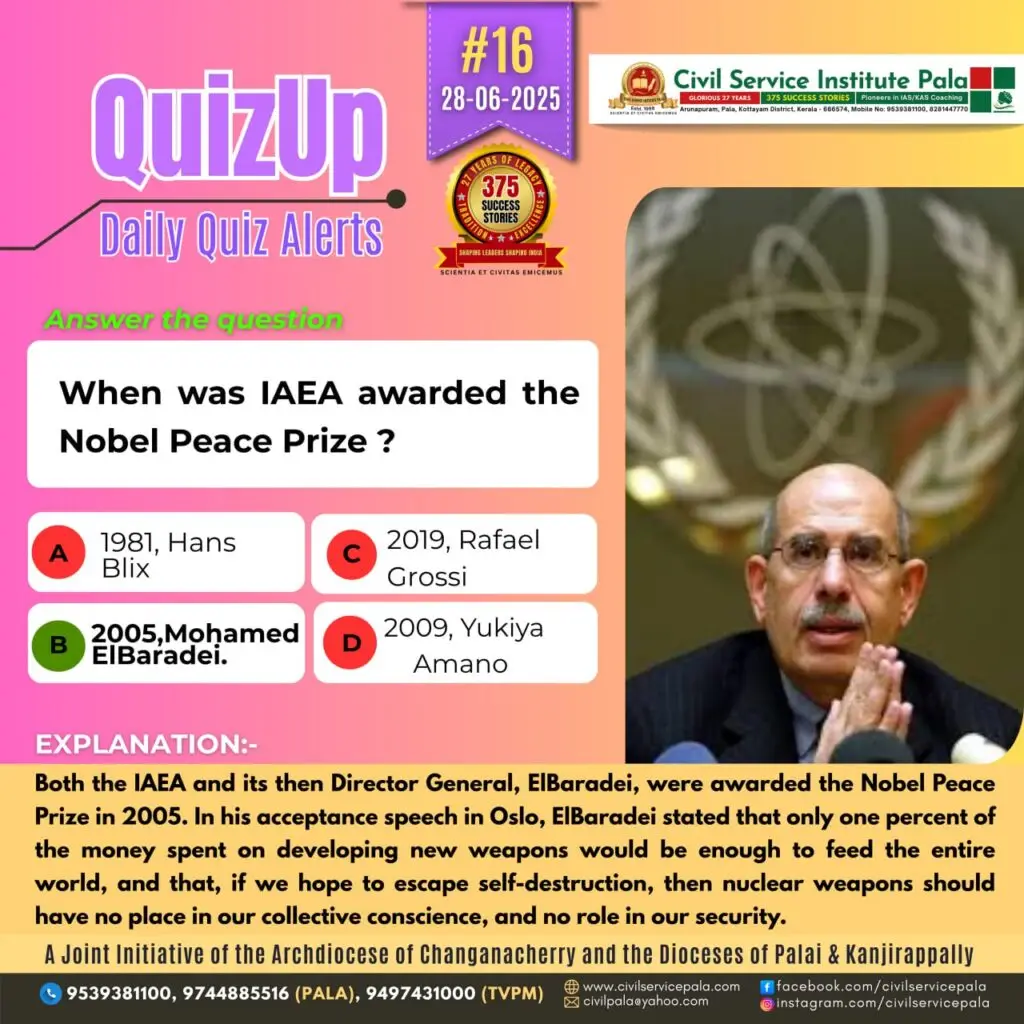
Director General Mohamed ElBaradei
The International Atomic Energy Agency (IAEA), along with its then Director General Mohamed ElBaradei, was awarded the Nobel Peace Prize in 2005. The Nobel Committee recognized their efforts to prevent nuclear energy from being used for military purposes and to ensure that nuclear energy is used safely and peacefully.
Why They Were Awarded
The Nobel citation specifically highlighted:
“their efforts to prevent nuclear energy from being used for military purposes and to ensure that nuclear energy for peaceful purposes is used in the safest possible way.”
This award came at a time of rising global concern over nuclear proliferation, particularly regarding Iran’s nuclear program and the fallout from the 2003 Iraq War, which was largely justified by incorrect claims of weapons of mass destruction. The IAEA, under ElBaradei’s leadership, had insisted on evidence-based inspections and diplomatic engagement instead of military intervention. The Nobel Committee viewed this as a crucial contribution to global peace.
Key Contributions Leading to the Award
Promotion of Nuclear Non-Proliferation:
The IAEA worked to uphold the Nuclear Non-Proliferation Treaty (NPT) by conducting inspections and verifying that nuclear materials were not being diverted for weapons development.
Diplomatic Approach:
ElBaradei and the IAEA emphasized diplomacy over confrontation, especially in tense situations like Iran and North Korea. This made the agency a voice of balance in international affairs.
Transparency and Integrity:
The IAEA maintained technical objectivity in politically sensitive areas, such as debunking claims of active nuclear weapons programs in Iraq, which were later proven false.
Global Nuclear Safety:
Beyond security, the IAEA’s efforts to enhance nuclear safety, medical uses of radiation, and peaceful applications of atomic energy contributed to development, especially in the Global South.
Significance of the Award
The Nobel Peace Prize elevated the IAEA’s profile on the global stage, reinforcing the importance of science-based, multilateral oversight in nuclear affairs. It also validated ElBaradei’s leadership style—calm, principled, and firm in upholding international law.
The award sent a clear message: international security is best preserved through cooperation, transparency, and rule-based global institutions—not unilateral action or force.
Source – https://www.un.org/en/about-us/nobel-peace-prize/iaea-2005
