



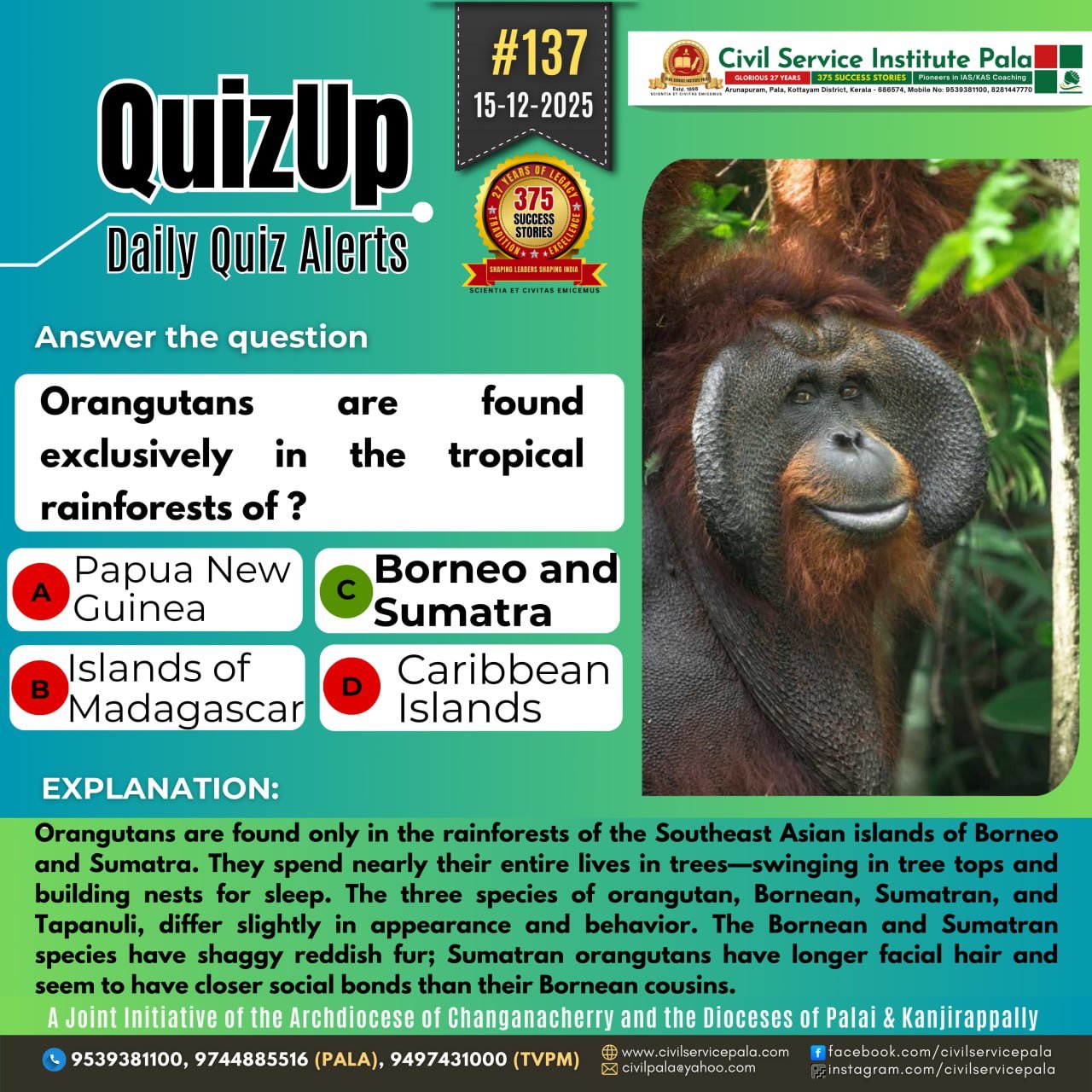
Borneo and Sumatra
Orangutans are large, intelligent great apes native to the tropical rainforests of Southeast Asia, known for their arboreal lifestyle and close genetic relationship with humans.
Classification & Species
Orangutans belong to the genus Pongo and consist of three species:
Bornean orangutan (Pongo pygmaeus) – Borneo
Sumatran orangutan (Pongo abelii) – Sumatra
Tapanuli orangutan (Pongo tapanuliensis) – Southern Sumatra (Batang Toru forests)
Physical Characteristics
Largest arboreal mammals on Earth
Long reddish-brown hair and very long arms (span up to 2.3 m)
Adult males may develop large cheek pads (flanges)
Highly adapted for tree life with strong grasping hands and feet
Habitat & Behaviour
Inhabit lowland and montane tropical rainforests
Mostly solitary, unlike other great apes
Excellent climbers; spend most of their lives in trees
Build a new nest every night for sleeping
Diet
Primarily frugivorous (fruits form the bulk of diet)
Also eat leaves, bark, flowers, insects, and occasionally small animals
Intelligence & Social Traits
Highly intelligent; use tools to extract food
Capable of learning and cultural transmission of behaviours
Known for complex problem-solving skills
Reproduction
Very slow reproductive rate
Gestation period: ~8.5 months
Females give birth once every 7–9 years, the longest inter-birth interval among mammals
Conservation Status
IUCN Status: All three species are Critically Endangered
CITES: Appendix I (highest level of protection)
Major Threats
Deforestation due to palm oil plantations, logging, and mining
Habitat fragmentation
Illegal wildlife trade and poaching
Human–wildlife conflict
Conservation Importance
Act as keystone species, helping regenerate forests through seed dispersal
Indicator species for tropical rainforest health
Conservation Efforts
Protected areas and wildlife corridors
Rehabilitation and reintroduction programmes
Sustainable palm oil initiatives
Community-based conservation and awareness
Conclusion
Orangutans are often called the “gardeners of the forest” due to their role in maintaining rainforest ecosystems. Their survival is closely linked to forest conservation and sustainable land-use practices in Southeast Asia.
