



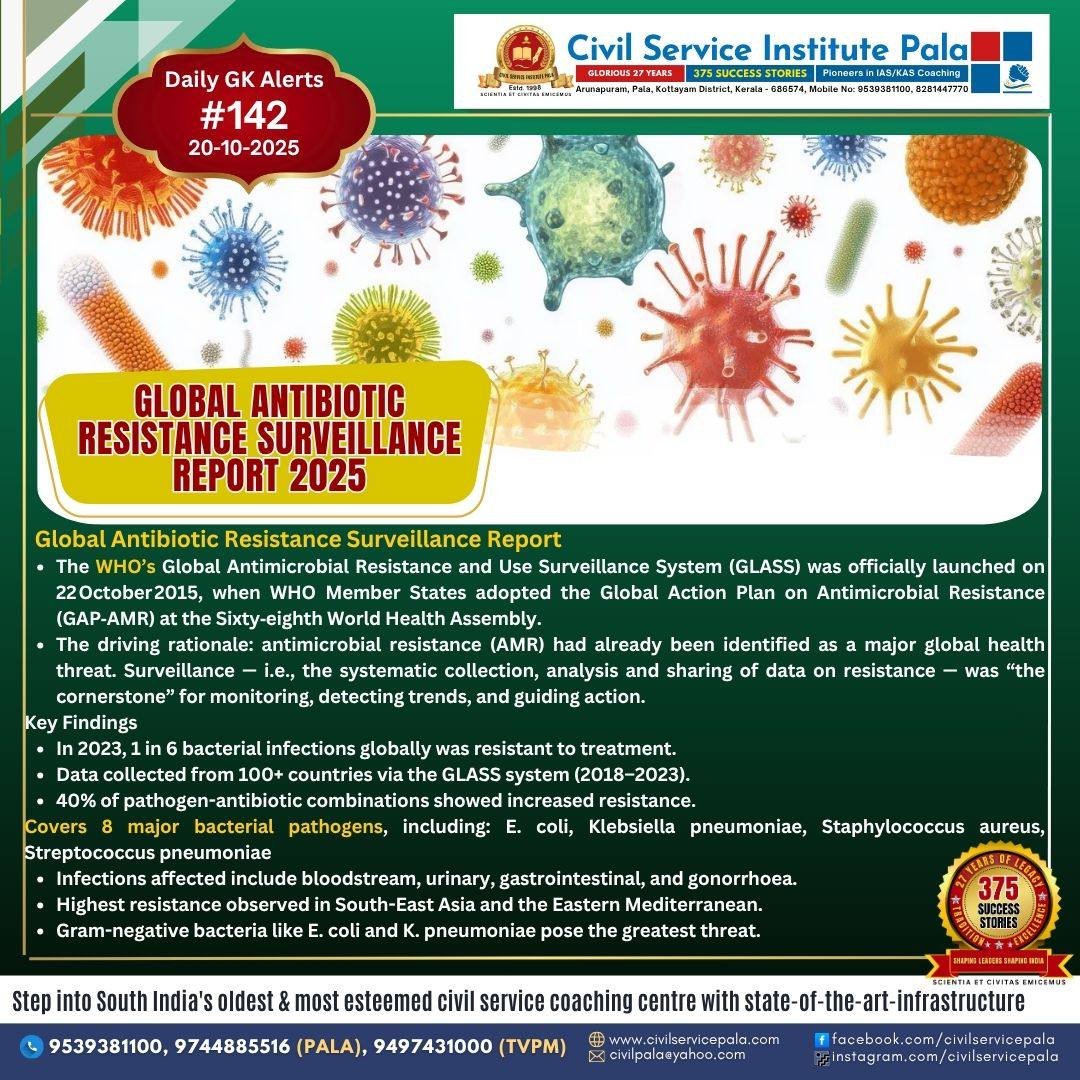
WHO Global Antibiotic Resistance Surveillance Report 2025
The WHO’s Global Antimicrobial Resistance and Use Surveillance System (GLASS) was officially launched on 22 October 2015, when WHO Member States adopted the Global Action Plan on Antimicrobial Resistance (GAP‑AMR) at the Sixty‑eighth World Health Assembly.
The driving rationale:
Antimicrobial resistance (AMR) had already been identified as a major global health threat. Surveillance — i.e., the systematic collection, analysis and sharing of data on resistance — was “the cornerstone” for monitoring, detecting trends, and guiding action. Prior to GLASS, there had been some regional AMR surveillance networks (for example in Europe, Latin America) and a WHO global report in 2014 (“Antimicrobial Resistance: Global Report on Surveillance”). But there was no standardized global system with shared methods and national contributions for common bacterial pathogens. The initial focus of GLASS was on human health, common bacterial pathogens in clinical settings, and setting up standardized methods. Over time, modules were added (such as for antimicrobial consumption, One‑Health surveillance, fungal infections).
Key highlights of the 2025 report
The WHO’s Global Antibiotic Resistance Surveillance Report 2025 reveals that in 2023, one in six bacterial infections was antibiotic-resistant.
Global Burden:
In 2023, 1 in 6 bacterial infections worldwide was resistant to antibiotics, highlighting a growing public health crisis.
Data Source:
Based on surveillance from over 100 countries through the Global Antimicrobial Resistance and Use Surveillance System (GLASS).
Rising Resistance: Between 2018 and 2023, 40% of pathogen-antibiotic combinations showed increased resistance.
Major Pathogens Covered:
E. coli Klebsiella pneumonias Staphylococcus aureus Streptococcus pneumoniae Neisseria gonorrhoeae Salmonella, Shigella, and Acinetobacter spp.
Infection Types: Bloodstream, urinary tract, gastrointestinal infections, and gonorrhoea.
Regions Most Affected:
South-East Asia and Eastern Mediterranean regions had the highest resistance rates — up to 1 in 3 infections resistant. Africa: ~1 in 5 resistant; Americas: ~1 in 7.
Key Concern:
Gram-negative bacteria (e.g., E. coli, K. pneumoniae) show high resistance to both first-line and last-resort antibiotics.
Challenges:
Incomplete surveillance — nearly half of countries didn’t report data. Resistance is rising fastest where diagnostic and treatment infrastructure is weakest.
Recommendations:
Strengthen lab surveillance and data reporting. Promote responsible antibiotic use (stewardship). Improve access to diagnostics, vaccines, and effective medicines. Apply a One Health approach (integrating human, animal, and environmental health).
