



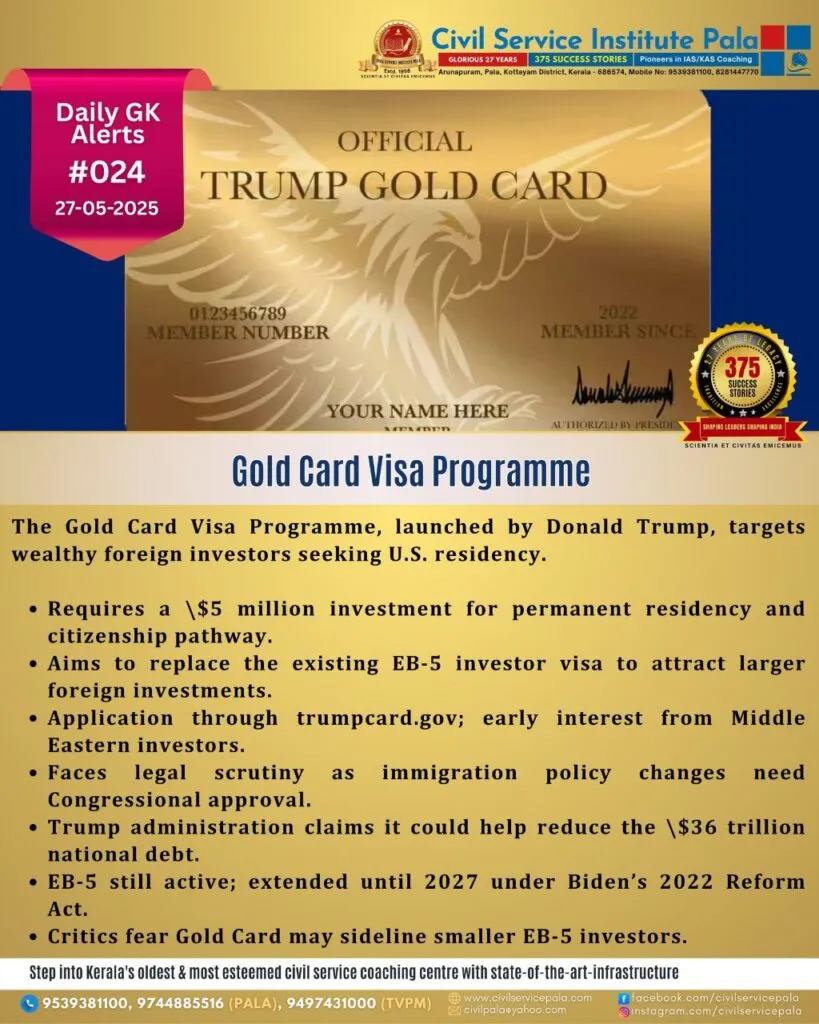
Trump’s Gold Card Visa Programme
Trump’s Gold Card Visa Programme
President Donald Trump has introduced the ‘Gold Card’ visa programme, a new immigration initiative designed to attract wealthy foreign nationals to the United States. Unveiled during the ‘Building the Future’ event in Washington, D.C., the programme enables applicants to obtain permanent residency—and eventually citizenship—by investing \$5 million in the U.S. economy.
Purpose and Economic Implications
The Gold Card is intended to replace the existing EB-5 investor visa scheme. It focuses on stimulating economic growth through substantial foreign investments. Trump’s team claims that this high-investment requirement will significantly boost federal revenue and help reduce the national debt, which currently exceeds \$36 trillion.
Legal Challenges and Comparison with EB-5
Despite the excitement, the programme has sparked legal debate. Changes to U.S. immigration law generally require Congressional approval, which raises questions about the legality of unilaterally replacing the EB-5 programme. The EB-5, launched in 1990, grants green cards to foreign investors who create at least 10 full-time U.S. jobs. The Gold Card’s higher investment threshold could potentially exclude smaller investors and create conflict with the still-active EB-5, which remains authorized until 2027 under the EB-5 Reform and Integrity Act signed by President Joe Biden.
The Gold Card visa marks a significant shift in U.S. immigration policy, signaling a preference for high-net-worth individuals as key drivers of economic development. While the initiative promises financial benefits, it also raises legal and ethical questions about accessibility, equity, and legislative oversight. Its long-term success will depend on political backing, judicial scrutiny, and global investor confidence.
