



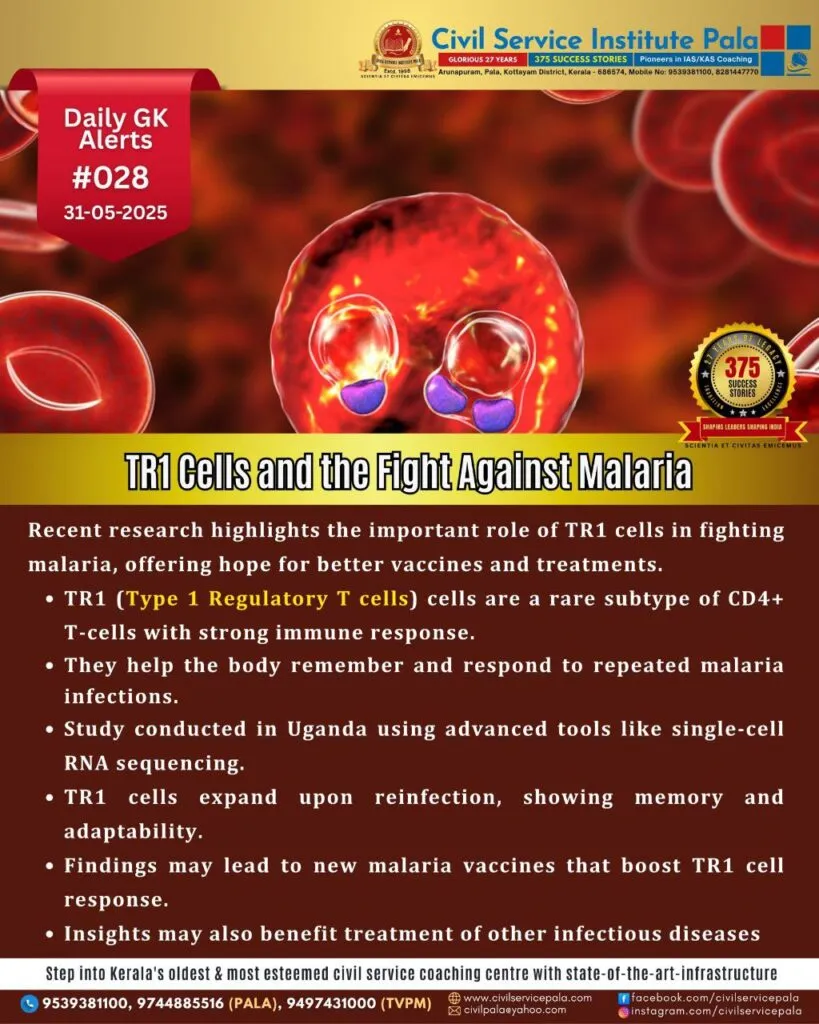
TR1 Cells and the Fight Against Malaria
The human body has a powerful defence system called the immune system. It protects us from infections caused by viruses, bacteria, and parasites. One of the deadliest infections, especially in Africa, is malaria. Recent research published in April 2025 has discovered the important role of a special immune cell called TR1 in fighting malaria. This finding can help scientists create better vaccines and treatments for malaria and other diseases.
Understanding the Immune System
The immune system has two main parts: innate immunity and adaptive immunity. Innate immunity acts as the first line of defence. It works quickly but is not specific to one type of infection. Adaptive immunity is slower to respond but creates a targeted attack against specific germs. It also remembers past infections so the body can respond faster in the future.
What Are CD4+ T-Cells?
Within the immune system, there are special white blood cells called CD4+ T-cells. These are part of the adaptive immune system and help activate other immune cells, including B-cells which make antibodies. CD4+ T-cells have different subtypes, one of which is TR1 cells (Type 1 Regulatory T cells). Although they are few in number, recent research shows they are very important in fighting malaria.
Research Conducted in Uganda
The study was done in Uganda, a country where malaria is common. Researchers studied children who had been infected with malaria multiple times. They found that TR1 cells were playing a strong role in controlling the infection caused by the parasite Plasmodium falciparum, which is responsible for most malaria cases.
New Scientific Methods
Scientists used single-cell RNA sequencing, a high-tech method that allowed them to look at individual TR1 cells closely. This helped them understand how these cells behaved during and after infection. They also used genetic barcoding to track the activity of TR1 cells over time. This gave a better understanding of how TR1 cells grow, remember infections, and respond to future ones.
Key Findings of the Study
The study found that TR1 cells are very active during malaria infections. Even though they are a small group among CD4+ T-cells, they expand in number when malaria returns. This shows that TR1 cells are not only specific to malaria but also capable of forming long-term memory. This makes them different from other immune cells and potentially more powerful in handling repeated infections.
Importance for Vaccine Development
These findings can help scientists develop better vaccines. If vaccines can be designed to activate TR1 cells, they may provide stronger and longer-lasting protection against malaria. Instead of directly killing the parasite, such vaccines could boost the body’s natural immune memory.
Wider Impact on Infectious Diseases
The discovery about TR1 cells is not only useful for malaria. It could help in understanding how the immune system reacts to other infectious diseases as well. This might lead to new treatments that help the body manage infections more effectively.
The discovery of the role of TR1 cells in malaria is a big step forward in immunology. These cells may hold the key to creating stronger and smarter vaccines. As research continues, we may find new ways to protect people from malaria and other deadly diseases by understanding and using the power of TR1 cells.
