



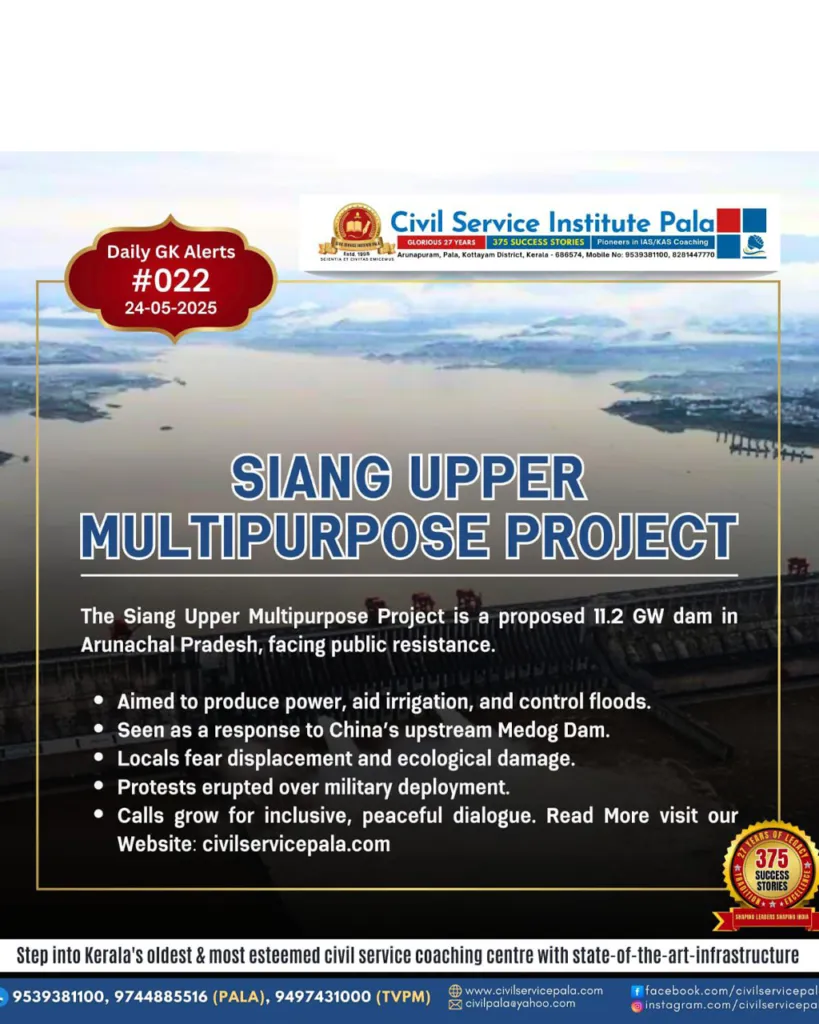
The Siang Upper Multipurpose Project
The Siang Upper Multipurpose Project (SUMP) in Arunachal Pradesh aims to construct an 11.2 GW hydroelectric dam on the Siang River, which is part of the Brahmaputra basin. Promoted as a major contributor to India’s energy security, the project also promises benefits such as flood control and irrigation. However, the scale of the dam has triggered strong opposition from local communities and student organisations.
Government’s Justification
The Arunachal Pradesh government, backed by the Centre, views the project as critical for national security. With China constructing the Medog Dam upstream, Chief Minister Pema Khandu has emphasised the need to safeguard India’s water interests. Government efforts to hold consultations in the Siang Valley aim to build local support for the project, framing it as a strategic asset.
Local Resistance and Tensions
Despite official assurances, residents of over 27 villages fear displacement and loss of livelihoods. Tensions have escalated with the deployment of central forces in the region, particularly as schools and public spaces are used for military accommodation. Local student bodies have strongly opposed the militarisation, urging peaceful dialogue over coercion.
Environmental and Social Concerns
The project poses significant environmental risks, including disruption of water flow, damage to biodiversity, and threats to fisheries. Additionally, the social structure of local communities is under stress, with fears of irreversible changes to their way of life.
While the SUMP may address energy and security goals, it raises serious environmental and social concerns. A balanced approach, including inclusive dialogue and transparent planning, is essential to ensure sustainable development that respects both national interests and local livelihoods.
