



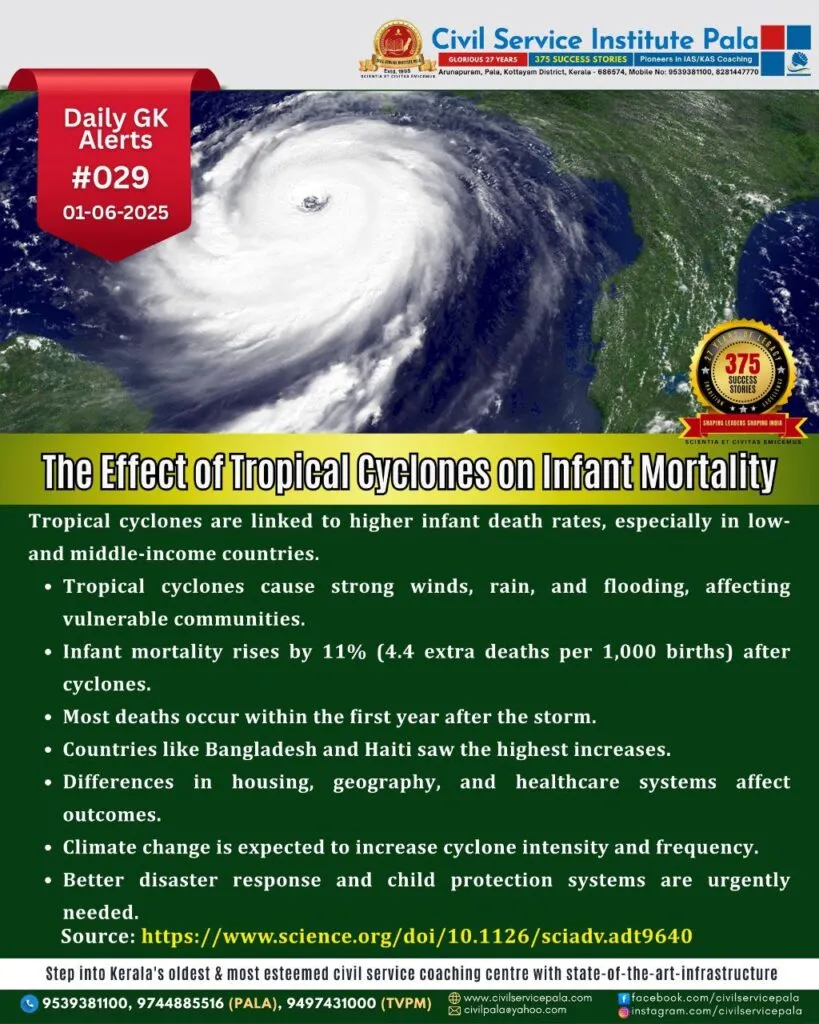
The Effect of Tropical Cyclones on Infant Mortality
The Effect of Tropical Cyclones on Infant Mortality
Recent research has shown a serious link between tropical cyclones and higher infant death rates in low- and middle-income countries. Infants exposed to such storms during their first year of life are at greater risk of dying. This raises the need for better disaster planning and protection for children, especially as climate change increases the number and strength of such storms.
What Are Tropical Cyclones?
Tropical cyclones are powerful storms that form over warm ocean waters. They bring strong winds, heavy rain, and low air pressure. These storms are known as hurricanes or typhoons, depending on the region. They need special weather conditions to form, including warm water and certain levels of humidity and temperature.
How Cyclones Affect Infant Mortality
The study found an average increase of 11% in infant deaths after a cyclone, which equals about 4.4 extra deaths per 1,000 births. Most of these deaths happen within the first year after the storm. After two years, the death rates return to normal.
Differences Between Countries
The research covered seven countries, including Bangladesh, Haiti, and the Philippines. In some countries like Bangladesh and Haiti, deaths increased by over 10 per 1,000 births, while others had smaller effects. Factors like poor housing and weak health care systems may explain these differences.
As climate change leads to stronger and more frequent cyclones, infants in poorer countries face growing dangers. To save lives, we need stronger disaster response systems and special care for infants and families during and after such disasters.
