



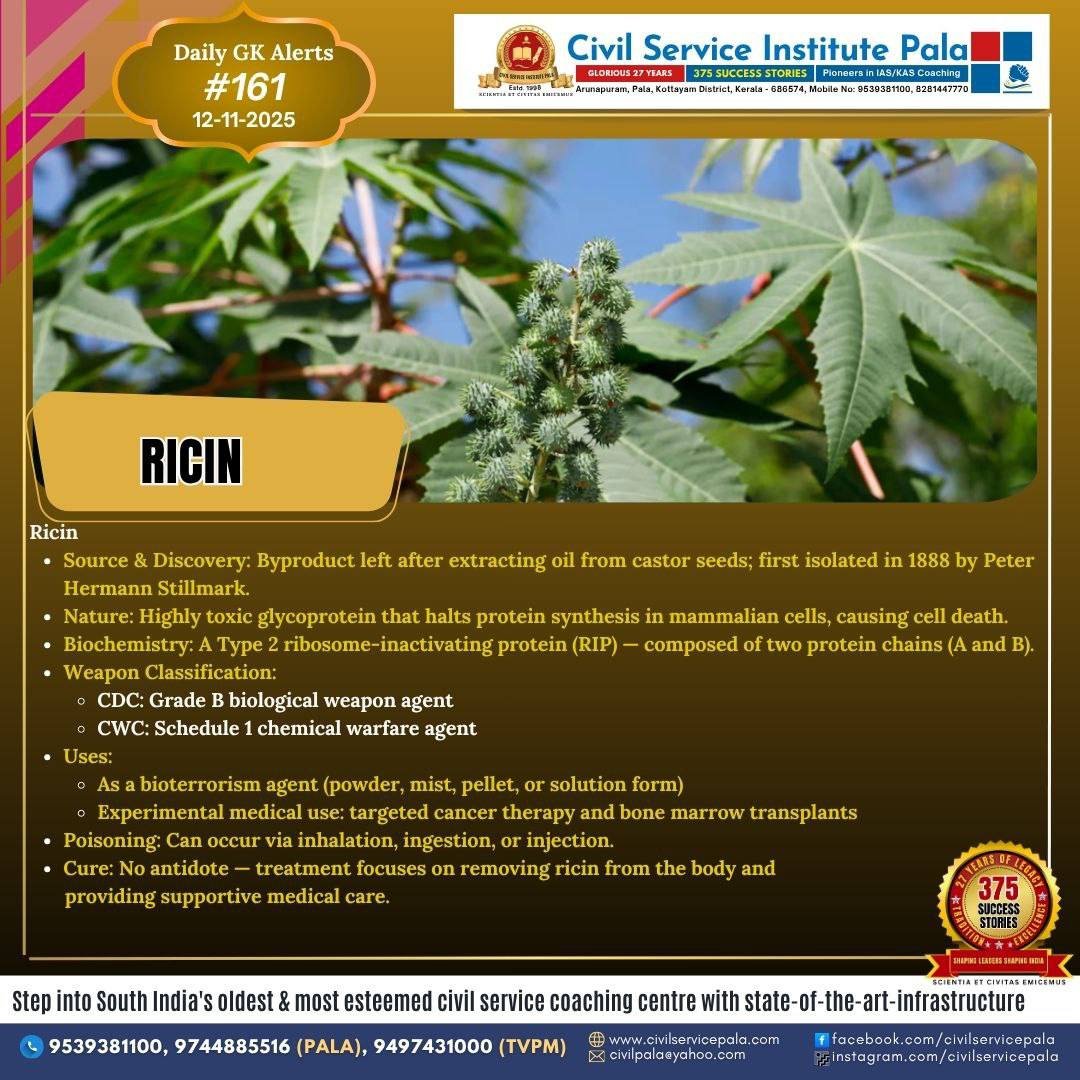
Ricin
Origin:
Ricin is a highly toxic natural protein obtained from the seeds of the castor bean plant (Ricinus communis). It is found in the residue left after processing castor oil.
Physical Properties:
• Form – Powder, mist, pellet, or dissolved in water/weak acid
• Stable under normal conditions; inactivated above 80°C (176°F)
• Odourless and tasteless T
oxicity: • Highly poisonous when inhaled, ingested, or injected
• Lethal dose – 5–10 micrograms per kilogram body weight
• Accidental poisoning usually occurs from chewing castor seeds
Mechanism of Action: Ricin enters cells and blocks protein synthesis by disabling ribosomes. Cell death leads to tissue damage and multiple organ failure, causing death within 36–72 hours depending on exposure route.
Symptoms:
• Inhalation – Cough, fever, chest tightness, lung fluid buildup
• Ingestion – Vomiting, diarrhea, dehydration, internal bleeding, organ failure
• Injection – Local necrosis, multi-organ failure
Treatment:
• No specific antidote
• Supportive care – maintain breathing, circulation, and hydration
• Activated charcoal if ingested early
Security Concern:
• Classified as a potential biological weapon due to ease of extraction, high toxicity, and lack of antidote
• Listed under Schedule 1 of the Chemical Weapons Convention (CWC)
Prevention:
• Avoid ingestion of castor beans
• Ensure safe disposal of castor plant residues
• Enforce biosecurity regulations
