



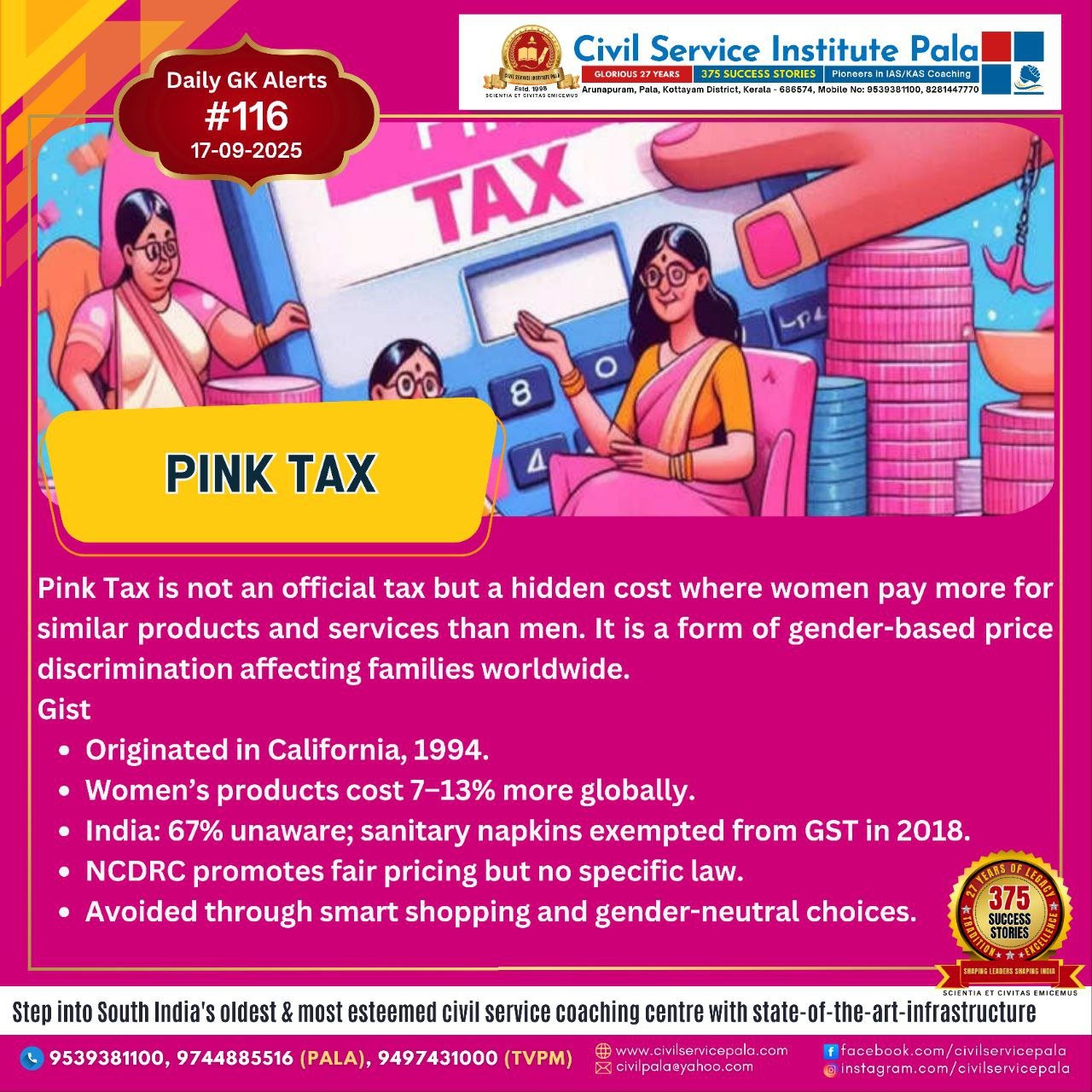
Pink Tax
What is Pink Tax?
Pink Tax is not a real tax by the government but a pricing practice. It means women often pay more than men for similar products or services. Items like razors, shampoos, toys, clothes, and even haircuts cost more for women. Companies earn extra profit from this without giving anything to the government.
Global Impact
The term Pink Tax started in California in 1994. Studies in the U.S. found women’s personal care products cost about 13% more than men’s. Clothing and accessories were 7–8% costlier, and dry cleaning women’s shirts could be nearly double the price of men’s. In the U.K., deodorants and moisturisers for women are also more expensive. The United Nations has urged countries to end such unfair practices to promote equality.
Pink Tax in India
In India, awareness about Pink Tax is very low. Research shows 67% of people don’t know about it. In 2018, the government removed GST on sanitary napkins and tampons, but many other goods still show gender-based price differences. The National Consumer Disputes Redressal Commission (NCDRC) has ruled that companies must follow fair pricing, though there is no special law banning Pink Tax.
How to Avoid It
Smart choices can help fight Pink Tax. Buying men’s or gender-neutral products, checking unit prices, choosing unisex salons, and supporting fair brands are practical steps. Online shopping comparisons and consumer advocacy also create pressure on companies.
Conclusion
Pink Tax silently increases women’s expenses and affects family budgets. Greater awareness, fair market practices, and active consumer choices are needed to stop this hidden form of discrimination and bring equality in pricing.
