



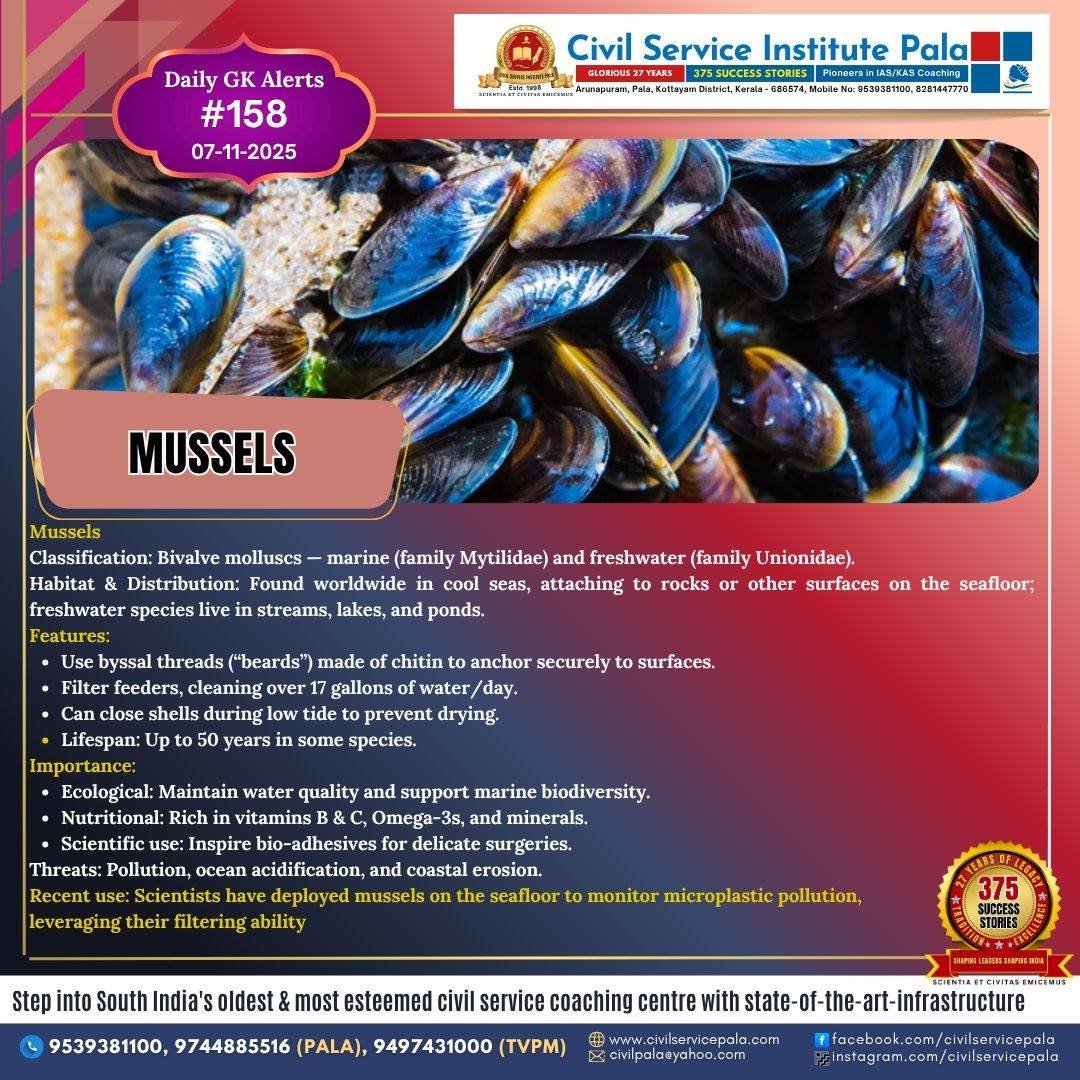
Mussels
Context
• Scientists have deployed thousands of mussels on the seafloor to monitor microplastic pollution levels, as mussels act as natural bioindicators due to their filter-feeding nature.
About Mussels
• Classification:
• Bivalve molluscs belonging to:
• Marine family: Mytilidae
• Freshwaterfamily: Unionidae
• Habitat:
• Live in beds on the ocean floor, attached to rocks or other mussels.
• Common in cool seas; freshwater species (naiads) inhabit streams, lakes, and ponds.
• Distribution:
• Found in oceans worldwide — Pacific, Atlantic, and Mediterranean.
• Lifespan: • Can live several decades; some species up to 50 years.
Feeding & Role
• Filter feeders: Extract plankton and nutrients by filtering seawater.
• A single mussel can filter over 17 gallons of water per day, helping clean marine ecosystems.
• Because they accumulate microplastics, they serve as natural indicators of marine pollution.
Features
• Attach to surfaces using byssal threads (“beards”) made of chitin, known for strength and flexibility.
• During low tide, they close their shells tightly to avoid desiccation.
Ecological & Human Importance
• Nutritional value:
• Rich in Omega-3 fatty acids, Vitamins B & C, and minerals (iron, phosphorus, potassium).
• Low in sodium and saturated fat.
• Ecological importance:
• Maintain water quality and support marine biodiversity.
• Scientific application:
• Their adhesion mechanism inspires bio-adhesive research for medical surgeries, including delicate eye operations.
Threats • Pollution and microplastics • Coastal erosion • Ocean acidification affecting shell formation and survival.
