



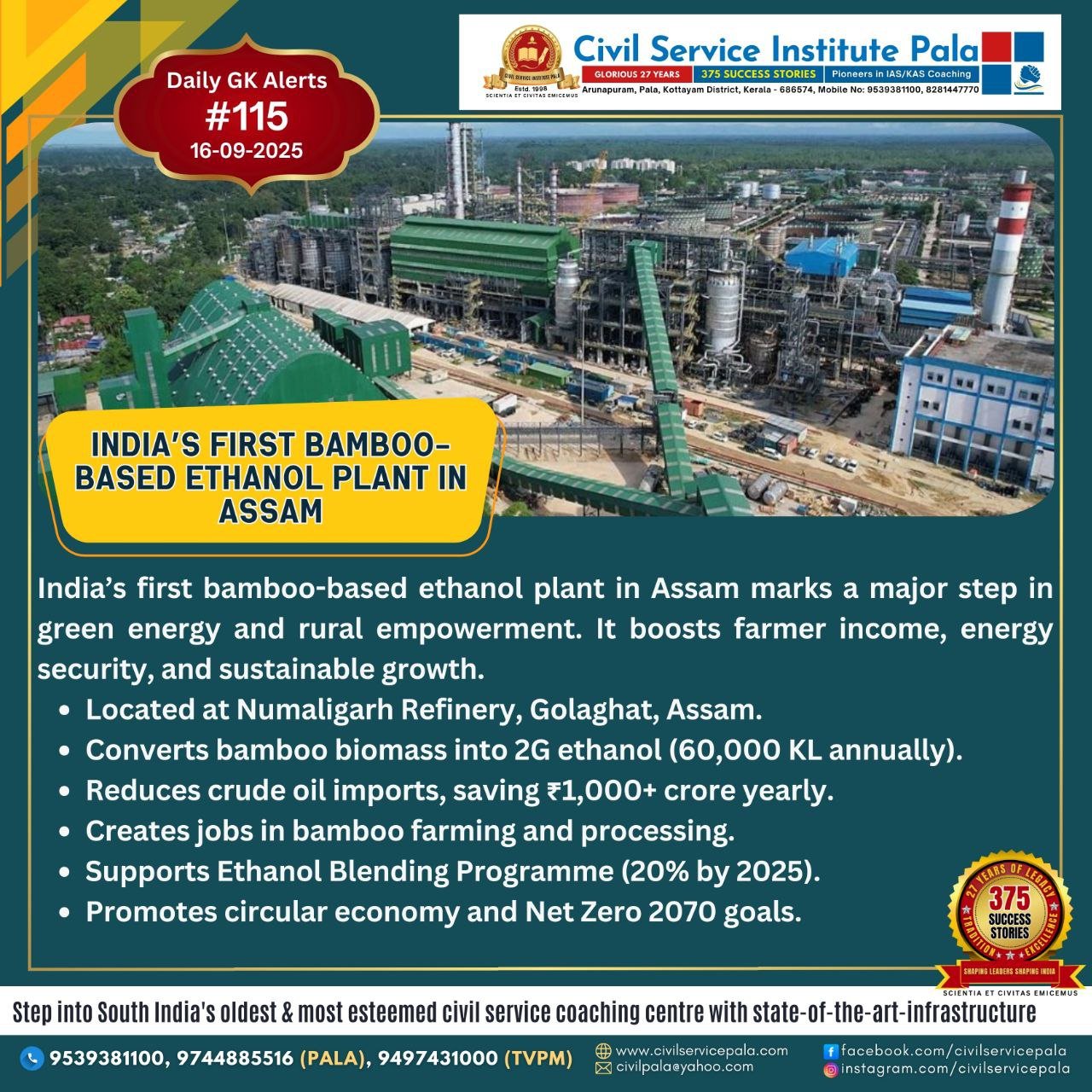
India’s First Bamboo-Based Ethanol Plant in Assam
Prime Minister Narendra Modi inaugurated India’s first bamboo-based ethanol plant at Numaligarh Refinery in Golaghat, Assam. The project also includes the foundation of a polypropylene plant. This marks an important step toward green energy, farmer empowerment, and regional development.
What is the Plant?
The plant, developed by Assam Bio-Ethanol Private Limited (ABEL) in collaboration with Numaligarh Refinery Ltd (NRL), converts bamboo biomass into 2G ethanol using advanced technology like enzymatic hydrolysis and fermentation. It produces 60,000 KL of ethanol annually, which will be blended with petrol under the Ethanol Blending Programme (EBP), aiming for 20% ethanol blending by 2025.
Benefits for Farmers and the Northeast
The project will create an assured market for bamboo cultivation in the Northeast. Farmers will get direct procurement contracts, ensuring a steady income. It also generates thousands of jobs in bamboo cultivation, collection, transport, and processing. Earlier, cutting bamboo faced legal restrictions, but with the ban removed, farmers and tribal communities can now benefit.
Industrial and Environmental Significance
The plant helps reduce crude oil imports, saving the country over ₹1,000 crore annually, and supports India’s Net Zero 2070 goal. By reducing greenhouse gas emissions and promoting waste-to-fuel technology, it strengthens the circular economy. The polypropylene plant will also provide raw materials for making essential plastic products, boosting the ‘Make in Assam’ and ‘Make in India’ initiatives.
Conclusion
The bamboo-based ethanol plant is a symbol of innovation, sustainability, and empowerment. It not only strengthens India’s energy security but also uplifts farmers, promotes green growth, and places Assam at the center of India’s renewable energy revolution.
