



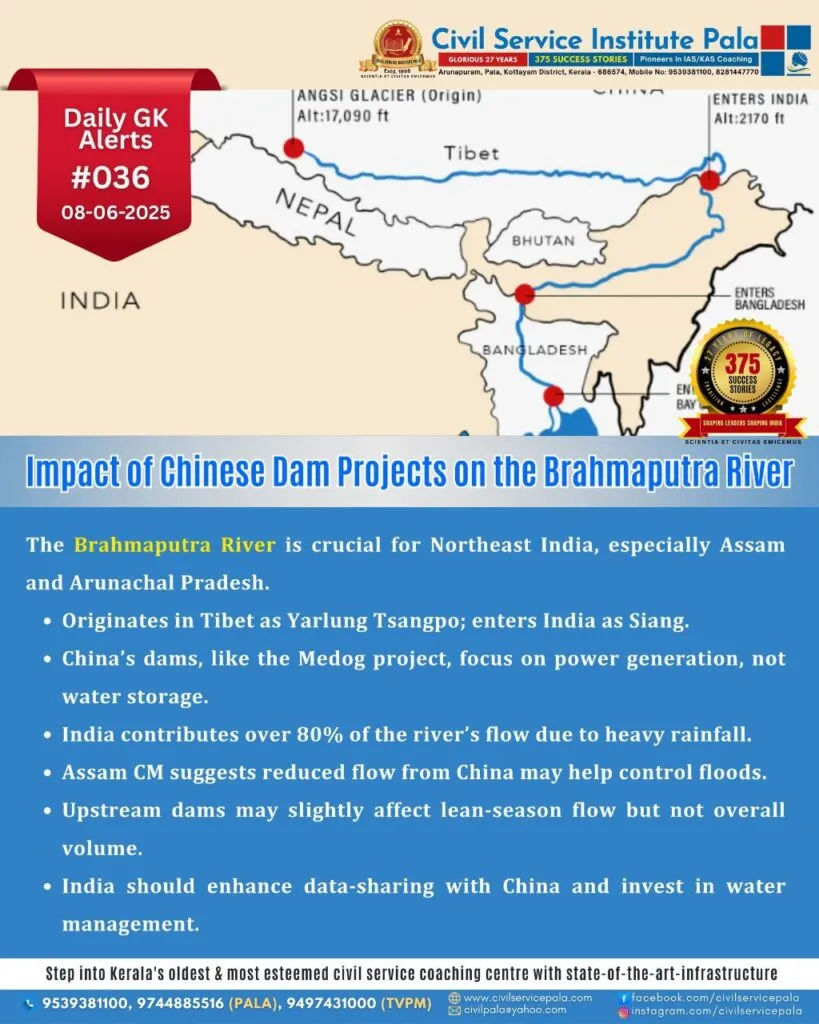
Impact of Chinese Dam Projects on the Brahmaputra River
The Brahmaputra River, one of India’s most significant waterways, plays a vital role in the northeastern states, especially Arunachal Pradesh and Assam. Recent Chinese hydropower developments on the river’s upstream stretch in Tibet have sparked discussions on potential downstream impacts. While concerns persist, experts and regional leaders suggest the effects may be less severe than initially feared.
Origin and Flow Dynamics
The Brahmaputra begins as the Yarlung Tsangpo in Tibet, flows into India via Arunachal Pradesh (as the Siang), and passes through Assam before entering Bangladesh as the Jamuna. Despite its Tibetan origin, India contributes a substantial share of the river’s flow, mainly through high rainfall and numerous tributaries.
Chinese Hydropower Projects and Their Nature
China’s dam-building efforts, including the massive Medog Hydropower Project, aim primarily at electricity generation rather than long-term water storage. These run-of-the-river designs are less likely to drastically reduce flow downstream but could alter seasonal water availability, especially during drier months.
India’s Contribution and Flood Mitigation
India, although occupying just over a third of the Brahmaputra basin, contributes over 80% of its water due to intense monsoon rains. Assam’s Chief Minister, Himanta Biswa Sarma, noted that even reduced flow from upstream might alleviate recurring floods, turning a potential threat into a regional management opportunity.
Strategic Responses and Future Planning
India must prioritize data-sharing agreements with China and invest in scientific research to better predict and manage water resources. Enhancing infrastructure and hydropower development, while addressing ecological and social concerns, will also be crucial. Proposed inter-basin transfer projects further underscore the strategic value of the river.
Though China’s upstream activities warrant vigilance, India’s hydrological dominance and adaptive potential reduce the threat of significant water shortages. Strategic planning, regional cooperation, and investment in water infrastructure are key to leveraging the Brahmaputra sustainably.
