



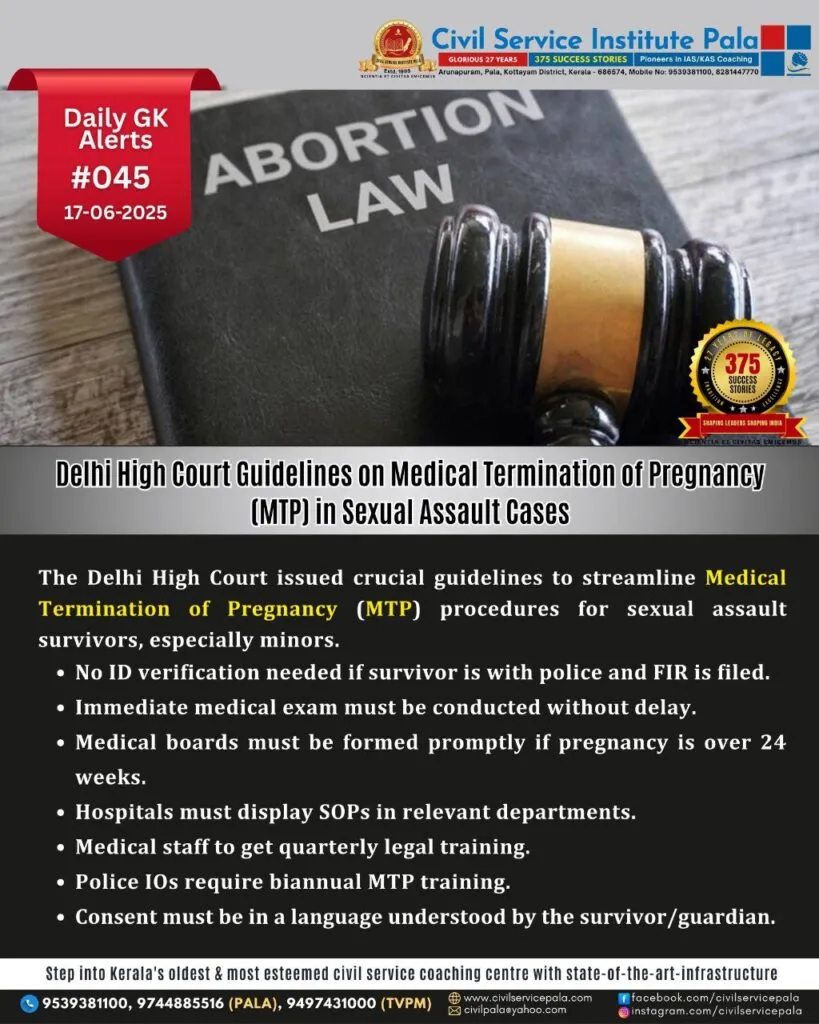
Delhi High Court Guidelines on Medical Termination of Pregnancy (MTP) in Sexual Assault Cases
The Delhi High Court has issued comprehensive guidelines to improve the handling of Medical Termination of Pregnancy (MTP) cases involving survivors of sexual assault, especially minors. This comes after a recent case highlighted critical lapses in hospital and police procedures that delayed urgent medical care for a 17-year-old rape survivor.
Background of the Case
A 17-year-old rape survivor was taken to AIIMS Delhi for MTP. Despite the presence of the police and an FIR, hospital staff denied ultrasound scans due to lack of ID proof. The Child Welfare Committee (CWC) directed immediate termination, but delays continued due to age verification tests. By the time intervention occurred, the pregnancy was found to be beyond 24 weeks, the legal limit under the MTP Act. A court-ordered reassessment later declared it within legal limits, allowing termination.
Key Guidelines for Hospitals
* No Separate ID Verification: If a survivor is accompanied by police with FIR and case files, no extra identity proof is needed.
* Immediate Medical Attention: Hospitals must not delay examinations. If pregnancy appears over 24 weeks, a medical board must be formed immediately without waiting for court approval.
* Availability of SOPs: Updated protocols must be available in Emergency and Gynaecology departments.
* Regular Training: Medical staff must undergo quarterly training on the MTP and POCSO Acts.
Delhi Police Responsibilities
* Training: Investigating Officers (IOs) must receive biannual training on MTP procedures.
* Prompt Action: IOs should ensure survivors reach medical facilities quickly with proper documents.
* Consent: MTP consent must be taken in Hindi or English to ensure understanding.
Conclusion
The Delhi High Court’s timely intervention aims to create a sensitive, prompt, and legally compliant system for MTP in sexual assault cases. These guidelines bridge critical institutional gaps, protect the rights of survivors, and ensure access to safe medical care, especially for vulnerable minors.
