



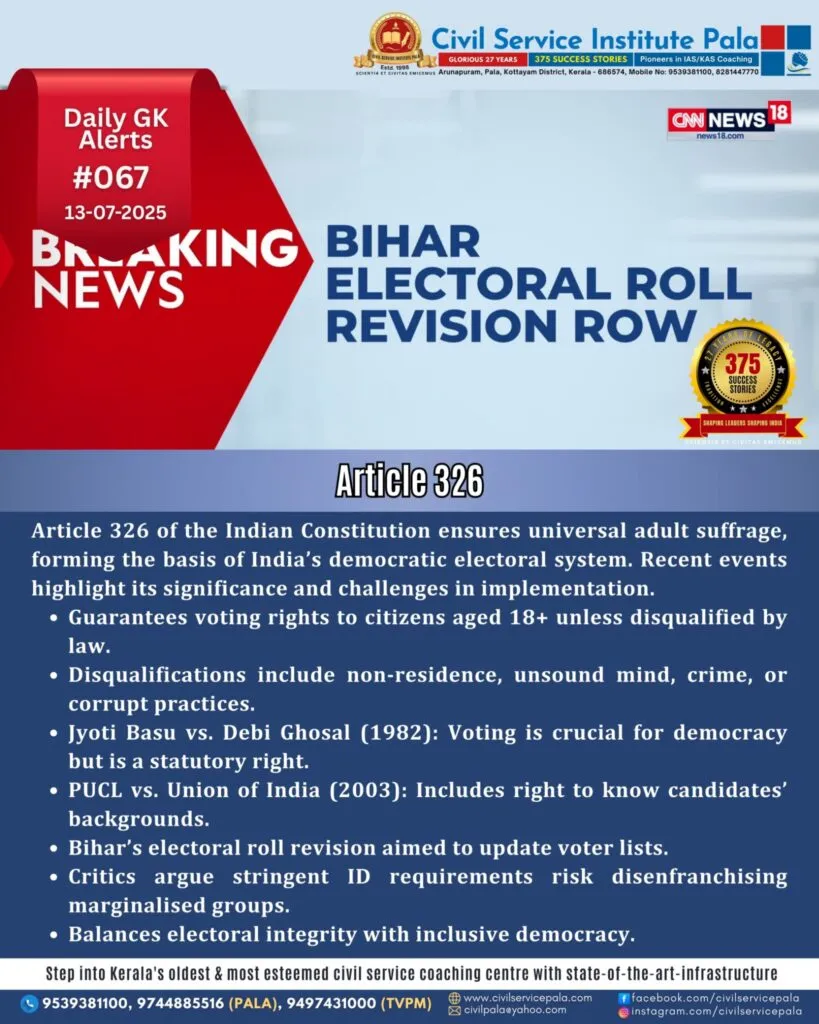
Article 326: Upholding Universal Adult Suffrage in India
*Article 326: Upholding Universal Adult Suffrage in India*
Article 326 of the Indian Constitution guarantees universal adult suffrage, enabling every citizen aged 18 or above to vote in Lok Sabha and State Assembly elections. This is a cornerstone of India’s democratic framework.
*Key Provisions of Article 326*
It mandates that elections be based on adult suffrage, with eligibility criteria including citizenship, minimum age of 18 years, and absence of disqualifications such as non-residence, unsoundness of mind, criminal conviction, or corrupt practices. Thus, it ensures an inclusive and representative electoral process.
*Judicial Interpretations*
In *Jyoti Basu vs. Debi Ghosal (1982)*, the Supreme Court emphasised voting as vital to democracy, though it remains a statutory right under Article 326. *PUCL vs. Union of India (2003)* expanded its scope by linking the right to vote with the right to know candidates’ backgrounds, ensuring informed voting.
*Bihar Electoral Roll Revision Case*
Recently, the Election Commission initiated a Special Intensive Revision of electoral rolls in Bihar to update voter lists as per its Article 326 mandate. The exercise aims to remove duplicate and ineligible entries while including new eligible voters. However, opposition parties argue that stringent documentation requirements risk disenfranchising marginalised groups, violating democratic principles.
*Significance and Challenges*
While maintaining accurate rolls prevents fraud and upholds electoral integrity, excessive identification demands can exclude vulnerable populations, raising questions about balancing inclusivity with security.
Article 326 strengthens India’s democracy by ensuring broad voter participation. Future reforms must uphold this principle while maintaining fair and transparent electoral processes without undermining citizens’ fundamental voting rights.
