



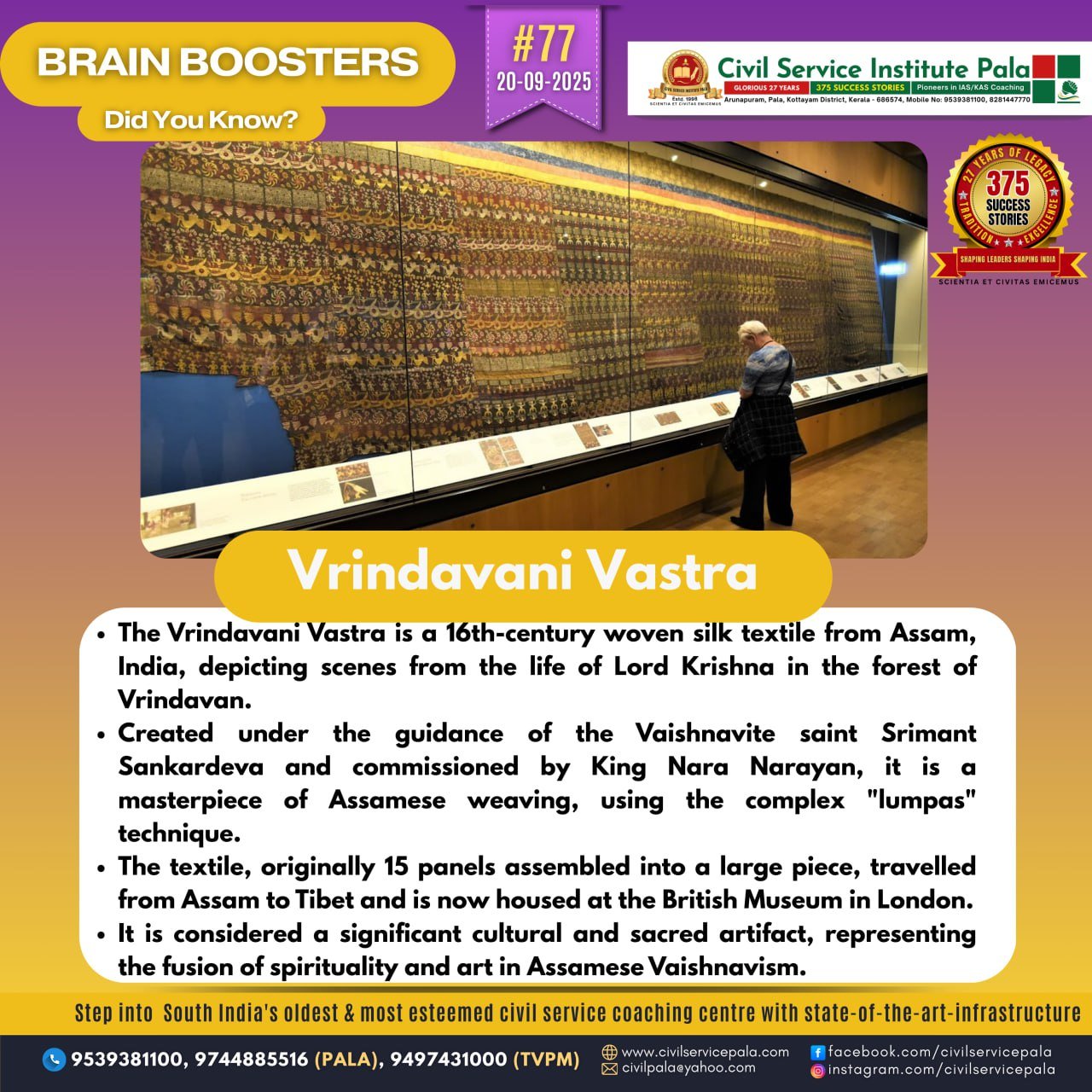
Vrindavani Vastra
Vrindavani Vastra is a historic and culturally significant silk textile woven in 16th-century Assam under the guidance of the saint-reformer Srimanta Sankardeva. This magnificent drape depicts scenes from the childhood activities and exploits of Lord Krishna in Vrindavan, woven using a highly intricate lampas weaving technique. The textile served both as a religious expression and a visual medium to propagate the Neo-Vaishnavite Bhakti movement, combining art and devotion to Lord Krishna.
The original Vrindavani Vastra was enormous, reportedly over 180 feet long, showcasing various episodes from Krishna's life and illustrations from the Bhagavata Purana. It is considered a rare example of Assamese silk craftsmanship and carries deep spiritual and cultural heritage. Pieces of this textile have traveled globally and are now housed in museums like the British Museum in London and the Victoria and Albert Museum. An 18-month loan exhibition of Vrindavani Vastra is planned in Assam for 2027, marking an important cultural moment for the state.
Key Features
Created under Srimanta Sankardeva’s supervision in Assam during the 16th century.
Illustrates the various leelas (divine plays) and exploits of Lord Krishna, emphasizing his childhood in Vrindavan. Woven using the complex lampas technique involving two weavers simultaneously.
The fabric served as a visual devotional aid to spread Krishna bhakti (devotion). Pieces of the original textile were taken to Tibet and later acquired by British explorers.
Current surviving fragments are kept in museums worldwide. The textile symbolizes Assamese cultural identity, religious devotion, and masterful silk craftsmanship.
This textile is more than a piece of fabric; it is a living testimony to Assamese culture, Neo-Vaishnavism, and the integration of art and spirituality.
