



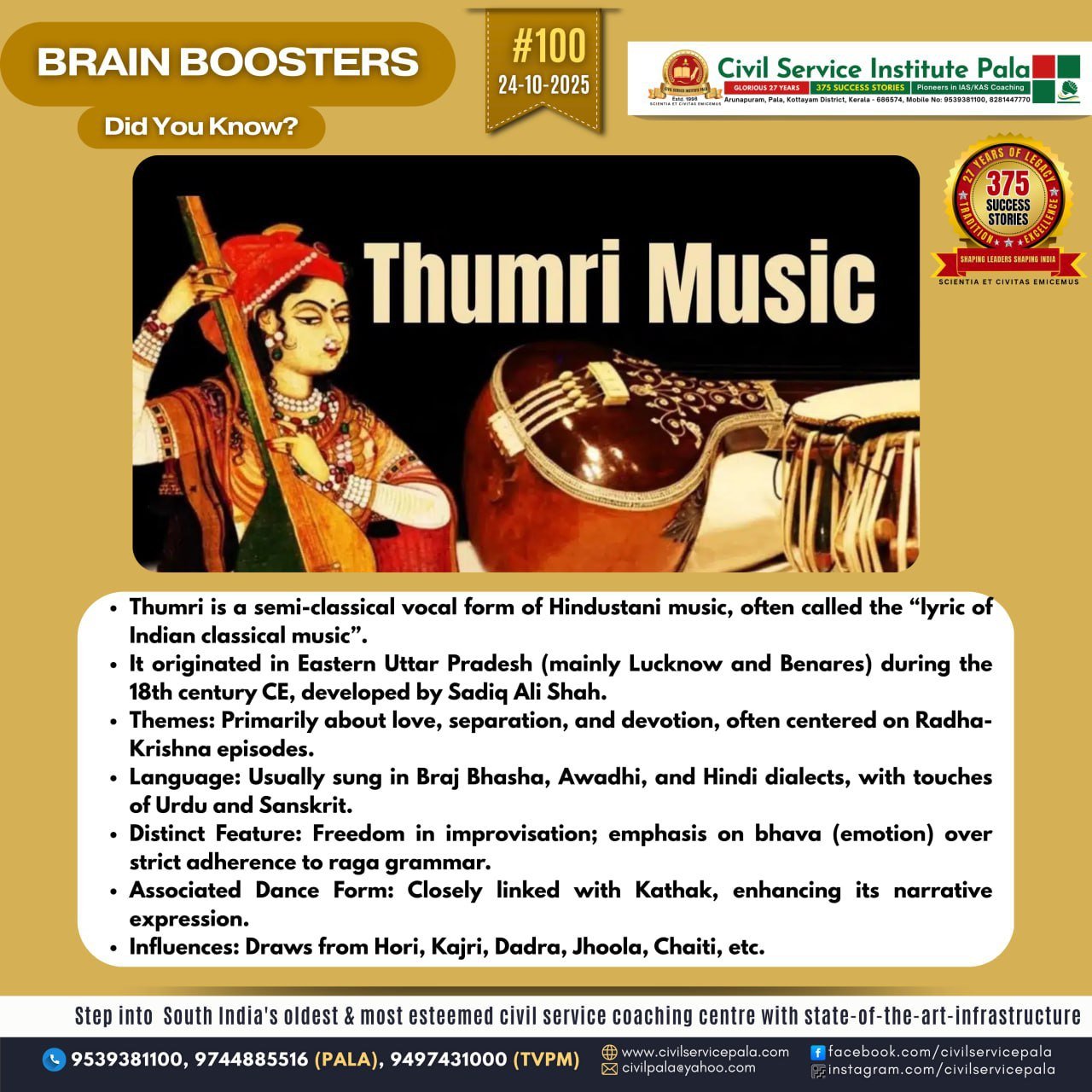
Thumri Music
Genre: Thumri is a semi-classical vocal music form in Indian classical tradition, mainly associated with North India (Hindustani music).
Origin: It developed in the 18th century in the courts of Lucknow and Varanasi, under the patronage of Nawab Wajid Ali Shah of Awadh.
Style: Thumri is light classical, meaning it’s less rigid than pure classical forms like Khayal or Dhrupad. It focuses more on emotional expression than on technical precision.
Theme: The lyrics often depict love, devotion, and separation, especially the romantic tales of Radha and Krishna.
Language: It is generally sung in Braj Bhasha or Awadhi, dialects of Hindi. Structure: Has two parts — Sthayi (main refrain) and Antara (subsequent verse). Follows slow to medium tempo with emphasis on the bhava (emotion) of the words.
Musical aspects: Commonly based on lighter ragas. Often includes improvisation and ornamentation (alankaras) to express emotion. Accompanied by instruments like tabla, sarangi, and harmonium.
Famous exponents: Begum Akhtar Girija Devi Shobha Gurtu Naina Devi Sub-styles: Two main gharanas are known for Thumri — Purab Ang (Eastern style) of Banaras and Punjabi Ang.
