



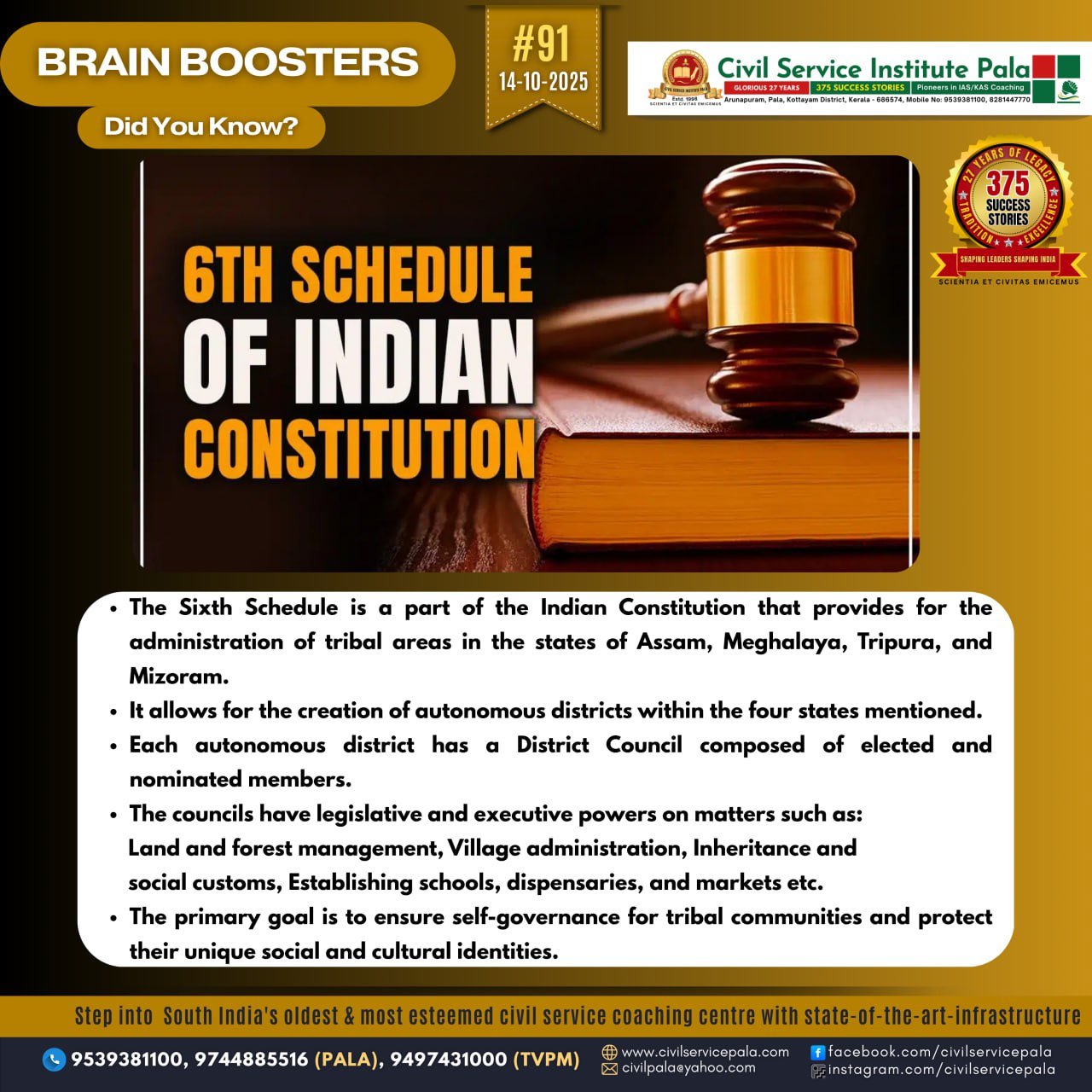
The Sixth Schedule of the Indian Constitution
The Sixth Schedule of the Indian Constitution is a special provision that deals with the administration of tribal areas in the Northeastern states of India. It aims to protect the rights, culture, and land of the tribal communities and to give them autonomy in governance.
Key Features of the Sixth Schedule Applicable States:
The Sixth Schedule applies to certain tribal areas in: Assam Meghalaya Tripura Mizoram
Autonomous District Councils (ADCs): These are self-governing bodies created for each tribal district. They have the power to make laws on specific subjects such as: Land use and management Forests (other than reserved forests)
Agriculture and village administration Public health, sanitation, and local trade Inheritance and social customs of tribes
Composition: Each council has up to 30 members: 26 elected by the local people. 4 nominated by the Governor.
Judicial Powers: Councils can set up village courts to try certain civil and criminal cases involving tribals. Financial Powers: Councils can collect taxes on land, entry of goods, and local markets. They receive grants-in-aid from the state government. Governor’s Role: The Governor has special powers: To modify or annul laws made by the council. To reorganize or change the boundaries of autonomous districts.
Objective The main goal of the Sixth Schedule is to: Protect tribal identity and culture Promote self-governance Ensure socio-economic development without disturbing tribal customs and traditions
