



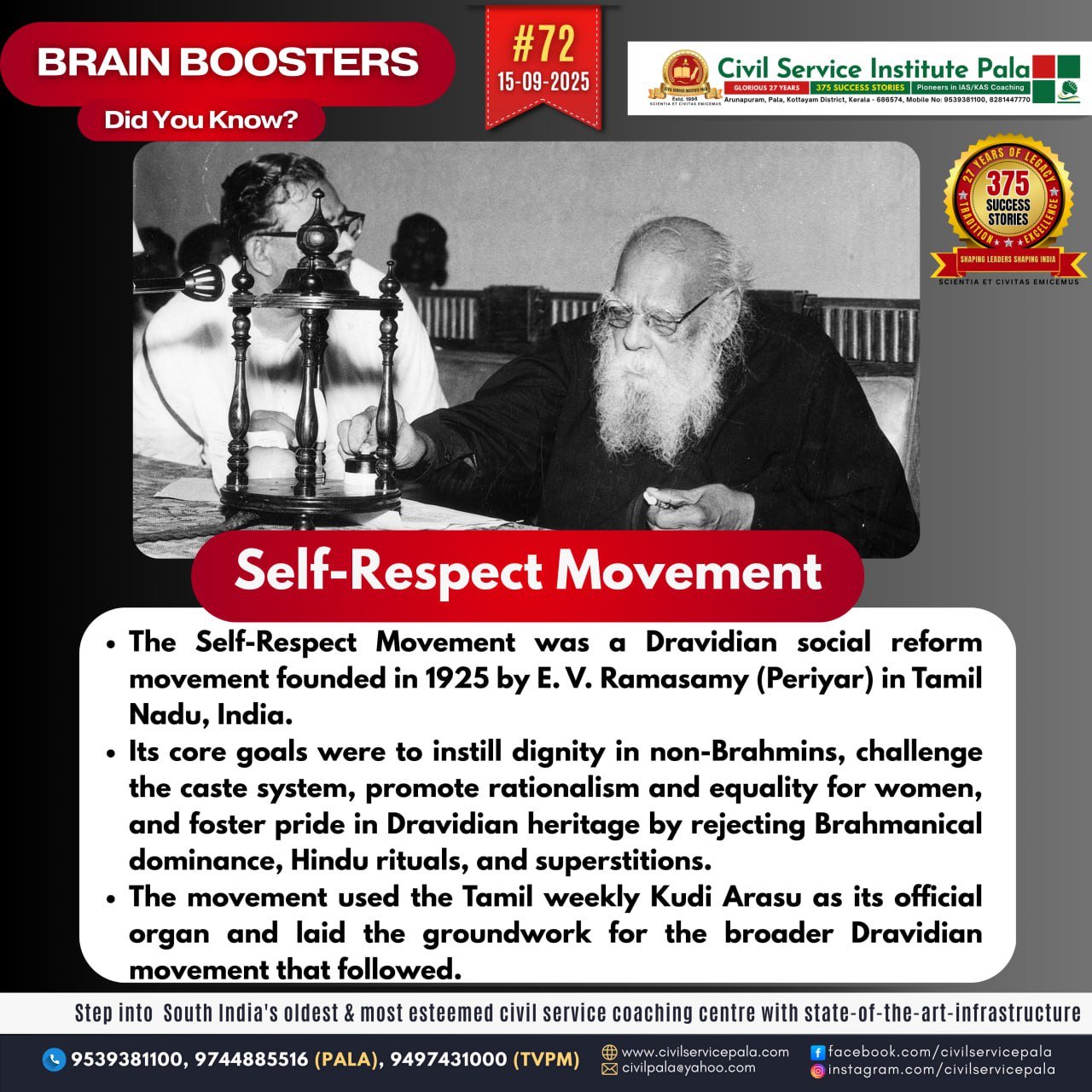
The Self-Respect Movement
The Self-Respect Movement was a major socio-political reform movement that began in Tamil Nadu (then Madras Presidency) in the 1920s, led by E.V. Ramasamy Periyar. It played a transformative role in challenging caste hierarchy, social inequality, and Brahminical dominance, while advocating rationalism and dignity for marginalized communities.
Background
Started in 1925 by Periyar E.V. Ramasamy after he left the Indian National Congress due to disagreements on caste-related issues. Emerged in a society dominated by rigid caste divisions, untouchability, and patriarchal norms.
Objectives
Abolition of caste hierarchy: To challenge Brahminical dominance and promote equality.
Rationalism: To encourage scientific thinking and oppose superstition, blind faith, and priestly control.
Social justice: To uplift backward castes and ensure dignity for all. Gender equality: Advocated women’s rights, widow remarriage, and opposed the devadasi system.
Self-respect marriages: Introduced weddings without religious rituals or priests, emphasizing equality between partners.
Key Features
Rationalist philosophy: Religion and caste were seen as tools of exploitation.
Promotion of Tamil identity: Linked with the Dravidian movement, opposing the dominance of Sanskrit and North Indian culture. Political influence: Laid the foundation for the rise of Dravidian parties (like DMK and AIADMK).
Literature and propaganda: Spread ideas through public speeches, journals, plays, and newspapers like Kudi Arasu. Impact Social reforms: Weakened caste-based practices and promoted inter-caste marriages.
Women’s empowerment: Encouraged education for women and equal rights in marriage and property.
Political outcomes: Inspired the Dravidian movement which later shaped Tamil Nadu’s politics. Long-term influence: Led to reservations for backward classes and the assertion of Tamil identity.
