



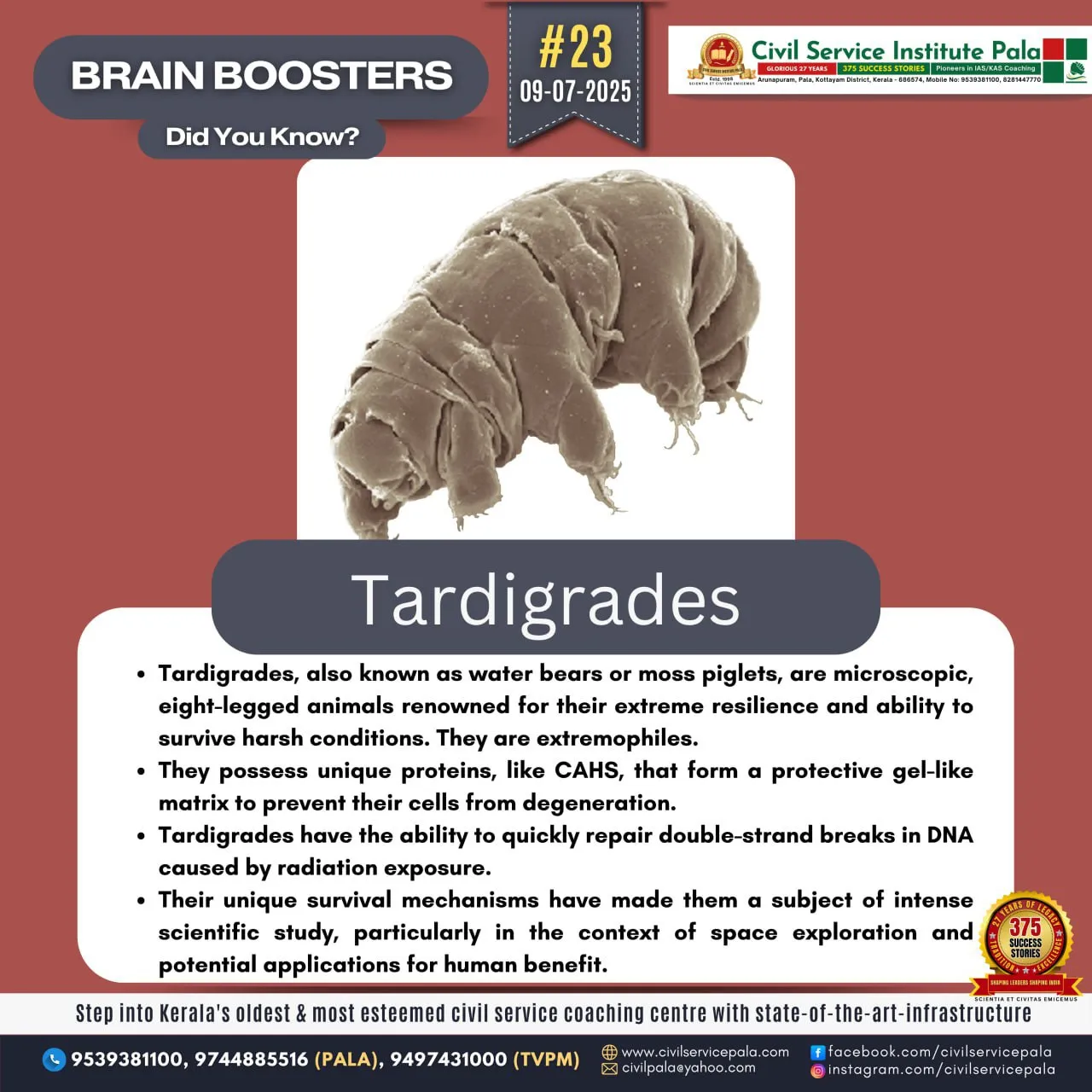
Tardigrades
Tardigrades, also known as water bears or moss piglets, are microscopic, eight-legged organisms renowned for their exceptional resilience, making them one of the toughest life forms on Earth. They inhabit diverse environments, from ocean depths to mountain peaks, and have even survived in the vacuum of outer space. Tardigrades can endure extreme temperatures, high radiation, intense pressure, and complete dehydration by entering a dormant state called cryptobiosis, where their metabolism nearly halts. This incredible survivability has made them a focus of scientific research, particularly in astrobiology, as they offer insights into how life might exist or travel through space. They also produce unique proteins like Dsup (damage suppressor), which protect their DNA from radiation and oxidative stress—an area of interest for cancer research, gene therapy, and astronaut protection. Furthermore, their ability to withstand dehydration could inspire new preservation methods for vaccines, organs, and other biological materials. Evolutionarily related to arthropods and nematodes, tardigrades help scientists understand the development and adaptability of life. Ecologically, they contribute to microbial food webs in mosses, lichens, and soil. Overall, tardigrades are not only biological marvels but also crucial to advancing knowledge in space science, medicine, and genetics.
