



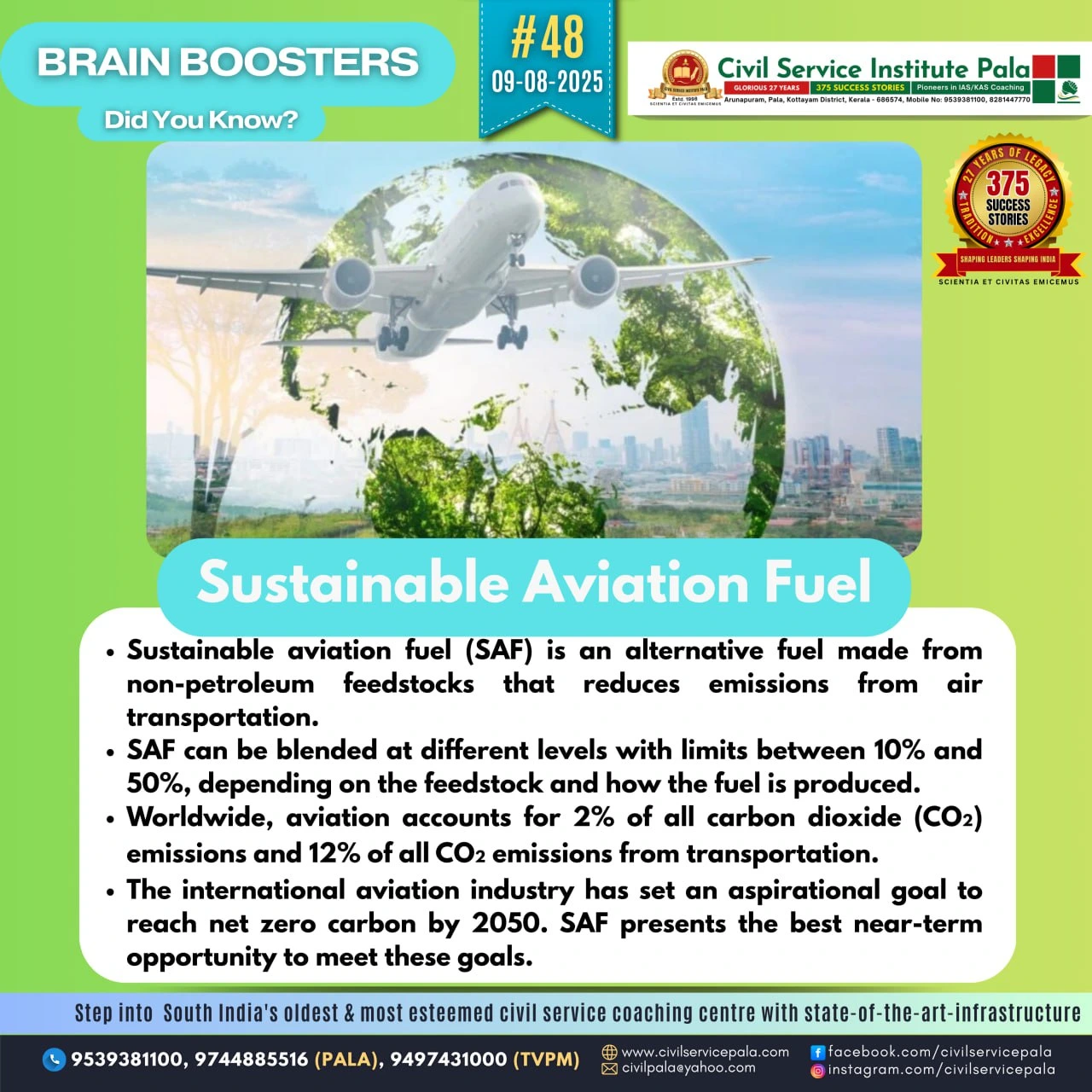
Sustainable Aviation Fuel (SAF)
Sustainable Aviation Fuel (SAF) is an alternative to conventional jet fuel (fossil-based kerosene) that’s produced from renewable or waste-derived sources. It’s designed to reduce greenhouse gas (GHG) emissions from aviation without requiring major changes to existing aircraft or fueling infrastructure.
Key Features
Drop-in fuel: SAF can be blended with conventional jet fuel and used in existing aircraft engines.
Carbon reduction: Lifecycle CO₂ emissions can be reduced by up to 80% compared to fossil jet fuel.
Compatibility: Meets international aviation fuel standards (ASTM D7566).
Sources / Feedstocks
Biomass-based:
Used cooking oil
Animal fats
Agricultural residues (corn stover, sugarcane bagasse)
Forestry residues
Waste-based:
Municipal solid waste
Industrial gases
Synthetic:
Power-to-liquid fuels (produced from green hydrogen + captured CO₂)
Production Pathways
HEFA (Hydroprocessed Esters and Fatty Acids) – most mature, from oils/fats.
Fischer–Tropsch synthesis – gasifies biomass/waste, then converts to liquid fuel.
Alcohol-to-Jet – converts ethanol or butanol to jet fuel.
PtL (Power-to-Liquid) – uses renewable electricity to make synthetic kerosene.
Benefits
Significant GHG emission reduction over the fuel’s lifecycle.
Utilizes waste materials, reducing landfill use.
Improves energy security by diversifying fuel sources.
Helps airlines meet net-zero targets by 2050 (ICAO & IATA goals).
Challenges
High production cost (currently 2–5× more expensive than conventional jet fuel).
Limited availability (less than 0.1% of total aviation fuel use today).
Need for scaling up feedstock supply and refining capacity.
Competition with other biofuel sectors (road transport, shipping).
Global Status
SAF flights have been operated by major airlines like KLM, United, Singapore Airlines, and Air India.
Policy support growing — e.g., EU’s ReFuelEU Aviation mandates SAF blending from 2025; US tax credits for SAF under the Inflation Reduction Act.
India is conducting SAF trials with IndiGo and Air India, using blends of HEFA fuel.
Source:https://www.airbus.com/en/innovation/energy-transition/our-commitment-to-saf/sustainable-aviation-fuels
