



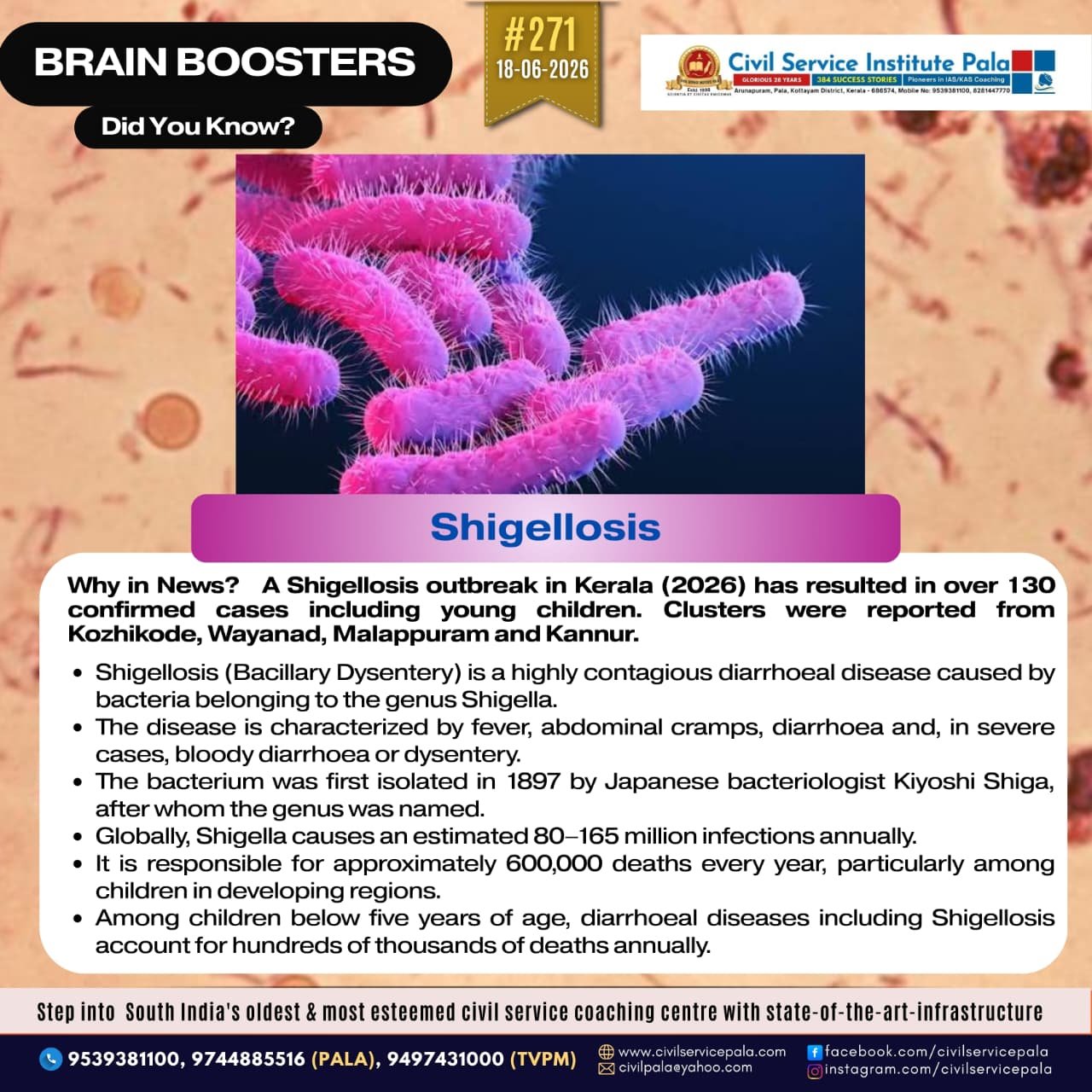
SHIGELLA & SHIGELLOSIS
SHIGELLA & SHIGELLOSIS
What is Shigellosis?
• Shigellosis is a highly contagious diarrhoeal disease caused by bacteria belonging to the genus Shigella, a Gram-negative, rod-shaped bacterium that primarily infects the human intestinal tract.
• The disease is characterized by fever, abdominal cramps, diarrhoea and dysentery (bloody diarrhoea), with severe cases potentially leading to dehydration, complications and death.
• The bacterium was first isolated in 1897 by Japanese bacteriologist Kiyoshi Shiga during a major dysentery epidemic in Japan, and the genus was subsequently named after him.
• Humans and other primates constitute the primary natural reservoirs of Shigella, making human-to-human transmission a major driver of outbreaks.
Why is Shigella a Major Public Health Concern?
• Shigella is among the most infectious bacterial pathogens known because ingestion of as few as 10–100 bacteria can cause disease and trigger outbreaks.
• Globally, Shigella causes an estimated 80–165 million infections annually and is responsible for approximately 600,000 deaths every year, particularly among children in developing regions.
• According to global disease burden estimates, Shigella was the second-leading cause of diarrhoeal mortality across all age groups and the leading bacterial cause of diarrhoeal deaths, accounting for roughly 212,000 deaths annually and about 13% of all diarrhoea-associated deaths.
• The greatest disease burden is concentrated in South Asia and sub-Saharan Africa, where inadequate sanitation and limited access to safe water increase transmission risks.
• Among children below five years of age, diarrhoeal diseases collectively account for hundreds of thousands of deaths annually, and Shigella contributes substantially to this burden.
How Does Shigella Spread?
• Shigellosis spreads primarily through the faeco-oral route, when microscopic quantities of infected faecal matter enter the body through contaminated food, water or hands.
• Poor sanitation, inadequate hand hygiene, unsafe drinking water and improper food handling practices create ideal conditions for the transmission of the disease.
• Because the infectious dose is extremely low, even minor contamination can result in infection and facilitate rapid community spread.
• Person-to-person transmission is common in crowded settings such as schools, hostels, childcare facilities and densely populated communities.
What are the Major Sources of Infection?
• Contaminated drinking water remains one of the most important sources of Shigella infection.
• Scientific studies have detected Shigella in rivers, surface waters, coastal waters and sewage-contaminated aquatic ecosystems, indicating the ability of the bacterium to persist in environmental reservoirs.
• Consumption of food prepared with contaminated water can directly introduce the pathogen into the human body.
• Fish harvested from sewage-contaminated water bodies may act as a source of infection if consumed improperly.
• Crops cultivated using contaminated irrigation water can transmit the bacteria through the food chain.
• Accidental ingestion of contaminated water during swimming or bathing can also result in infection.
Who is Most Vulnerable?
• Although Shigella can infect individuals of all age groups, the disease burden is highest among children below five years of age.
• Young children face the greatest risk of severe dehydration, complications and mortality because of their relatively weaker immunity and higher vulnerability to diarrhoeal diseases.
• Studies have also reported that the incidence of shigellosis tends to increase again after the age of forty, making older adults another vulnerable group.
• Individuals living in areas with poor sanitation, inadequate water supply and overcrowded living conditions face a significantly higher risk of infection.
Kerala Outbreak (2026)
• Kerala reported a major outbreak of shigellosis beginning in March 2026, bringing renewed attention to the disease.
• The first major cluster was identified in Kuttikkattoor in Kozhikode district.
• Additional clusters subsequently emerged in Wayanad, Malappuram and Kannur districts.
• A particularly significant outbreak occurred in a school in Wayanad, resulting in the hospitalization of more than 300 children.
• By mid-June 2026, Kerala had reported over one hundred confirmed cases and numerous probable cases, with multiple deaths linked to the outbreak.
• Health authorities traced the outbreaks primarily to contaminated food and water sources combined with poor hygiene practices in community settings.
Has Kerala Experienced Similar Outbreaks Earlier?
• Kerala has experienced repeated outbreaks of shigellosis over the years, indicating the recurring nature of the threat.
• A major food-borne outbreak in 2009 reportedly infected more than 300 people across the state.
• Another outbreak in Kozhikode in 2020 resulted in the death of a child and infected dozens of individuals.
• In 2022, Shigella was identified as a likely cause behind a mass food poisoning incident in Kasaragod that led to hospitalizations and fatalities.
What are the Health Impacts of Shigellosis?
• Mild infections often resolve with adequate hydration and supportive care, particularly in otherwise healthy individuals.
• Severe infections can cause prolonged dysentery, dehydration, electrolyte imbalance and systemic complications requiring hospitalization.
• Young children are particularly vulnerable to severe disease because rapid fluid loss can quickly become life-threatening.
• The low infectious dose and ease of transmission enable localized outbreaks to spread rapidly if timely public health interventions are not implemented.
Antimicrobial Resistance: An Emerging Threat
• The growing emergence of multidrug-resistant Shigella strains is one of the most serious concerns associated with the disease today.
• Many strains are developing resistance to commonly used antibiotics, reducing available treatment options and increasing the complexity of clinical management.
• Rising antimicrobial resistance can lead to longer illness duration, greater transmission and higher healthcare costs.
• Experts emphasize continuous surveillance of resistance patterns and the development of updated local antibiograms to guide effective treatment strategies.
• Judicious use of antibiotics remains one of the most important measures to slow the emergence and spread of resistant strains.
Why is a Shigella Vaccine Important?
• The development of a safe and effective Shigella vaccine is considered a major global public health priority.
• A successful vaccine could significantly reduce the incidence of diarrhoeal disease, particularly among young children in low- and middle-income countries.
• Vaccination could reduce dependence on antibiotics and thereby help slow the emergence of antimicrobial resistance.
• The potential for herd immunity means that vaccination may provide protection even beyond directly vaccinated individuals.
• A Shigella vaccine could therefore contribute not only to reducing mortality but also to lowering the overall burden of diarrhoeal diseases worldwide.
Prevention and Control
• Ensuring access to safe drinking water remains the most effective long-term strategy for preventing shigellosis.
• Proper handwashing with soap, particularly after using toilets and before handling food, significantly reduces transmission.
• Safe food preparation practices and protection of food from contamination are essential preventive measures.
• Rapid identification and treatment of cases help prevent further spread during outbreaks.
• Strengthening sanitation infrastructure and improving community hygiene practices remain fundamental to long-term disease control.
