



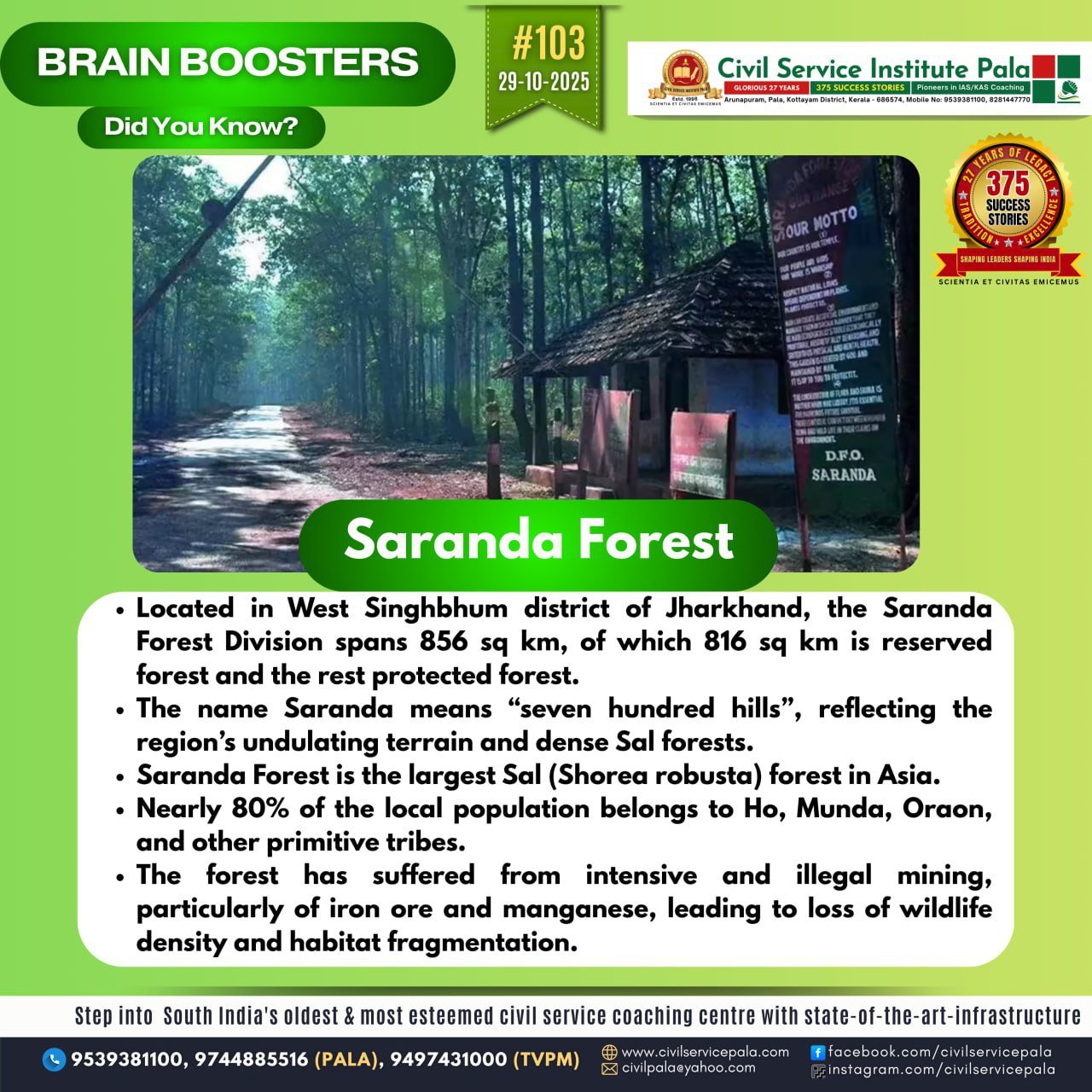
Saranda Forest
Location: Saranda Forest is located in the West Singhbhum district of Jharkhand, near the borders of Odisha. The name “Saranda” means land of seven hundred hills in the local Ho tribal language.
Geographical Features: It is spread over around 820 square kilometers, making it Asia’s largest Sal (Shorea robusta) forest.The region is characterized by undulating hills, dense vegetation, and several streams and rivers, including the Koina River, a tributary of the Brahmani.
Flora and Fauna: Dominated by Sal trees, which form dense canopies. Other species include teak, mahua, bamboo, and medicinal plants. Rich wildlife such as elephants, leopards, deer, bison, and various birds and reptiles inhabit the forest.
Tribal Population: Home to the Ho, Munda, and Oraon tribes, who depend on forest produce and agriculture for their livelihood. Economic and
Environmental Importance: Contains significant iron ore deposits, leading to large-scale mining activities, especially around Chiria mines operated by SAIL (Steel Authority of India Limited). The forest plays a crucial role in carbon sequestration, groundwater recharge, and maintaining the ecological balance of the region.
Conservation Concerns: Faces threats from illegal mining, deforestation, and industrial pollution. Wildlife habitats and tribal livelihoods are under pressure due to expanding mining operations. Government initiatives like the Saranda Development Plan (2012) aim to balance development with environmental protection.
Tourism: Known for its natural beauty, waterfalls, and scenic hills, though access is limited due to its remoteness and past security issues related to Naxalite activities.
Source: https://indianexpress.com/article/explained/saranda-forests-sanctuary-supreme-court-10318867/
