



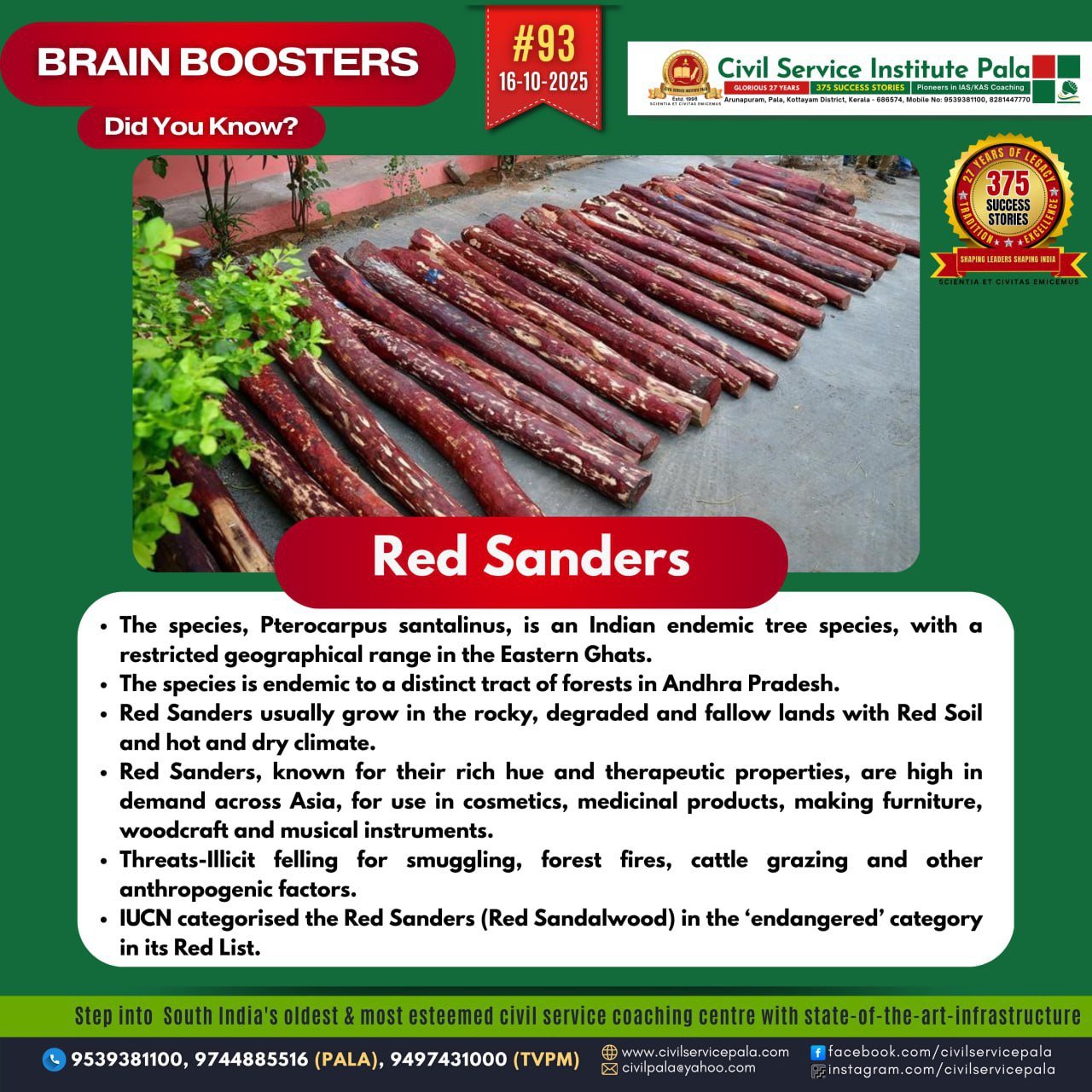
Red Sanders
Palk Bay Reserve is a proposed marine conservation area located along the southeastern coast of India, between India and Sri Lanka, in the Palk Bay region of Tamil Nadu. This bay is part of the larger Palk Strait, which connects the Bay of Bengal to the Gulf of Mannar. The region is ecologically rich and supports thousands of coastal communities that depend on fishing and marine resources for their livelihood.
Ecological Importance Palk Bay hosts diverse marine ecosystems such as seagrass meadows, coral reefs, mangroves, mudflats, and sand dunes. It is home to endangered species including dugongs (sea cows), sea turtles, and many varieties of fish and shellfish. The bay acts as a breeding and nursery ground for numerous marine organisms that sustain fisheries in the region.
Palk Bay Reserve Initiative The idea of declaring Palk Bay as a Marine Biosphere or Conservation Reserve aims to: Protect critical habitats and biodiversity from overfishing, pollution, and habitat loss. Promote sustainable fishing practices for local communities. Encourage eco-tourism and scientific research. Support the Dugong Recovery Program, as the bay is one of the last remaining habitats for dugongs in India.
Conservation Challenges Overfishing and trawling have led to the depletion of marine life and habitat destruction. Conflicts between Indian and Sri Lankan fishermen occur frequently due to overlapping fishing grounds. Pollution and coastal development threaten delicate ecosystems like coral reefs and seagrass beds.
Government and NGO Efforts The Wildlife Institute of India (WII) and the Tamil Nadu Forest Department, along with international partners, are working towards sustainable management and community-based conservation in the Palk Bay region. There are ongoing discussions to integrate it with the Gulf of Mannar Biosphere Reserve, forming a larger marine conservation network along India’s southeastern coast.
