



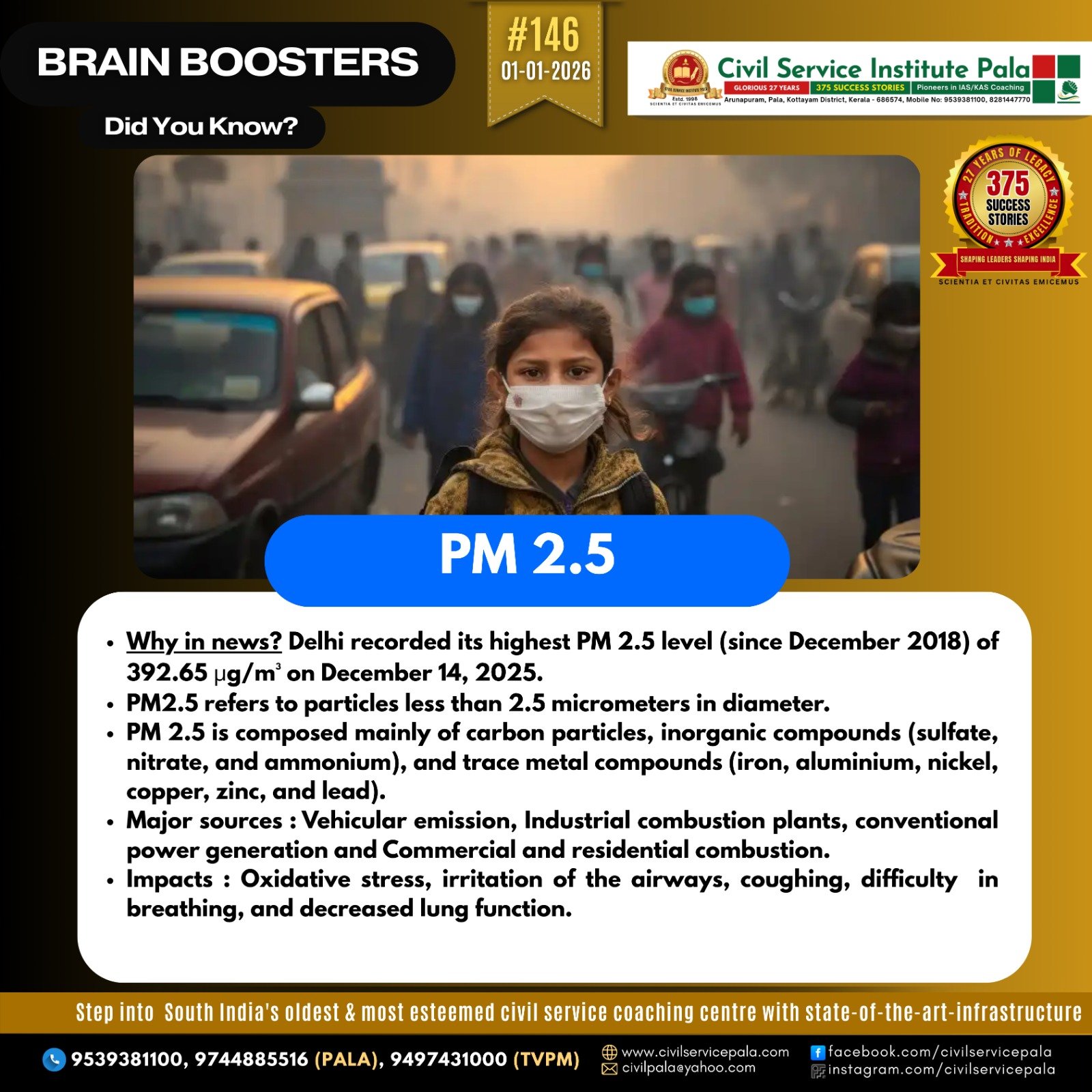
PM 2.5
PM2.5 refers to particles less than 2.5 micrometers in diameter.
PM 2.5 is composed mainly of carbonaceous materials (organic and elemental), inorganic compounds (sulfate, nitrate, and ammonium), and trace metal compounds (iron, aluminium, nickel, copper, zinc, and lead).
Natural sources : Fine particles are largely formed from gases. Gas transforms into particle form through nucleation. These particles can grow up to a size of 1µm through condensation.
Anthropogenic sources : Vehicular emission, Industrial combustion plants, conventional public power generation and Commercial and residential combustion.
How does it work ? PM2.5 particles have very small diameters but large surface areas. Due to this property, PM 2.5 can carry various toxic substances which pass through the filtration of nose hair.
With airflow, they reach the deepest parts of the respiratory tract and accumulate there. The smallest particles can penetrate deeply into the lung, irritate and corrode the alveolar wall, impairing lung function
Through air exchange in the lungs, they can damage other parts of the body as well.
Impacts : Oxidative stress, respiratory symptoms such as irritation of the airways, coughing, or difficulty breathing, decreased lung function, aggravated asthma, chronic bronchitis, irregular heartbeat cardio-pulmonary disordera, and premature death in people with heart or lung disease.
According to WHO Air Quality Guidelines, the 24-hour mean of PM2.5 should not exceed 15 ug/m3 and annual mean of PM2.5 should not exceed 5 μg/m³.
According to National Ambient Air Quality Standards, 24-hour average of PM 2.5 should not exceed 60 μg/m³ and annual average should not exceed 40 μg/m³.
Why in news ? Delhi recorded its highest PM 2.5 level (since December 2018) of 392.65 μg/m³ on December 14 2025.
