



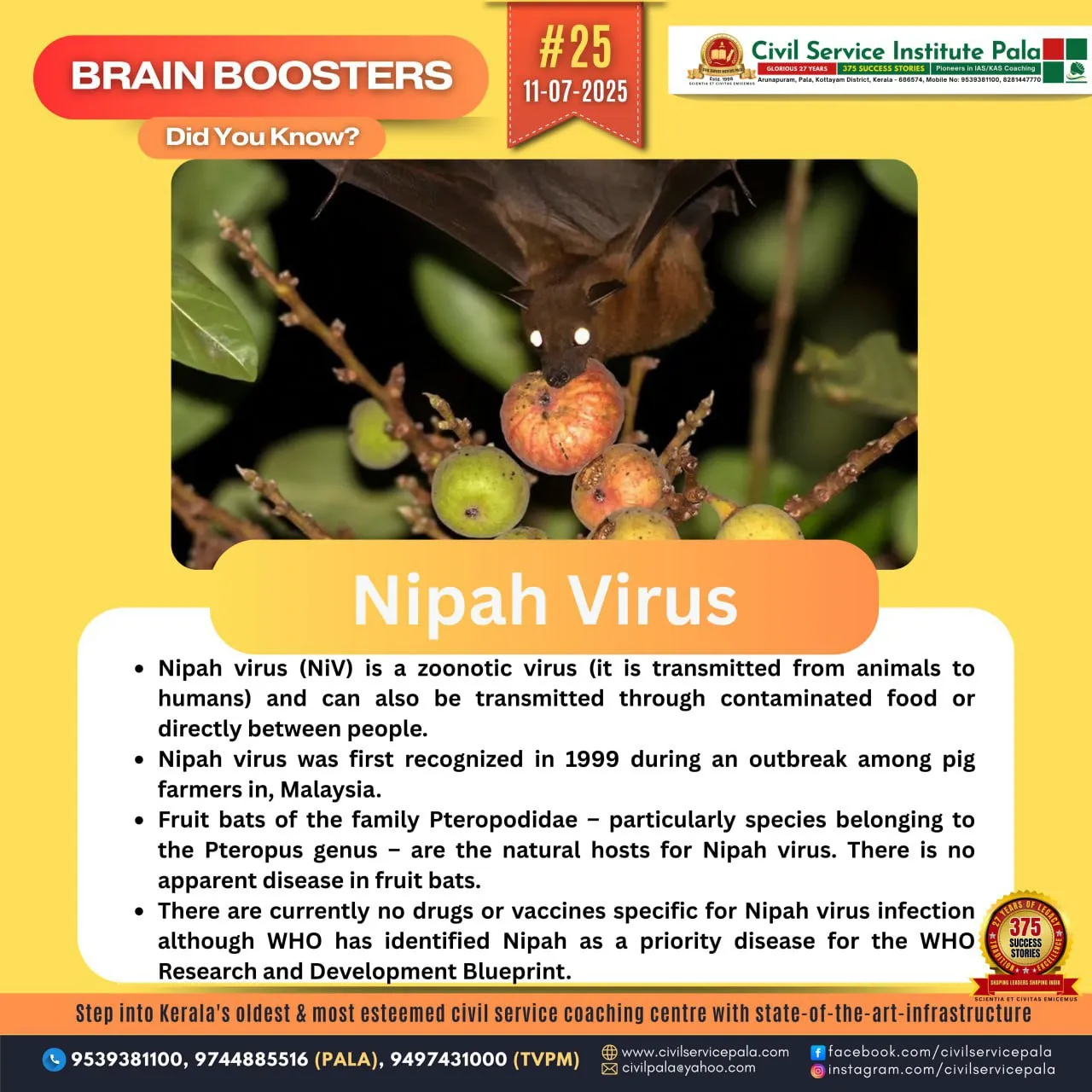
Nipah Virus (NiV)
Nipah Virus (NiV) is a zoonotic virus (transmitted from animals to humans) that causes severe illness in both animals and humans. It is a highly contagious and potentially fatal virus belonging to the family Paramyxoviridae, genus Henipavirus. The virus was first identified in 1999 during an outbreak among pig farmers in Malaysia, where it caused encephalitis (brain inflammation) and respiratory illnesses.
Origin and Natural Reservoir
Primary natural host: Fruit bats (also known as flying foxes) of the genus Pteropus.
These bats can transmit the virus to other animals such as pigs, or directly to humans.
Outbreaks have been reported in Malaysia, Singapore, Bangladesh, and India, particularly in the Indian states of Kerala and West Bengal.
Transmission
Nipah virus can spread through:
Animal-to-human: Direct contact with infected bats, pigs, or other animals.
Human-to-human: Close contact with an infected person’s bodily fluids (saliva, urine, blood).
Consumption of contaminated food: Drinking raw date palm sap or fruit partially eaten by infected bats.
Symptoms
The incubation period ranges from 4 to 14 days, but can extend up to 45 days in some cases.
Early symptoms:
Fever
Headache
Drowsiness
Muscle pain
Sore throat
Severe symptoms:
Encephalitis (swelling of the brain)
Disorientation
Seizures
Coma within 24–48 hours in extreme cases
Respiratory distress (in some outbreaks)
Mortality rate: Between 40% to 75%, depending on healthcare access and outbreak response.
Diagnosis
Laboratory tests such as RT-PCR (Real-Time Polymerase Chain Reaction) for detecting viral RNA.
ELISA (Enzyme-Linked Immunosorbent Assay) for detecting antibodies.
Virus isolation and immunohistochemistry from tissues during autopsy (rarely used due to high risk).
Treatment and Prevention
No specific antiviral treatment or vaccine currently available for Nipah virus.
Supportive care, such as maintaining hydration and treating secondary infections, is the primary treatment.
Research on monoclonal antibodies and vaccines (like the ChAdOx1 Nipah vaccine) is ongoing.
Prevention strategies include:
Avoiding consumption of raw date palm sap.
Avoiding contact with sick animals or humans infected with NiV.
Using protective equipment for healthcare workers and caregivers.
Public awareness campaigns, especially in regions with recurring outbreaks.
Nipah Virus in India
First outbreak in West Bengal (2001 & 2007).
Recent and more deadly outbreaks in Kerala (2018, 2019, 2021, 2023).
The 2018 Kerala outbreak was particularly severe, with a high fatality rate and involved aggressive contact tracing and isolation measures by the state government.
Global and National Response
The World Health Organization (WHO) lists Nipah as a priority pathogen for research and development due to its pandemic potential.
The Indian Council of Medical Research (ICMR) and the National Institute of Virology (NIV) actively monitor and research Nipah outbreaks in India.
Nipah virus is also being tracked under the One Health approach, integrating human, animal, and environmental health surveillance.
