



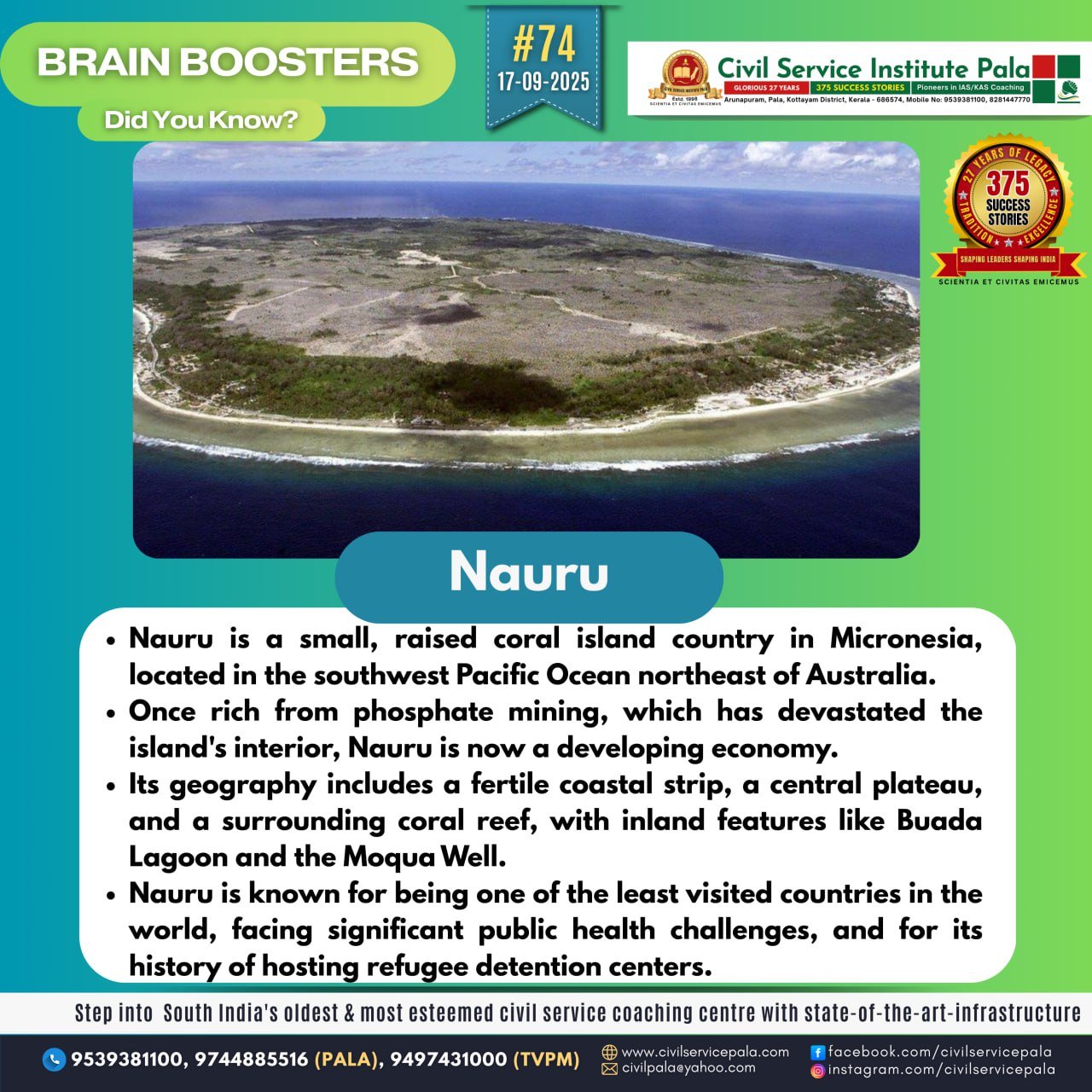
Nauru
Geography & Basics
Nauru is a tiny island country in the central Pacific Ocean, part of Micronesia. It is the third smallest country in the world (after Vatican City and Monaco), with an area of just 21 square kilometers.
Population: About 12,000 people (one of the least populated nations).
Capital: Nauru has no official capital, but Yaren District functions as the administrative center.
History
Originally inhabited by Micronesian and Polynesian peoples. Colonized by Germany in the late 19th century, later controlled by Australia, New Zealand, and the UK. After World War II, it was under UN trusteeship, administered by Australia. Gained independence in 1968.
Economy
Nauru was once extremely wealthy due to phosphate mining, which exploited the island’s rich phosphate deposits (formed from centuries of bird droppings). By the 1970s, it had one of the highest per capita incomes in the world. Over-mining led to environmental destruction and depletion of resources. Today, the economy is dependent on: Aid from Australia, Fishing license revenues, Small industries and offshore banking, Hosting Australia’s controversial offshore refugee detention centers.
Politics & International Role
Nauru is a republic with a parliamentary system. Member of the United Nations, Commonwealth of Nations, and Pacific Islands Forum. Its small size makes it dependent on international partnerships for development and security. Challenges Environmental degradation due to phosphate mining. Economic vulnerability – limited industries and overdependence on aid. Health crisis – Nauru has one of the highest obesity and diabetes rates in the world due to lifestyle and dietary shifts. Climate change threat – as a low-lying island, rising sea levels pose a long-term existential risk.
