



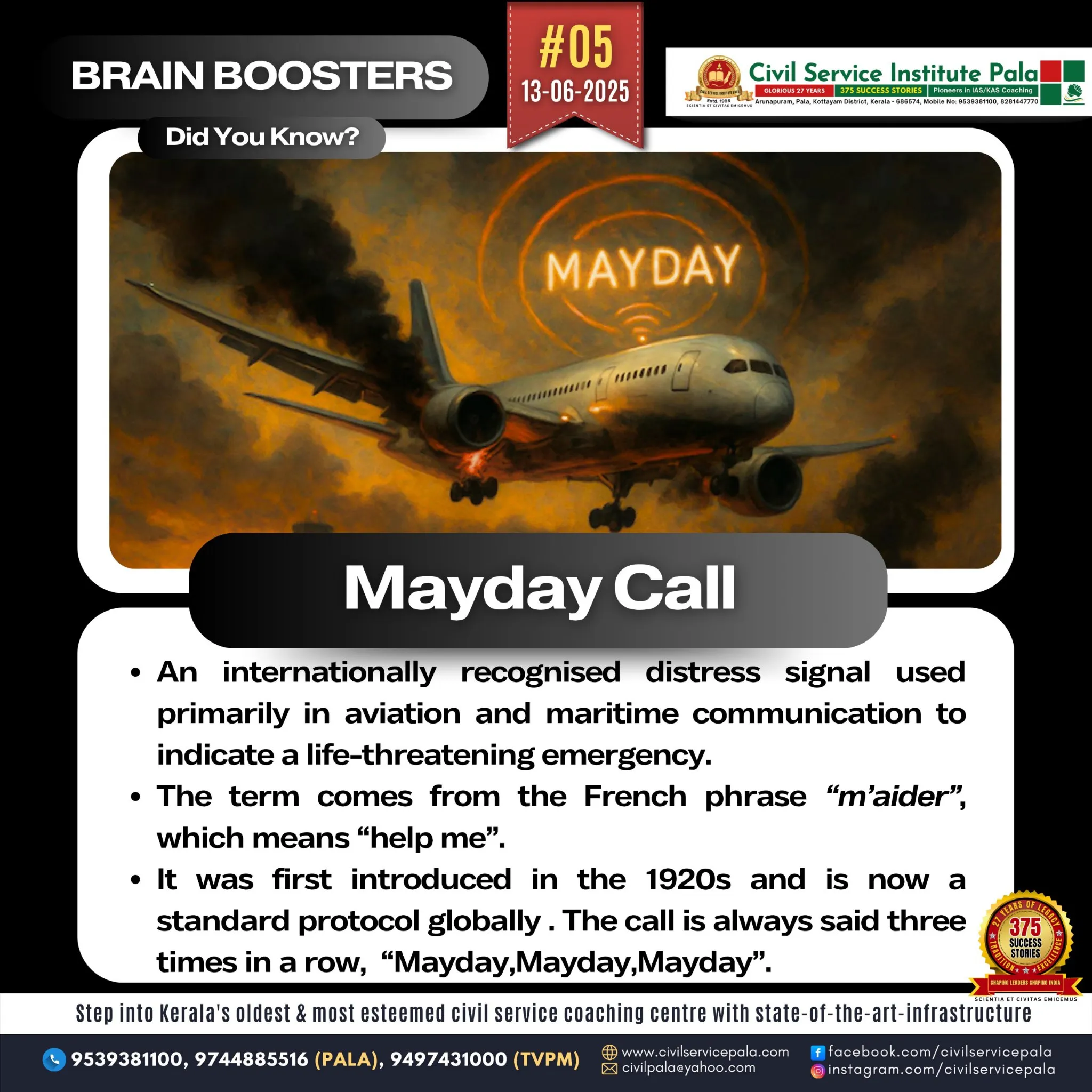
Mayday Call
A mayday call is an internationally recognized radio distress signal used to indicate a life-threatening emergency. It is primarily used in aviation and maritime communication but can also apply to other radio-equipped services. The word “mayday” comes from the French phrase “m’aidez,” meaning “help me,” and is always spoken three times in succession—“Mayday, Mayday, Mayday”—to distinguish it from routine communication and to ensure it’s heard clearly.
This type of call is reserved strictly for situations where there is an immediate threat to life, such as a sinking ship, an aircraft in danger of crashing, or a serious medical emergency at sea or in the air. It takes priority over all other transmissions on the same frequency.Using a mayday call when not in true distress is illegal in many countries, as it can divert resources from real emergencies. It’s a vital tool for saving lives and ensuring rapid response from rescue services.A mayday call is given by the person in command of a vessel, aircraft, or vehicle—typically the captain, pilot, or radio operator—when they determine that an emergency poses an immediate threat to life or the safety of the craft. This could include situations like fire on board, loss of control, collision, or a medical crisis.
Once the mayday call is broadcast, it triggers an urgent response. Nearby stations and crafts are required to listen and stand by. Search and rescue authorities, such as the Coast Guard, air traffic control, or maritime rescue coordination centers, immediately mobilize to respond. They assess the situation, determine the location, and dispatch rescue teams—often by air or sea.
During this time, communication is kept open with the person in distress to gather more information, guide survival efforts, or provide instructions until help arrives. All non-essential radio traffic on that frequency is silenced to avoid interference.
If the situation improves, the caller may cancel the mayday with a “seelonce feenee” (meaning “silence finished”), allowing normal communication to resume. Otherwise, the mayday remains active until the emergency is resolved or authorities take over completely.
