



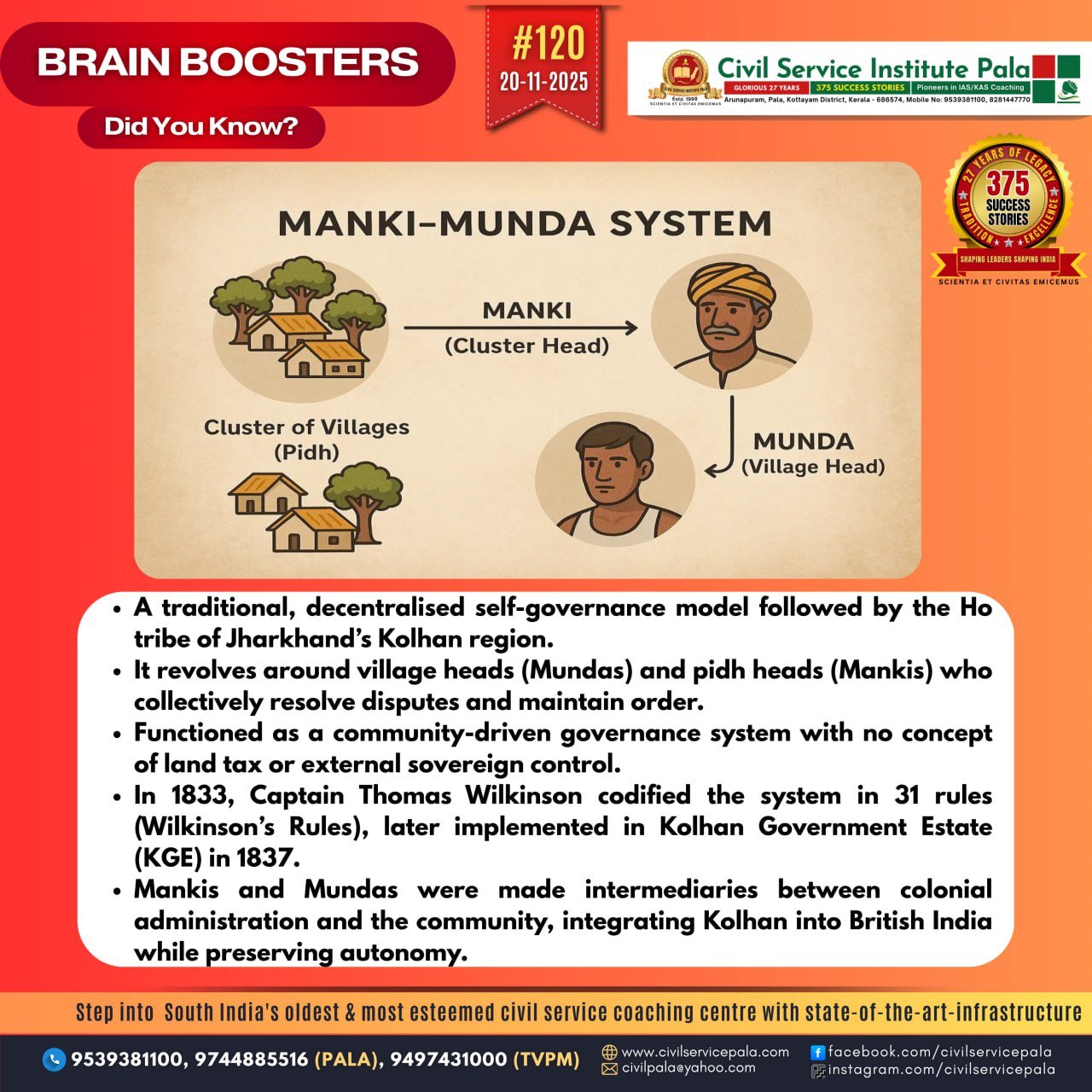
Manki–Munda System
The Manki–Munda system is a traditional tribal administrative and governance structure practiced mainly among the Munda and Oraon tribes of Jharkhand, particularly in the Chotanagpur region. It is one of the oldest indigenous self-governance systems in eastern India.
What is the Manki–Munda System?
It is a customary administrative framework where tribal communities govern themselves through hereditary village and regional heads.
It predates the British period and functioned as a local governance, justice, revenue, and social regulation system.
Key Components of the System
1. Munda (Village Headman)
Each village has a Munda, the traditional head.
Responsible for maintaining order, resolving disputes, and organizing community activities.
Acts as the mediator between villagers and higher authorities.
2. Manki (Cluster or Regional Head)
A Manki supervises a group of villages (usually 10–15).
Coordinates between the Mundas of all villages under him.
Handles larger disputes, mobilizes the community for collective work, and represents the area before external authorities.
Functions of the Manki–Munda System
1. Local Governance
Manages village affairs, community rules, social norms, and festivals.
Regulates common resources such as forests and water bodies.
2. Conflict Resolution
Both Munda and Manki act as traditional judges.
Emphasizes consensual, community-based justice, avoiding formal courts.
3. Land and Resource Management
Oversees land distribution, ownership customs, and inheritance practices.
Protects community rights over forests and cultivable lands.
4. Cultural Preservation
Maintains tribal customs, rituals, and community identity.
Why Is the System Significant?
Represents decentralized indigenous governance.
Preserves tribal autonomy, culture, and traditional laws.
Plays a major role in protecting tribal land rights, especially under laws like Chotanagpur Tenancy (CNT) Act.
Still remains influential in rural governance and local decision-making.
