



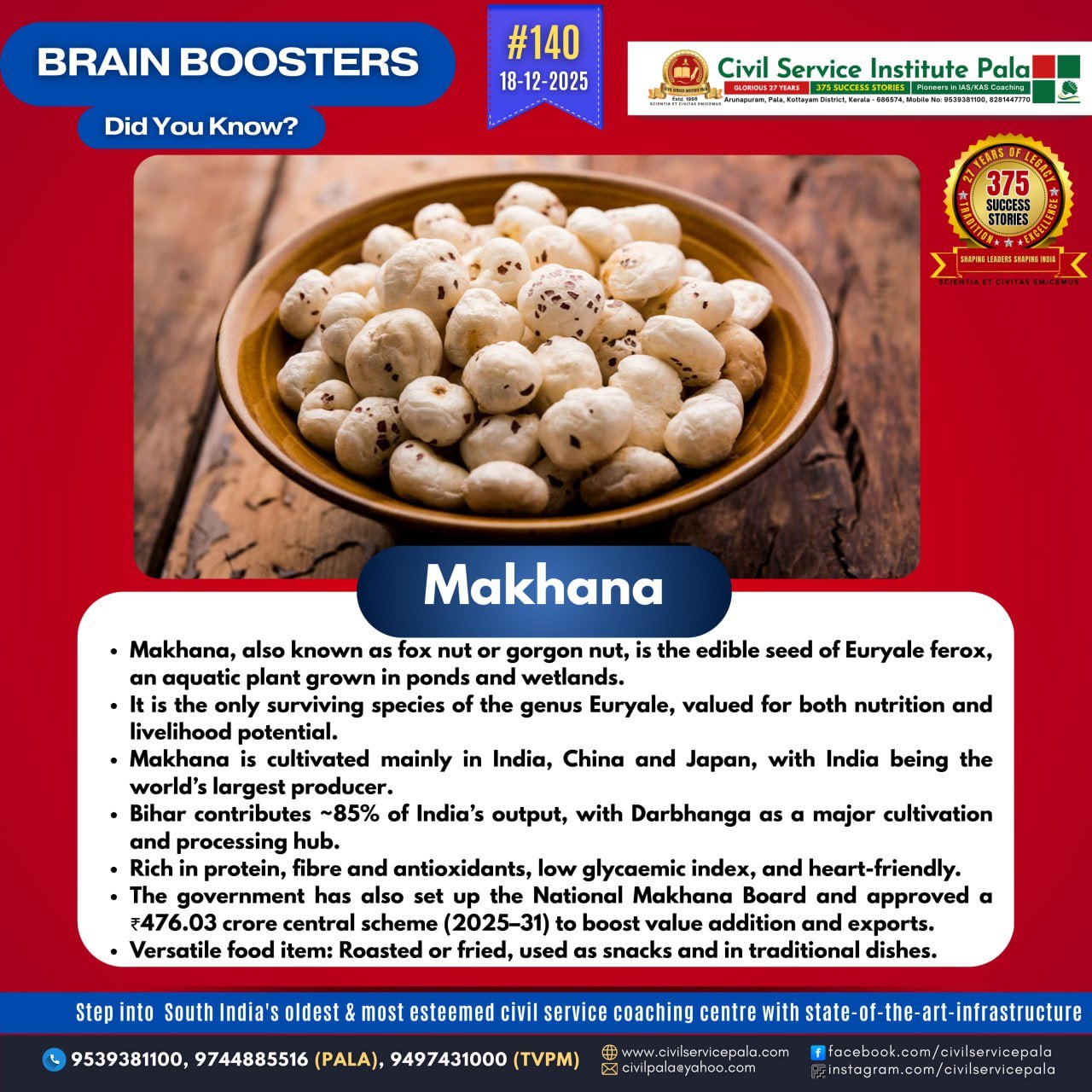
Makhana
Makhana (Fox Nut / Lotus Seed) is a traditional Indian nut widely known for its nutritional, medicinal, and economic importance. It is especially popular in Indian households and has recently gained global recognition as a superfood.
Origin and Cultivation
Makhana is obtained from the seeds of the lotus plant (Euryale ferox), which grows in shallow freshwater bodies such as ponds, wetlands, and lakes.
Bihar is the largest producer of makhana in India, contributing about 85–90% of national production. Other producing states include Assam, West Bengal, Odisha, and Manipur.
Cultivation and processing are labour-intensive and provide livelihood to thousands of rural families.
Nutritional Value
Makhana is low in fat and rich in essential nutrients:
High in protein, dietary fibre, and complex carbohydrates
Rich in calcium, magnesium, potassium, phosphorus, and iron
Contains antioxidants and is gluten-free
Low glycaemic index, making it suitable for diabetics
Health Benefits
Supports heart health and helps control blood pressure
Beneficial for weight management due to low calories
Aids digestion and boosts immunity
Traditionally used in Ayurveda for improving kidney health, fertility, and overall vitality
Cultural and Culinary Significance
Commonly consumed during fasting (vrat) in India
Used in sweets like makhana kheer, savoury snacks, and roasted preparations
Considered satvik food in Hindu traditions
Economic and Recent Developments
India has received a Geographical Indication (GI) tag for Mithila Makhana (2022), recognising its unique quality and boosting exports.
The government promotes makhana cultivation through schemes like PM-FME and agricultural diversification programmes.
Rising international demand has made makhana a high-value crop with export potential.
Environmental Importance
Makhana cultivation supports wetland conservation and maintains aquatic biodiversity.
Acts as a natural purifier of water bodies.
