



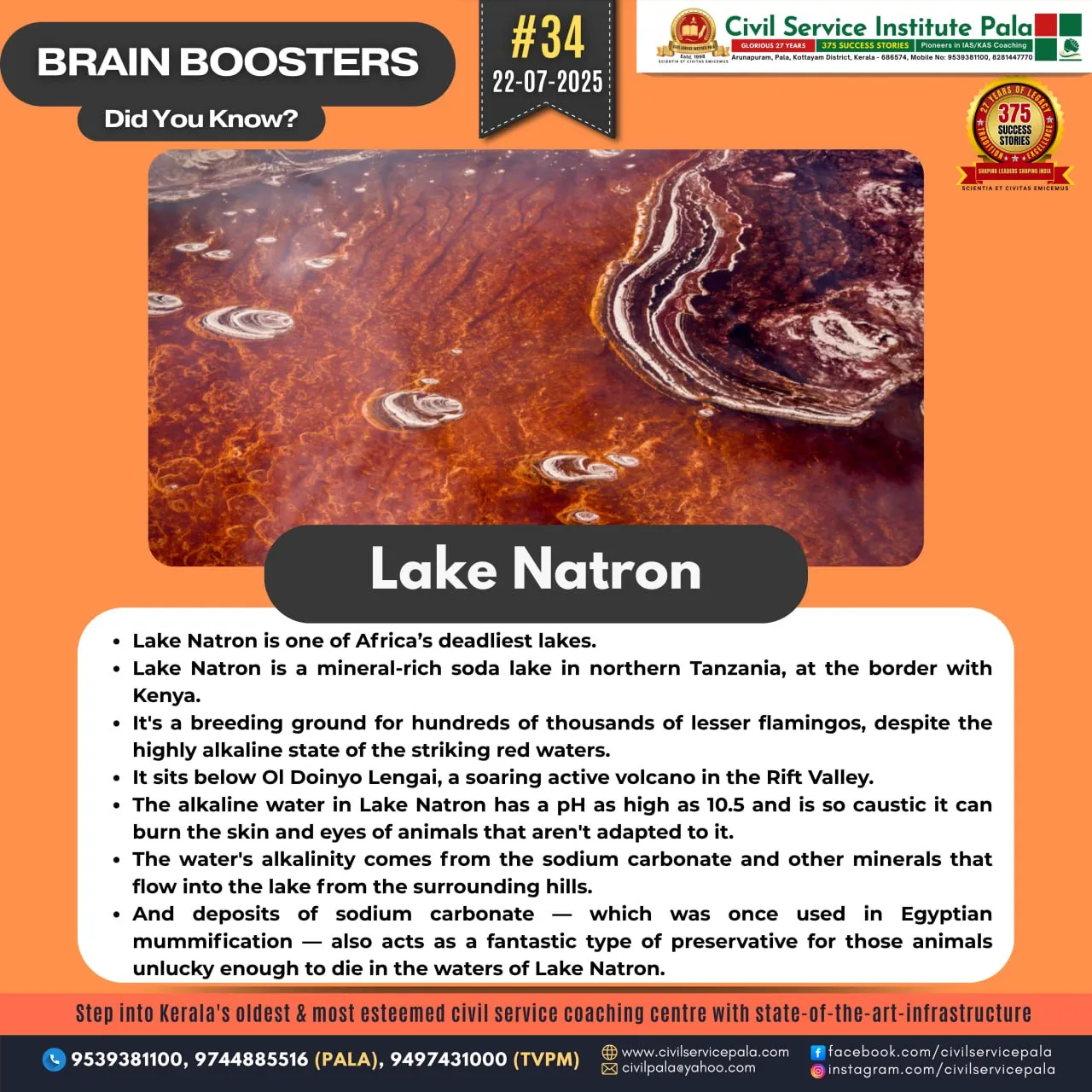
Lake Natron
Lake Natron is a unique and extreme lake located in northern Tanzania, near the border with Kenya. It lies within the East African Rift Valley, at the base of the active Ol Doinyo Lengai volcano, and is known for its stunning red hues, high alkalinity, and unusual ecological conditions.
Key Features of Lake Natron:
1. Extreme Alkalinity:
The lake has a very high pH level (9 to 10.5) due to the presence of sodium carbonate and other minerals from surrounding volcanic activity.
Its waters can reach temperatures up to 60°C (140°F).
The lake’s caustic environment can burn skin and preserve animal remains in a mummified state, creating a petrified appearance.
2. Red and Pink Coloration:
The lake appears deep red or pink due to halophilic (salt-loving) microorganisms and cyanobacteria that thrive in the salty, alkaline conditions.
The color becomes more intense during the dry season when evaporation increases salt concentration.
3. Wildlife Habitat:
Despite its harsh environment, Lake Natron is one of the only regular breeding sites for Lesser Flamingos in East Africa.
The flamingos feed on the algae and nest on small islands formed by evaporative salt crusts.
The lake supports limited biodiversity but is crucial for these flamingo populations.
4. Geological Importance:
Situated in a tectonically active region, the lake reflects the geological dynamism of the East African Rift System.
It receives minerals from Ol Doinyo Lengai, the only known volcano that erupts natrocarbonatite lava, which contributes to the lake’s chemical composition.
5. Conservation Status:
Lake Natron is part of the Ramsar Convention (a wetland of international importance).
It faces threats from proposed soda ash extraction and climate change, which could disrupt the flamingo breeding grounds.
Fun Fact:
The lake’s eerie landscape and the preserved remains of birds and animals give it a mythical reputation, and it has been dubbed “the lake that turns animals to stone”—though the animals are not turned to stone, their bodies are calcified and preserved due to the lake’s high mineral content.
Source:https://www.livescience.com/40135-photographer-rick-brandt-lake-natron.html
